

The less somebody needs you, the more drawn you are to them.
Have you ever shown interest in a person or cat only for them to shun you, but when you pay attention elsewhere, they suddenly fawn all over you?
This sounds counterintuitive but it’s everywhere.
Venture Capitalists try to invest in founders that don’t need them.
Socially, we’re drawn to people who don’t need our approval.
Diners would rather fight for a table at an overcrowded restaurant than walk into an empty but perfectly decent one. There are people still trying to get a table at Dorsia.
There’s something magnetic about people and institutions that don’t seem to need you, and something off-putting about desperation. When something is thriving, they won’t seek your approval. They’ll make you feel like you couldn’t impact their trajectory if you tried.
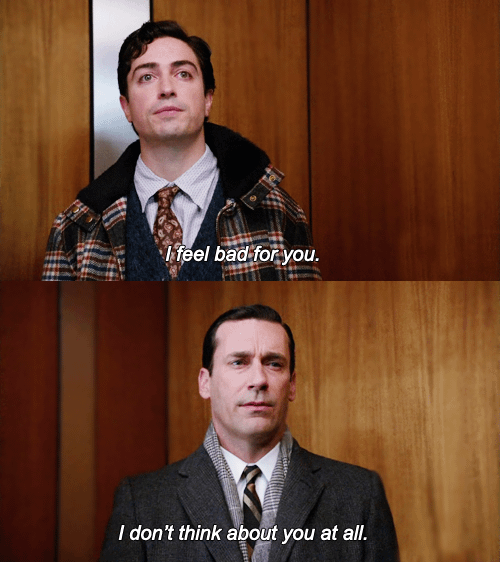
This is the power of indifference.
Regardless of who wins the election, where markets move, if conditions worsen or improve, they’ll be fine. They aren’t anxious about what the world might do to them. If anything, the world is more concerned with what they might do.
A lot of people will try to convince the world that they are indifferent or they don’t care ‘bout nothing, but you can see through this act. You can’t fake indifference. You either care, or you don’t. Those that don’t, have the power. Let me explain why.
If this week’s article does not interest you, please check out some other recent ones:


Indifference is Cool: Pop Culture’s Favorite Illusion
Every generation of filmmakers have understood that to audiences, the person who cares the least is perceived as the most powerful.
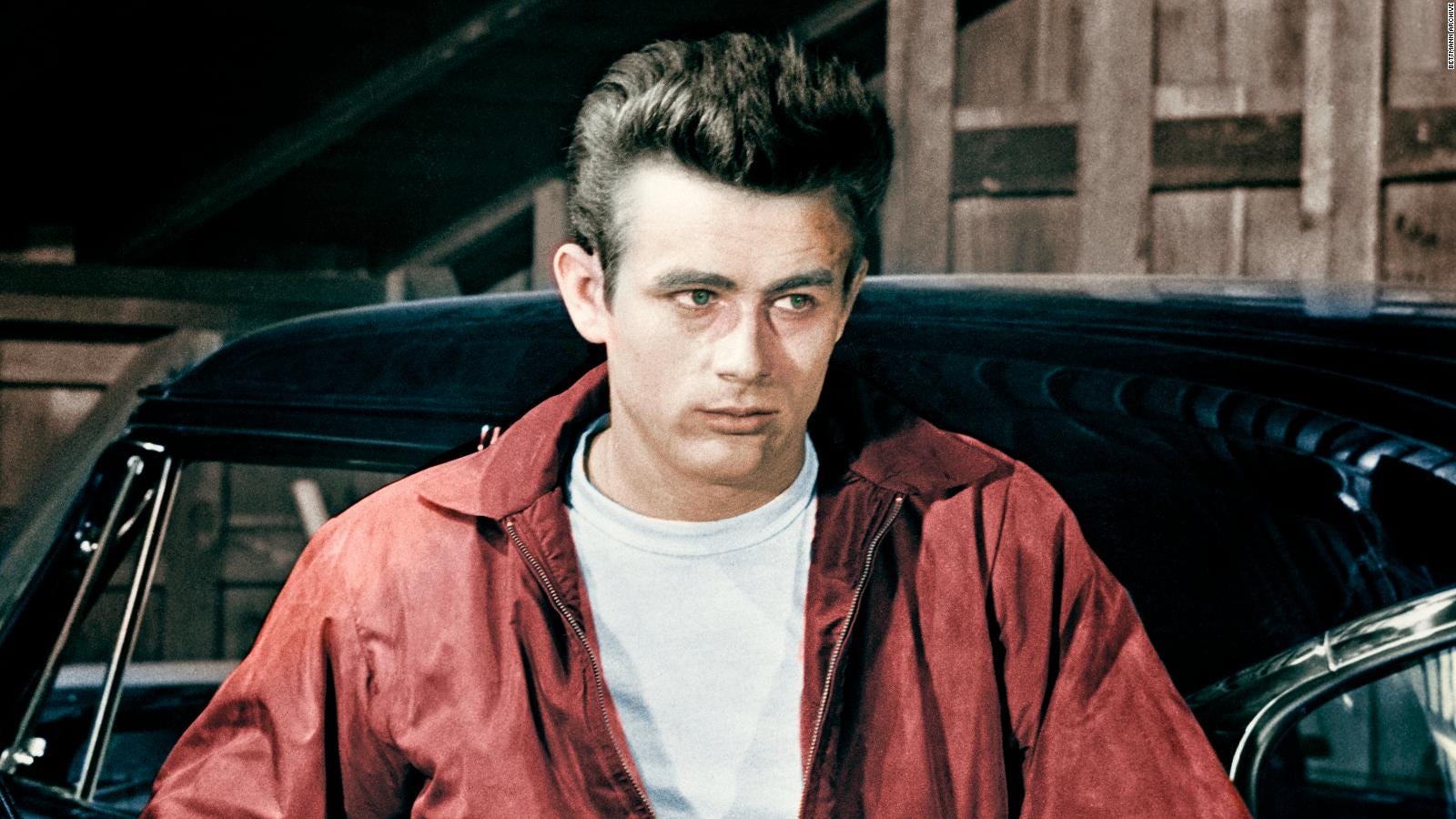
An obvious example is Rebel Without a Cause. It’s in the title. James Dean isn’t cool because he’s articulate, successful, or even particularly competent. On paper, he’s a loser, yet he’s remembered as one of the coolest characters in cinematic history.
This is largely because he’s emotionally unavailable to authority, to expectations, even to himself. He doesn’t chase approval but he still absorbs it passively. Society is one big status game but he’s won by opting out. The audience instead of seeing him as a burnout, perceive a Holden Caufield level genius who has identified the game and decided it’s not worth playing. Indifference gets associated with depth.
Most of my readers are probably too young to have seen Rebel, so a more recent example is Tyler Durden in Fight Club. Durden, played by Brad Pitt during a generational run, is meant to represent the ideal image of masculinity. He’s supposed to be what men aspired to in the 90s: a handsome nihilist unconstrained and unafraid of anything modern society can threaten him with. Virtually every man born between 1975-1995 at one point aspired to achieve the same physique as Pitt in that movie, and Tyler Durden very likely inspired Luigi Mangione.
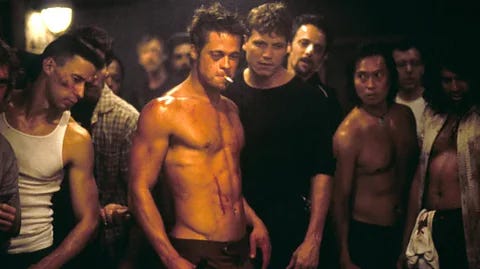
Indifference does not equal dispassionate. Durden may be nihilistic, but he’s not apathetic. He cares deeply about re-making society through Project Mayhem and willing to go to extreme lengths to see his vision through.
His indifference to norms, consequences, and even his own survival allows him to recruit a legion of dispossessed, interchangeable men willing to carry out his vision. He doesn’t need them. He doesn’t protect them. He doesn’t even acknowledge them individually, until their death, and that’s precisely why they follow him.
Durden can do this because he doesn’t care what happens to him. Once someone genuinely reaches that point, they become impossible to threaten and easy to mythologize. This superpower isn’t exclusive to fiction.
![We're the middle children of history, man. No purpose or place. We have no Great War. No Great Depression. Our Great War's a spiritual war…" - Tyler Durden [1280 x 800] : r/QuotesPorn](https://substackcdn.com/image/fetch/$s_!Q_-v!,f_auto,q_auto:good,fl_progressive:steep/https%3A%2F%2Fsubstack-post-media.s3.amazonaws.com%2Fpublic%2Fimages%2F882b86f5-47ae-4978-955b-9ba8a5181b05_640x400.jpeg "We're the middle children of history, man. No purpose or place. We have no Great War. No Great Depression. Our Great War's a spiritual war…\" - Tyler Durden [1280 x 800] : r/QuotesPorn")
In Business: Chris Voss Won’t Save You
You can read as many negotiation books as you want, but if you are desperate you will lose.
The person least willing to walk away from the table won’t win. This is why the early part of any discussion is sizing the other person up. Both parties are trying to see who will blink first, revealing who is more desperate to make the deal.
There are structural advantages but desperation is a matter of perspective. Highly anxious and impatient people won’t win many negotiations because they can’t handle uncertainty, or they’re too emotionally invested in the outcome. The moment someone can’t walk away from the table, is the moment they’ve lost.
There are plenty of instances where the outcome of the negotiation can be highly consequential. If your opponent knows this, they will have the advantage. Your goal is to convince them you could walk away and be fine. You have other options. In other words you don’t need them, in fact, they need you!
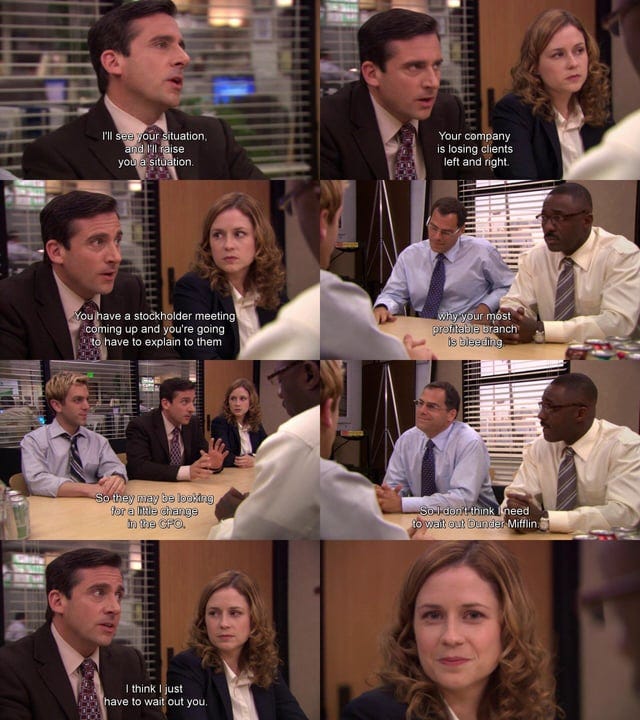
I recently found myself in a negotiation with an electrician, Tony. He wanted more than $400 for a 15 minute house charge, which is absurd. Tony thought he had leverage because of an email saying this was their minimum charge.
Tony had misplaced confidence, because his email wasn’t enough to convince my wife it was worth paying that much for a visit involving zero electrician work. He had to somehow collected on that invoice. I might be a useless millennial incapable of replacing a space heater, but I’ve been in higher stakes situations than this.
What Tony missed was we could simply not pay his bill. I calmly explained he could send us to collections, bring us to small claims court or cut the bill in half. He got loud but at the end of the day, he cut the bill in half. I might not be Tyler Durden but you need to threaten me with something worse than that.
This is a fairly low stakes example, but it exhibits how when you don’t fear consequences, you become powerful. Don’t be scared, be indifferent.
Don’t believe me? It’s the same dynamic in hiring. If you operate in a budget constrained environment and you’re interviewing someone you know will accept less than your posted range, do you think they will get above that range? Of course not. Even if the hiring manager wants to offer it, HR or Finance will shut them down, unless they believe this is a can’t miss candidate, that they need more than the candidate needs them.
Desperation leaks and people can sense it. Desperate people don’t have control. You want control.
You Can’t Fake Indifference
Jay Gatsby is one of the most iconic figures in American fiction, and he’s introduced as mysterious, aloof, and untouchable. Through the eyes of Nick Carraway, we see Gatsby as the mimetic ideal of his era: young, rich, handsome, high status and surrounded by myth. To the outside world, he appears effortlessly above it all.
This persona worked well, but only at a distance. As soon as Carraway starts to spend time with him, he realizes Gatsby isn’t as cool and impenetrable as his reputation would assume. He built his entire life around simping for Daisy.
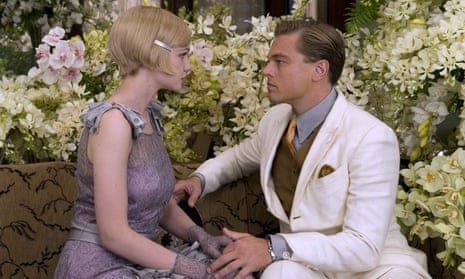
Gatsby understands that overt longing would come off as desperate. Since Daisy is married, he can’t simply ask her out. So he tries to recreate the same dynamic that worked on everyone else. Drawing her into his orbit, hoping proximity and the spectacle would do the work for him.
He almost gets his way, but his insecurity and desperation eventually seeps through just long enough for Daisy to get the ick. That’s because you can’t fake indifference. He wasn’t, he absolutely needed Daisy, in an obsessive way.
The harder someone tries to appear cool, detached, or self-sufficient, the more obvious it becomes they aren’t. People who have nothing to prove don’t need to signal it. They don’t live or die on approval. This causes others to instinctively work harder for their attention. This asymmetry creates control.
It’s why indifference wins in dating, in business, in politics, and in negotiations. The person unbothered by the outcome, dictates the terms of. The obsessed person, has no control.
The only way you can be indifferent, is to find inner peace. With this, you’ll have nothing to fear and nobody to impress, which will make you unstoppable.
Thank you for reading. If you liked this article please Subscribe below. I publish articles on a wide range of topics from business, books, current events or anything on my mind.
Nice piece, Ben.
I imagine that this is rooted in a power differential. We inherently seek out people and institutions that don’t need us because this trait signifies their level of power or influence in an unwritten social hierarchy.
Great line - "The person unbothered by the outcome, dictates the terms of. The obsessed person, has no control. The only way you can be indifferent, is to find inner peace. With this, you’ll have nothing to fear and nobody to impress, which will make you unstoppable."
Reads like advice on my relationship with markets! lol