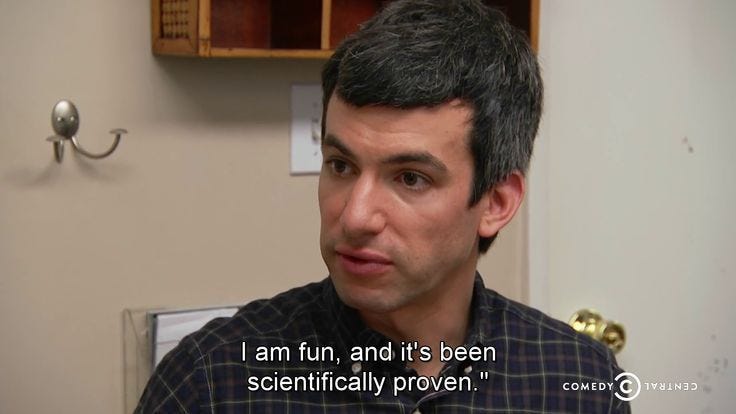
Even those living in the centre of the Venn diagram between comedy fans and tech enthusiasts were shocked to learn the most highly anticipated documentary of the year was a film about Elizabeth Holmes by Nathan Fielder.
You Can See Everything was made in secret over several years. Fielder was given unprecedented access to Holmes, her partner Billy Evans and their family. It’s normal to wonder how this could happen.
Why would a comedian want to spend a month with the person the media once dubbed the female Steve Jobs? Why would Holmes agree to this documentary in the first place? Why would she trust Fielder with this?
Last year I declared Nathan Fielder was the new king of comedy. I was wrong. What Fielder does goes beyond comedy or even journalism.
Fielder built his career on exposing truth by convincing people to agree to things that weren’t in their best interest. He might not have broken a Watergate-level scandal but Fielder is this generation’s Woodward & Bernstein.
Fielder’s comedy rarely comes from his punch lines. The humour is from seeing how far he can push a situation beyond its logical extreme. In Nathan For You, Fielder presented himself as a successful marketing whiz offering advice to small business owners. Using the halo of the film crew and the confidence of someone who appears to know what he’s doing, he convinced dozens of entrepreneurs to attempt completely outrageous initiatives to increase sales.
Examples include an ice cream store launching an excrement-flavoured ice cream, a coffee shop rebranding itself as Dumb Starbucks and a taxi company starting a sleeper cell operation to take down Uber. Not only does Fielder pitch insane ideas, he follows through with them.
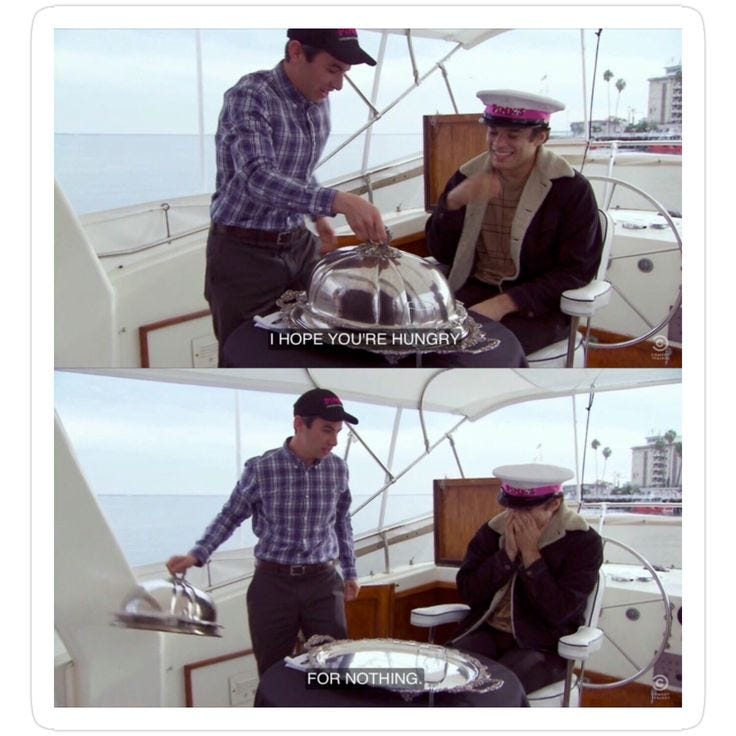
Most comedians would be content convincing the business owner to agree to their bit. Not Fielder. Not only does he suggest that a taxi company create a sleeper cell to infiltrate Uber, Fielder recruits drivers and does it. After discovering that a stranger lied about having a doctor’s appointment to skip a hot dog line, Fielder follows him, lures him aboard a boat to confront him at sea.
He approaches comedy with the intensity of a competent management consultant who misunderstood his mandate. This attention to detail along with the appearance of complete sincerity, helps convince reluctant people to participate in his schemes.
It separates Fielder from comedians like Sacha Baron Cohen, who rely on deception. Cohen invents characters to get someone to reveal themselves because they misunderstand who they are talking to. Fielder plays a version of himself that seems real enough to the person sitting across from him.

The absurdity is how little pressure is required to get perfectly normal people to accept an irrational premise. Over time, Fielder realized there was more interesting applications than helping a frozen yogurt shop sell disgusting yogurt.
The final episode of Nathan for You, Finding Frances, showed Fielder’s desire to transcend comedy. Fielder helps Bill Heath, a Bill Gates impersonator who had appeared in an earlier episode, search for a woman named Frances whom he had dated decades before. What begins as another ridiculous Nathan scheme becomes a nearly feature-length documentary about regret, memory, loneliness and whether Bill is actually searching for Frances or for the younger version of himself. It has almost nothing to do with the premise of Nathan for You, but it gave a glimpse of what Fielder wanted to do next.
This was on display in The Rehearsal. Instead of helping people deal with uncomfortable situations, Fielder began recreating those situations so precisely that they could practice them beforehand. Nathan helps a man admit to a friend that he lied about having a master’s degree. A normal person might rehearse the conversation in their head. Fielder recreates the bar where the conversation will occur with paid actors posing as bar patrons.
The HBO series gradually becomes less interested in whether rehearsals work and more interested in what happens when reality can be recreated so accurately that the distinction stops mattering. Actors play real people. Actors study other actors playing real people. Fielder rehearses his own interactions with people who are themselves rehearsing interactions.
Calling it surrealist comedy is inaccurate. Surrealism introduces something impossible into an otherwise recognizable world. Fielder does the opposite. Everything he creates is possible. It’s real. His comedy is hyperrealist. Instead of distorting reality, he recreates it with such obsessive precision that reality itself begins to look ridiculous.
In Simulacres et Simulation, Jean Baudrillard argues there is eventually a point where the representation no longer merely reflects reality. Reality itself begins to imitate the representation. Fielder goes to such extreme lengths to reproduce reality that the distinction between the original and the simulation starts breaking down. At times his artificial world becomes more detailed, controlled and realistic than life itself.
In the second season of The Rehearsal Fielder became interested in airline accidents where communication between captains and first officers may have contributed to disaster. He studied cockpit transcripts, consulted aviation experts, created elaborate simulations and eventually learned to fly a Boeing 737 himself.
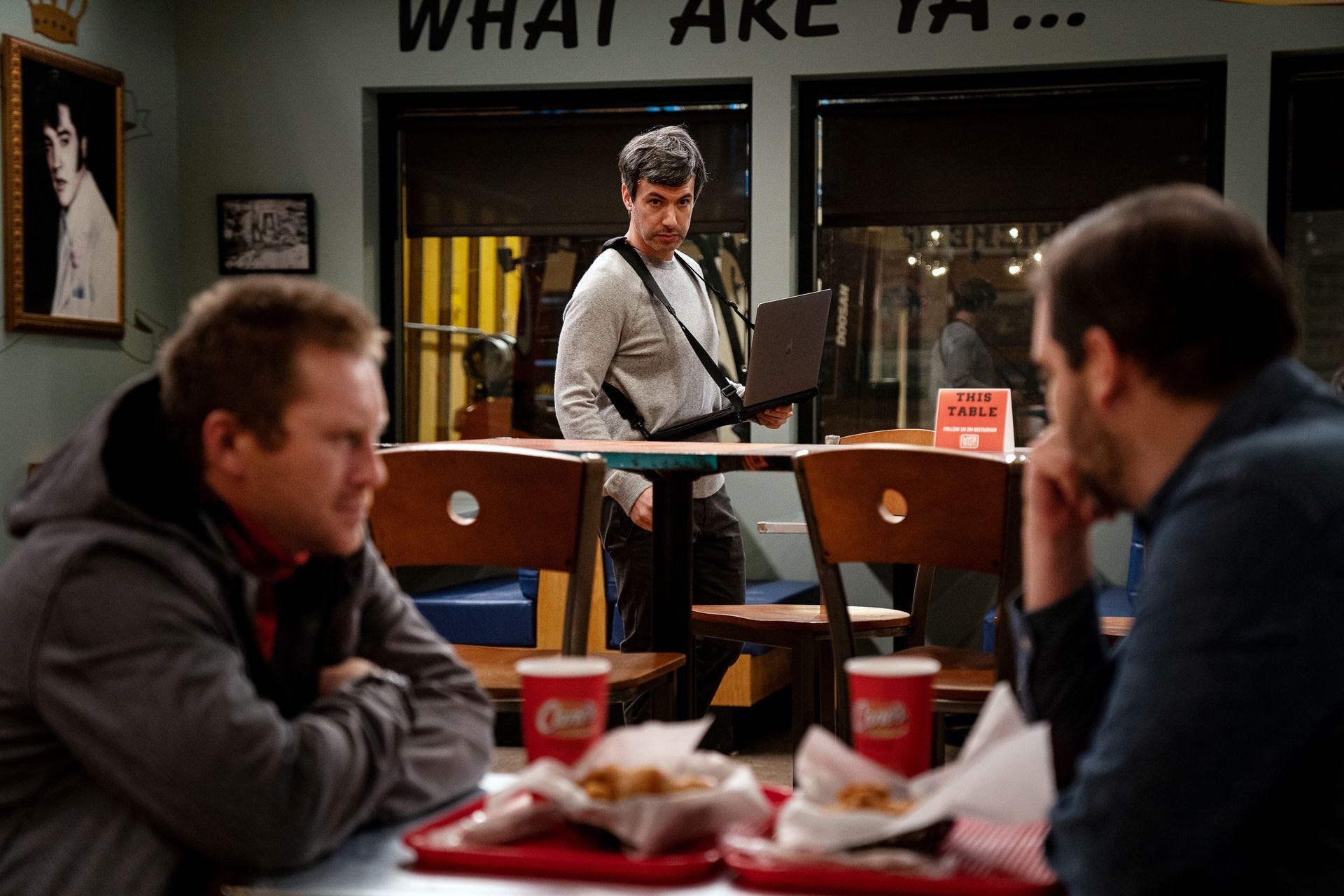
This goes well beyond comedy. This is further than what most journalists would consider attempting. What Fielder is doing is beyond comedy or journalism. He’s finding something that doesn’t make sense to him, asks the questions others won’t and constructs an elaborate experiment and films the entire experience.
This is why a documentary about Elizabeth Holmes is the most fascinating subject for a Nathan Fielder documentary.
Holmes’s entire professional life was built off a lie. Theranos reached incredible hype despite the underlying technology not working. The media was clamouring for a young female tech founder with a purpose more grand than business efficiency. Holmes played into the image by wearing black turtlenecks, manufacturing an unnatural deep voice. She tried to represent what she believed people wanted losing track of reality. It worked for a time, with some of the wealthiest and accomplished people buying into a version of reality that she presented to them.
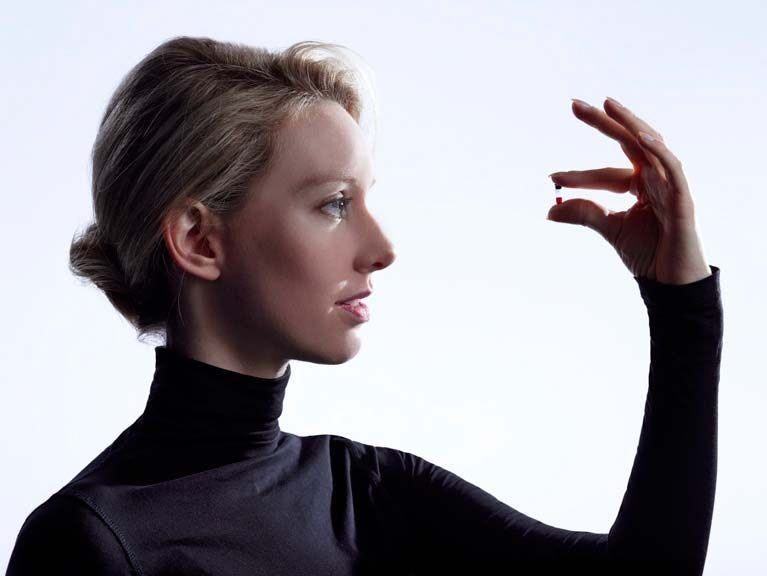
Although the Theranos fraud was exposed a decade ago, and despite mountains of evidence Holmes has maintained her innocence. Former employees, customers and business partners have revealed Holmes was selling a technology she knew did not work. Theranos falsified health data to patients. Holmes tried every legal maneuver available to her but eventually even the most expensive lawyers, can’t change the fact that she broke the law. Still Holmes doesn’t see it that way. She earnestly believes she is misunderstood. At some point she lost track of what was the reality and what was her distortion. She is lost in her own simulation.
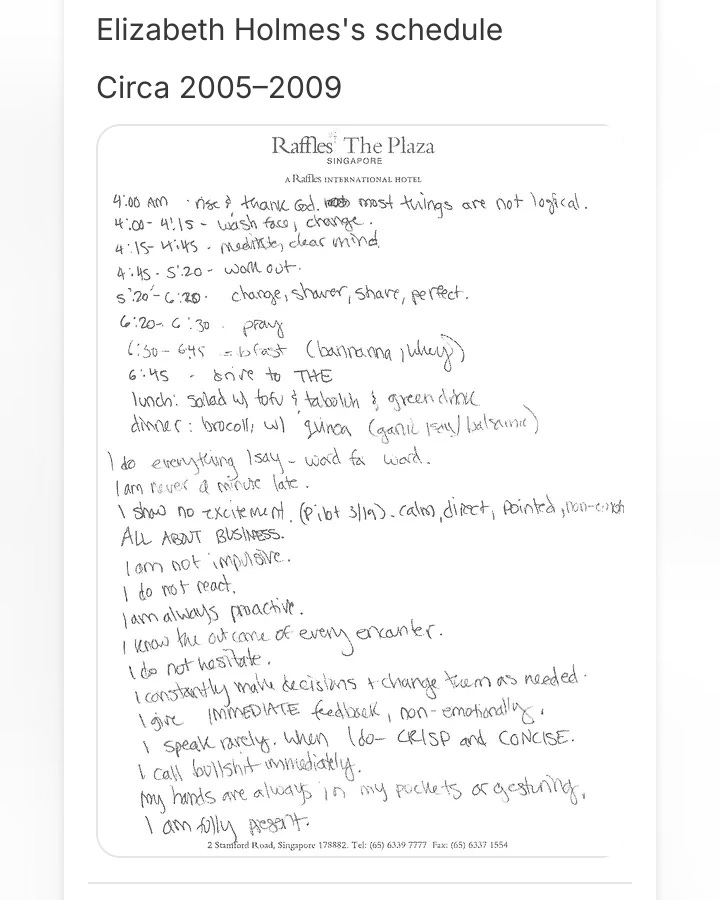
This made her a perfect subject for Nathan Fielder, who has spent his career studying people performing versions of themselves. Nathan Fielder himself, plays a painfully awkward version of Nathan Fielder.
Elizabeth Holmes, agreed to the documentary hoping that radical transparency would convince Fielder and the public that she had been misunderstood. Instead of Holmes accepting her version of events might be distorted she aimed to convince the public they should accept her reality.
This is why You Can See Everything promises to be one of the best documentary films in years. Holmes is a perfect subject for Fielder. She desperately wants people to accept her reality, while Fielder is an expert at exposing the truth, no matter how absurd. There will certainly be some laughs, but the film will likely expose more truths.