

For years Crypto has been a fascinating case study of the “midwit” phenomenon.
The smartest and dumbest people you knew were 100% certain Crypto was inevitable, while everyone in the middle was skeptical.
Since inception, most signals have been on the side of the midwits. Despite massive but volatile price appreciation in Bitcoin, Ethereum and other tokens, there was always the missing killer/wedge use case for Crypto that wasn’t speculating on Crypto. That changed in 2025.

The use case midwits have been asking for arrived. Stablecoins (check here for a primer).
In 2025, Stablecoins moved $33 Trillion in transaction volume all on-chain. That’s ~50% more than Visa and Mastercard combined. There was seemingly endless momentum. Starting with the passing of the GENIUS Act, CRCL 0.00%↑ going public at a market cap of ~$7B and many major banks, payment companies, and asset managers announced pilots, partnerships, and production use cases..
By Q3 2025, Crypto had an estimated $225 Billion dollars in Total Value Locked (TVL). TVL measures the cumulative dollar value of crypto assets deposited into decentralized finance protocols (ex: Lending, Staking, liquidity pools). This only represents 10-15 basis points (0.1%) of global bank deposits. Tiny relative to the traditional off-chain financial system, but an all-time high for crypto.
Despite its relatively insignificant size, there is plenty of reason to expect this won’t be the case for long.
Institutional acceptance has surged to levels not seen in prior crypto cycles. Spot Bitcoin and Ethereum ETFs are now offered by major financial institutions. Banks are accepting BTC and ETH as collateral. Even long-time skeptics like Jamie Dimon have been forced to moderate their stance as clients demand access.
Stablecoins are only the beginning. Prediction markets such as Polymarket are processing billions of dollars using smart contracts on Ethereum. Financial institutions are tokenizing stocks, credit, and money market funds. Many more tools are emerging. The tipping point has been reached.
Not because influencers are going on CNBC or because people are paying six figures for JPEGs. The underlying financial infrastructure of the global economy is being rewired. Regulators are engaging. Institutions are building. Money is moving.
This is not an argument to put your entire net worth into Bitcoin, Ethereum, or whatever token is trending on X this week. It’s evidence crypto is here to stay and the proof is starting to look overwhelming. It’s time to pay attention or have fun staying poor! (I’m sorry I couldn’t help myself).
Keep reading for evidence the future of finance has arrived.
If this week’s article does not interest you, please check out some other recent ones:



Crypto Has Arrived
The main arguments for why Crypto could never compete let alone supplant the existing financial system boiled down to three beliefs:
Regulators would never allow it
Incumbents would try to block it
Consumer won’t trust their money to an anonymous network
For most of Crypto’s existence, these seemed like credible concerns. In 2025, it became clear they no longer are.
Regulators Would Never Allow It
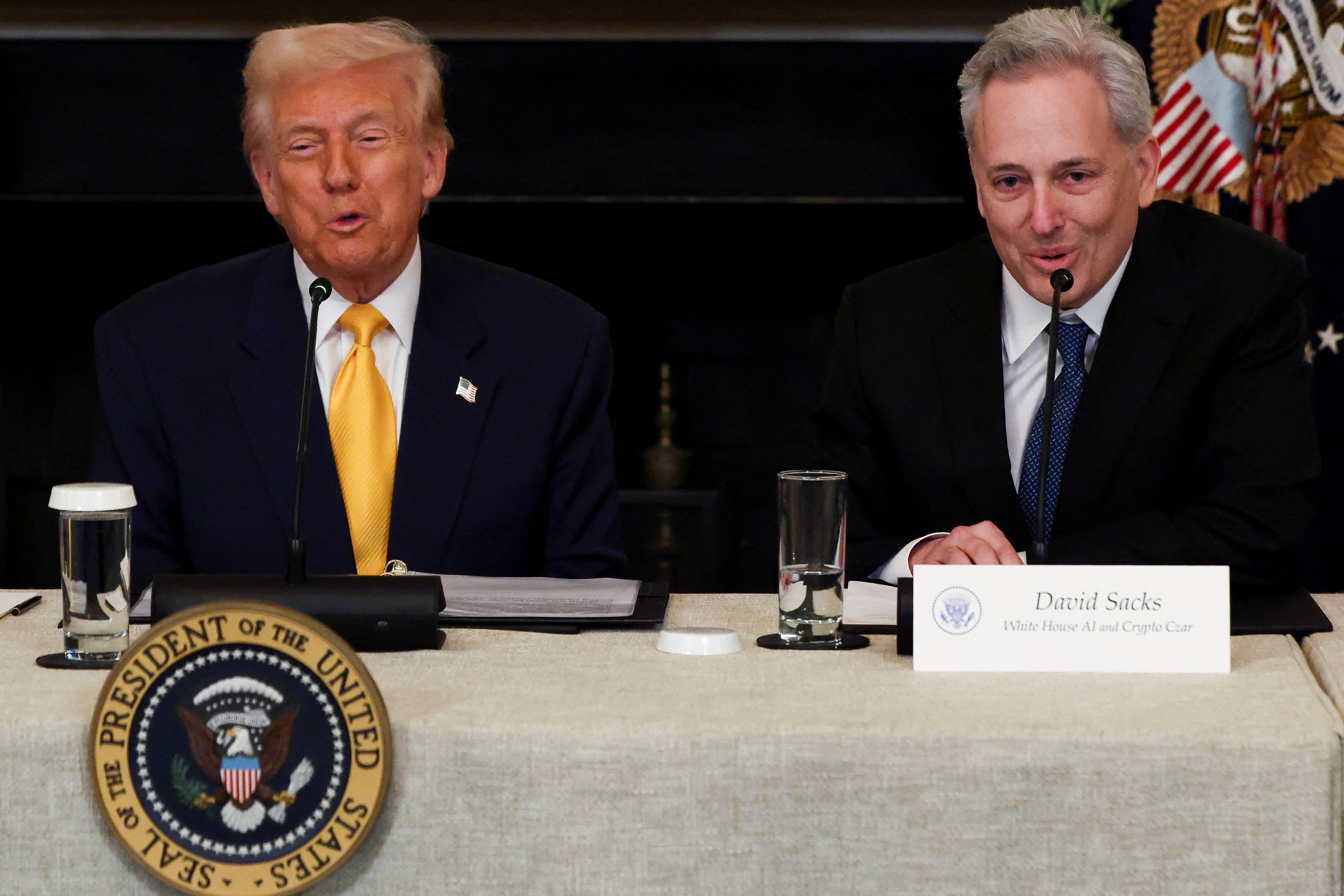
It’s no secret the second Trump administration has taken a markedly different stance toward crypto and digital assets than its predecessor. President Trump started by appointed David Sacks to the newly created role of AI and Crypto Czar, signaling a coordinated federal effort to engage with the industry rather than constrain it.
This represented a sharp departure from the Biden administration, which relied heavily on enforcement actions and informal pressure while declining to provide legislative clarity. Even during Trump’s first term, crypto received little explicit regulatory support. In 2025, it was all systems go!
In January 2025, the SEC rescinded SAB 121 via SAB 122, removing a major accounting and custody obstacle that had discouraged banks from holding crypto on behalf of clients. Its removal materially lowered the barriers for institutional participation.
Shortly thereafter, the Office of the Comptroller of the Currency (OCC) reaffirmed/clarified bank authority for crypto activities. Later guidance confirmed that banks could hold certain crypto assets as principal to pay network fees, explicitly normalizing operational use of so-called gas tokens within regulated institutions.
At the sovereign level, the US federal government proposed a Strategic Bitcoin Reserve and a digital asset stockpile. While largely symbolic, the proposal placed crypto assets into the same strategic conversation as other nationally significant reserves such as Gold and Oil, signaling long-term governmental interest rather than hostility.
This shift has not been limited to the United States. The Dubai Multi Commodities Centre signed a strategic partnership with Crypto.com to accelerate tokenization and global trade infrastructure, embedding blockchain technology into one of the world’s most important commercial hubs.
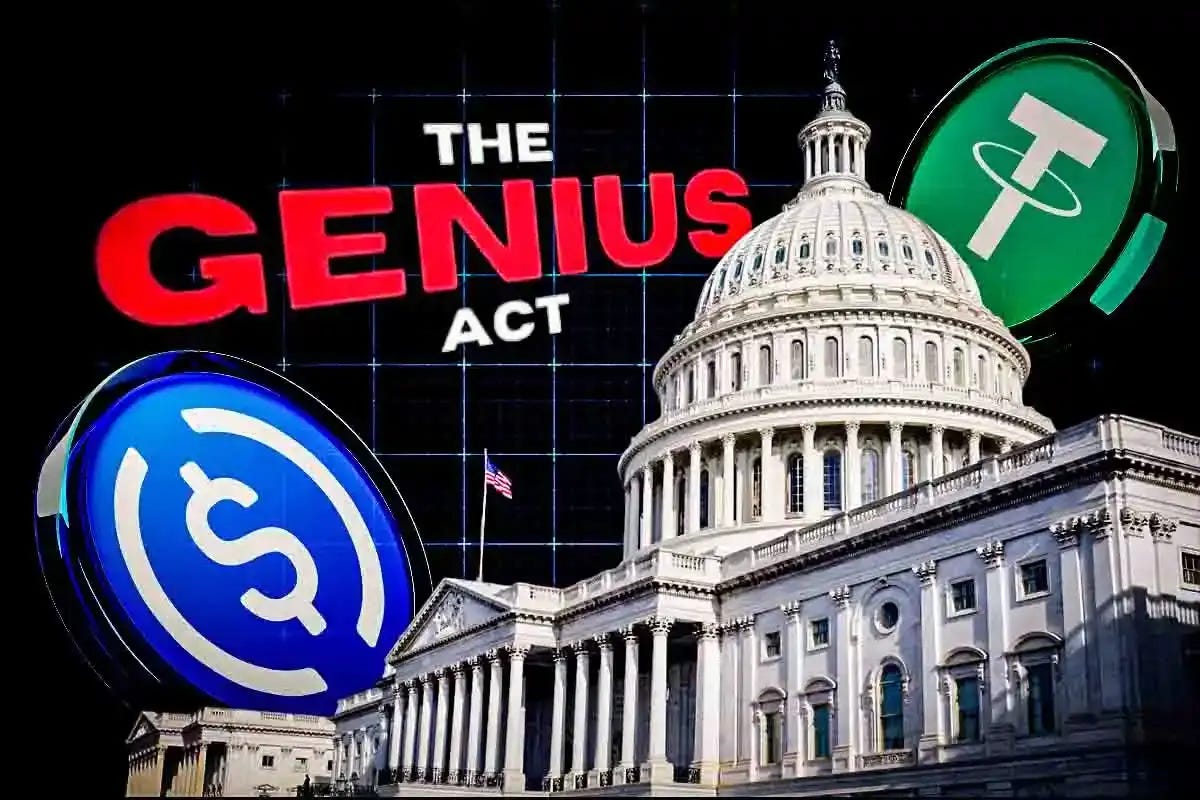
The most consequential regulatory development, however, was the passage of the Guiding and Establishing National Innovation for U.S. Stablecoins Act, (people just call it the GENIUS Act). Signed into law in July 2025, it established the first federal regulatory framework for payment stablecoins, providing long-sought legal clarity for banks, issuers, and payment companies.
Several other jurisdictions, including Canada, Japan, Singapore and even the EU have since followed with similar regulatory frameworks permitting the issuance and use of stablecoins. Regulators have changed the debate from whether crypto could exist, to how it should be integrated.
Incumbents would try to block it
The establishment made no secret about their dislike of Crypto. Who can blame them? Large banks, asset managers, and market infrastructure providers had too much to lose. Crypto threatened their margins and was born with the ethos to disrupt their centralized business model. They used their considerable economic and political power to stop it.
Yet at the same time, many of these financial players kept a watchful eye on the space. As the technology improved and adoption scaled, there was gradually an opening up and willingness to engage. That’s why it didn’t take long between the shift in regulatory environment to these incumbents willingness to embrace it.
In March 2025, Deutsche Börse’s Clearstream announced custody and settlement services for Bitcoin and Ethereum for institutional clients. This integrated crypto assets directly into regulated European post-trade infrastructure, placing them alongside traditional securities rather than outside the system.
A few months later, Standard Chartered became the first major global bank to offer direct spot Bitcoin and Ethereum trading to institutional clients. By embedding crypto into its existing FX and trading franchise, the bank signaled that digital assets were no longer experimental side products, but instruments worthy of balance sheet support and client-facing distribution.
As market access expanded, crypto also began to scale inside traditional investment vehicles. Throughout 2025, institutional crypto ETFs grew materially, with products such as BlackRock’s Bitcoin ETF attracting large, long-term allocations. Crypto exposure increasingly resembled other allocatable asset classes, held in diversified portfolios rather than traded tactically.
There were seemingly announcements of new pilot projects, Crypto ETF approvals or bank policy changes weekly, each more consequential than the last. Including in October 2025 when JPMorgan announced plans to allow institutional clients to use Bitcoin and Ethereum as collateral for loans. This marked a massive escalation from custody or trading. Crypto was now being treated as financeable collateral, eligible for use in core credit and margin workflows. Not long ago Jamie Dimon was loudly calling Crypto worthless. This goes even further than the bank’s prior acceptance of crypto-linked ETFs as collateral, putting digital assets into traditional lending.

Yet arguably the asset managers were the most eager to embrace the technology either as a tool or as an asset. J.P. Morgan Asset Management launched a tokenized money market fund, MONY, on Ethereum. Meanwhile, Goldman Sachs and BNY Mellon partnered on tokenized money market fund mechanics, bringing blockchain settlement into established asset management and custody workflows. Beyond new products, Bank of America and Morgan Stanley announced their advisors would begin suggesting to its clients to allocate up to 4% of their total assets into Crypto.
These legacy financial players aren’t just allowing Crypto a seat at the table, they are actively trying to partner or leverage it as much as they can.
Consumer won’t trust their money to an anonymous network
The Crypto/Defi user experience in the early days was horrendous. It was everything a person can hate when it comes to using money. The products were unusable at times since transaction fees (gas prices) and speeds were too volatile; you couldn’t be sure how long it would take to send your money and how much it would cost. If you didn’t have enough gas money in your wallet, you wouldn’t be able to execute a transaction. For some chains and tokens you couldn’t receive without gas money. If you had an issue you couldn’t pick up the phone and talk to somebody, you would have to search internet forums or Discord channels for help from FAQ sections. If you sent money to the wrong wallet address, well tough luck. You aren’t getting it back.
I could go on for much longer, but needless to say, this would not work for a mainstream audience. I can’t promise none of these problems exist today, but there has been incredible leaps made in the past few years as products kept improving and Decentralized Apps (Dapps) have proven they aren’t all scams. This has played a key role in making people feel comfortable
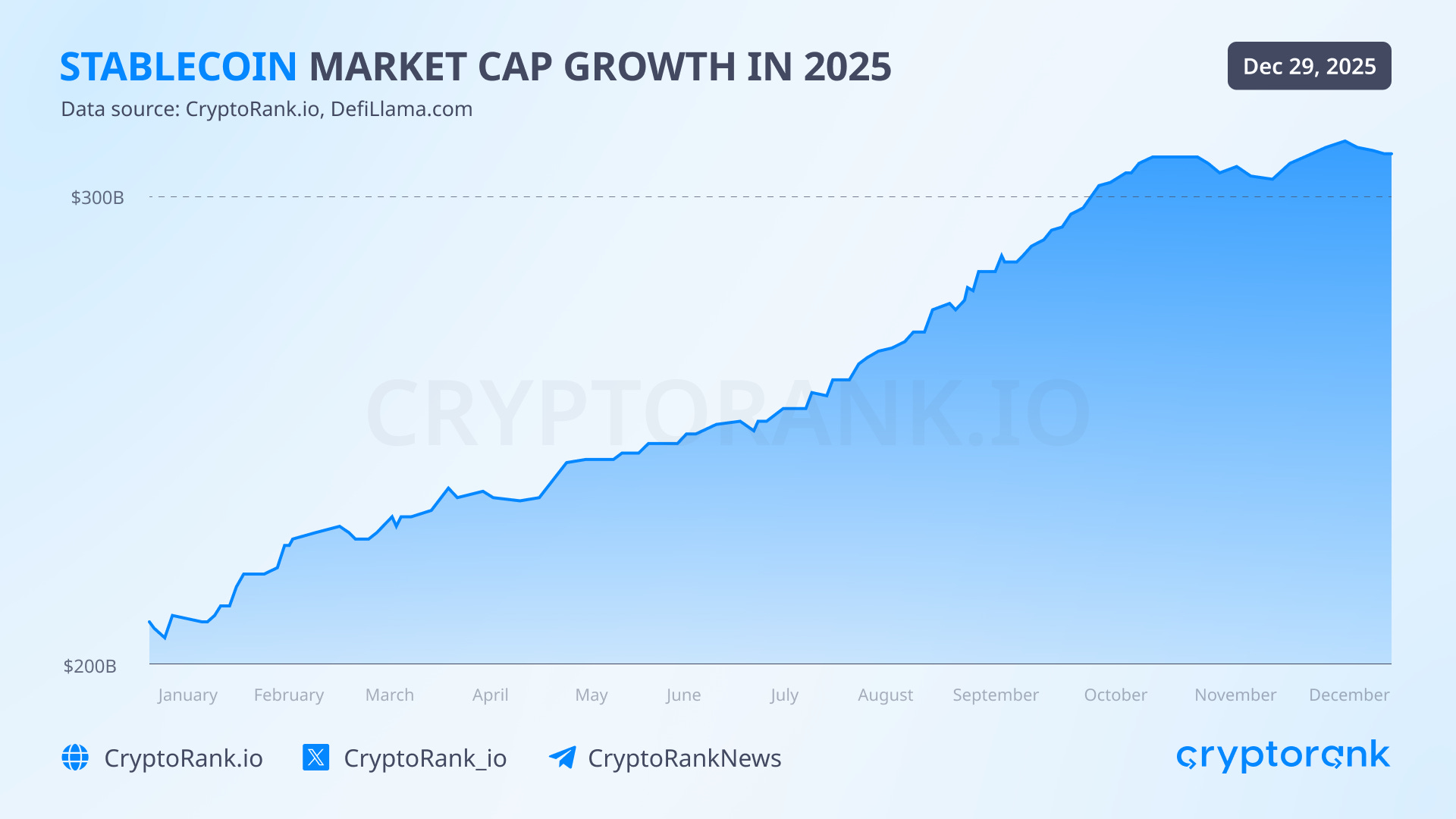
Just look at all the capital moving on-chain. Stablecoin usage reached record levels, with roughly $33 trillion in on-chain transaction volume processed during the year. This wasn’t just trading. Real value transfer, settlement, and payments are occurring on public blockchains at a global scale.
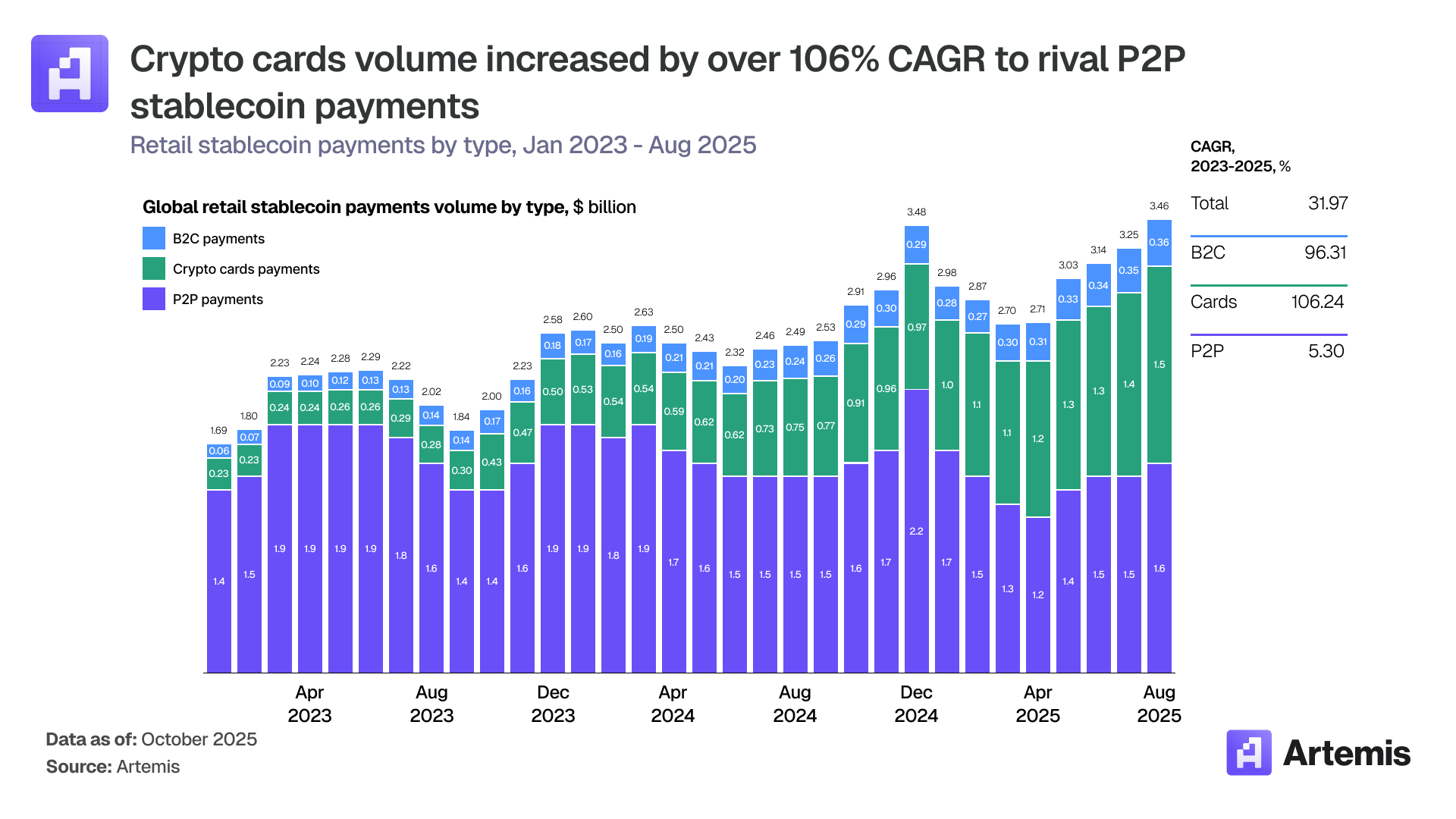
At the same time, on-chain participation broadened. Unique wallet activity increased across major networks, with millions of addresses interacting regularly with blockchains for transfers, decentralized finance, and applications. In 2025, there were 246M unique stablecoin sending addresses and 306M receiving addresses. That’s more than just a few drunk Crypto bros on a Friday night.
Trust also showed up through traditional investment channels. Bitcoin and Ethereum ETFs attracted tens of billions of dollars in net inflows with more to come. Seemingly every bank is now trying to launch their own Crypto ETF. These are regulated vehicles held by retail investors, financial advisors, and institutions allocating crypto alongside equities and bonds. ETF holders aren’t just chasing sh*tcoins they see on X.
Now ~30% of U.S. adults claim to own some cryptocurrency, with a much larger share open to owning it in the future. This is massive considering only around 60% of Americans hold stocks. Whatever people agree with the crypto philosophy or not, a growing number are willing to trust it with real money.
This has moved beyond speculation. Meaningful amount of capital is moving on-chain, more wallets are being spun up and an increasing number of people want to hold Crypto.
Although most consumers don’t fully understand how blockchains work, they don’t understand how banks work either (you can find out here). Few people are willing to abandon their banks to go full crypto native but don’t be surprised if an increasing percentage of people’s assets move out of their mobile banking and on-chain. As On and Off-Ramps improve, and Crypto get increasingly integrated with traditional finance products, we won’t know if we are on-chain or not.
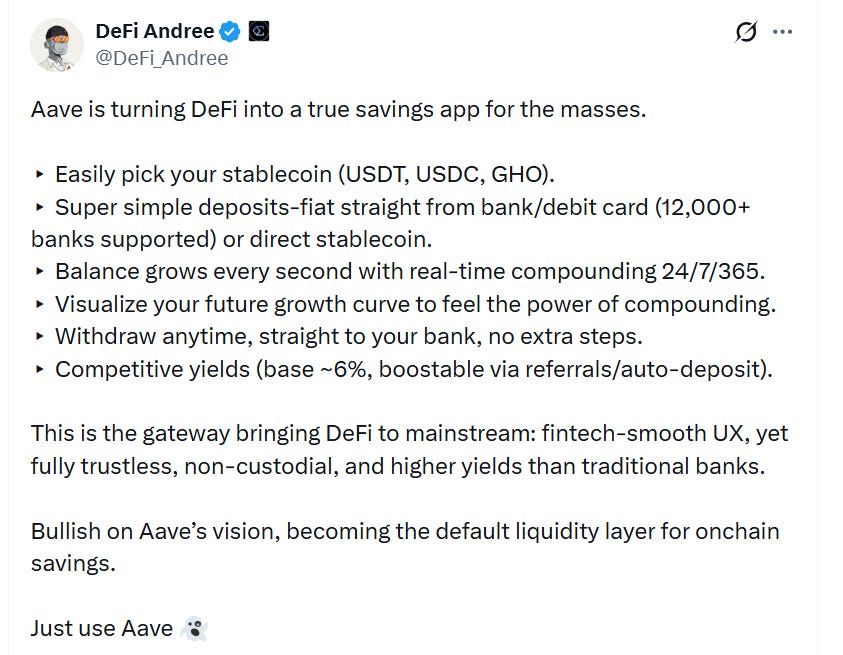
This is already happening. Polymarket did around $20B in transaction volume in 2025, the majority of which was settled using smart contracts on-chain. Prediction markets are expected to soar in 2026 and beyond.
All this proves that the original case against crypto rested on three assumptions, and all have failed. What remains is not a speculative experiment, but a financial technology that is increasingly used, regulated, and integrated.
Thank you for reading. If you liked this article please Subscribe below. I publish articles on a wide range of topics from business, books, current events or anything on my mind.
The more regulation we have, the less people want crypto.
Finally came across another crypto writer and this is quality writing. Great read, thank you.