

Most people are terrible at investing. They like to imagine themselves as Michael Burry or Gordon Gekko, but in reality they’re much closer to Nick Leeson, the rogue trader who single handedly blew up Barings Bank. At least he got played by Ewan McGregor in the movie adaptation. In your case, losing your life savings probably won’t get you an A lister for your biopic.
The truth is most investors don’t know what they are doing. They can’t explain why they bought something, why they sold it, or what caused the price to move. This is long before getting into more complicated concepts like rebalancing or when to cut losses. People aren’t thoughtful with their investments.
This is why “dumb money” retail investors only average about 3 percent annual returns. That’s less than you earn just parking cash in government bonds or a high-interest savings account. Professional investors aren’t much better. Most lag simple index funds they are paid to beat like the S&P 500 or FTSE Global 1000, which deliver closer to 8 to 10 percent annual returns. At least these professionals get to charge handsome fees for their efforts.
Personal finance gurus give the same advice: avoid stock picking, buy index funds and forget about it. For most people this is good advice. Picking stocks takes time, resolve, and discipline. Something in short supply. Even with this success isn’t guaranteed.
Academics will tell you beating the market is impossible. They’ll come up with all types of rationalizations but plenty of investors do it. They’ll say you need to be diversified, however concentrated portfolios often do the best. Experts will tell you to stay fully invested since you can’t time the market, but can you handle the swings?
I can’t guarantee you good returns but here are a few concepts to prevent you from being among the worst if you want to try to beat the market.
Keep reading if you want to learn why conventional investment advice is flawed and what to do instead.
Disclaimer: this is not investment advice, I am not a licensed advisor, insert legal boilerplate language yourself here. Serviceable Insights is a reluctant not-for profit operating without in-house legal counsel.
But first, make sure to hit the Subscribe button to join 1,000+ other Subscribers that get Serviceable Insights delivered directly to their inbox each week.
If this week’s article does not interest you, please check out some other recent ones:


Are you Investing or Trading?
You’ll often see the terms trading and investing used interchangeably but they are different. Trading is generally short term in nature, with traders taking positions based on how they expect the market to move. Investing on the other hand is longer term, and investors take positions based on how they expect the underlying asset to perform over a certain holding period.
Many people consider themselves to be investors, but behave more like traders. If you buy a stock for an AI or Crypto company because you think the price will rocket once other people hear about it, this is not investing. If you decide whether to buy or sell based on price movement charts, you are trading. This type of price movement research is known as technical analysis and it’s about as effective as horoscope predictions. Just like with astronomy, the people who believe in it, will insist on its accuracy no matter what evidence they see to the contrary.

On the other hand if you decide whether to invest or not by reviewing a company’s financial statements, economic data and other information that can impact performance, this is fundamental research and its consistent with investing.
Of course, the line isn’t always clean. A good investor might avoid a stock they like because of recent price action and only revisit it after another big move. Likewise, traders might also do fundamental research and hold positions long enough to look like investors. For the purposes of this article, we’re going to focus on investing and the myths associated with it. This is largely targeted at public equities but can apply to bonds or private market investments as well.
Myth# 1 — It’s Impossible to Beat the Market Over The Long-term
Through two finance degrees and three levels of CFA exams the message never changed. “You cannot consistently beat the market.” At the time the irony was clear. We were dedicating thousands of hours of studying finance to be told try as we might, we won’t do better than the average market return. This is because markets are efficient and all publicly available information is already factored in. “Priced in”. As such, the only way you can consistently beat the market, is if you have an information advantage. Translation. Insider trading. (For you nerds out here, this is known as the semi-strong efficient market hypothesis)
Even if you don’t know much about finance, surely reading this, you have to question how these academics can say things like this. There are countless examples of financiers, hedge fund and mutual fund managers that beat the market for decades. Looking past Warren Buffet, investors such as Peter Lynch, Stanley Druckenmiller and many more have far exceeded the broad based market return for decades. If they couldn’t, investment firms surely wouldn’t still exist could they? Don’t answer that.
Any time one of these academics gets challenged with this evidence they generally dismiss it one of the following ways:
Law of large numbers: With such a large sample size, there are bound to be exceptions, outliers etc. If you put enough monkeys in front of a type writer, one will eventually produce Shakespeare.
It ignores risk: They will concede that some investors may have outperformed the market over a long time horizon but they will argue they failed to do so on a risk adjusted basis (more on that in a subsequent article perhaps).
So to recap their argument. It’s impossible to beat the market long term, however some will do it because with so many people trying, some will get lucky and if more than a few people do it, it’s because they just took on more risk.
That last part is key. Most finance gurus you see on TikTok probably didn’t get that deep into their textbooks, so they stopped at “you can’t beat the stock market”. Now if your goal is to beat the stock market returns of 8-10% historically, the solution is actually pretty simple. Take on more risk.
How do you do that though? Buying lottery tickets won’t help you beat the market. Risk can be measured a few ways but a commonly used measure is Beta. Beta is how an asset changes relative to a market index. If historically when the market goes up 10%, an asset goes up by 20%, it would have a Beta of 2.
High-Beta assets tend to swing harder than the market. In theory, if you want to beat the market, you’d build a portfolio with a Beta greater than 1 when markets are rising, and less than 1 when they’re falling. A perfectly diversified portfolio of every stock would have a Beta of 1. Tilt the weights or exclude certain stocks, and you’ll push that Beta above or below 1. On paper, if your Beta is consistently greater than 1 in bull markets, you should always outperform. Of course, you don’t.
That’s because Beta is measured based on historical price movements. This helps you build a portfolio that will do great on backtests but since we are concerned about the future, this isn’t as helpful. You need to invest based on what you expect will happen.
You need to build a portfolio of position’s that will in aggregate outperform the broader market. This isn’t as difficult as it sounds. Anybody who has been invested in technology stocks since the Great Financial Crisis will have beaten the overall broad market return. Compare the Nasdaq 100 QQQ 0.00%↑ versus the S&P 500 SPY 0.00%↑since 2010 and tech has outperformed the broader market index by at least 4-5% annually. If you were slightly more exposed to tech than the broader market, you would have outperformed. If you were long oil stocks from 2000-2007, you would have also crushed the market benchmark.
Eventually winning strategies will get overbought but you can outperform the market for extended stretches without having to rely on insider trading. Just the willingness to accept higher risk and more concentrated bets. Which brings us to our next myth.
Myth# 2 — Diversification is King
“Diversification is the only free lunch in investing.” — Harry Markowitz, founder of Modern Portfolio Theory (MPT).
After reading about how efficient markets are, if you haven’t already dropped out, you will next be told as an investor you need to maximize return for every unit of risk. In order to do this, you need to find the optimal point on the risk/return curve, where the risk of any individual stock is diversified out, so all that remains is a positions exposure to market risk (Beta).
The idea is simple enough: don’t put all your eggs in one basket and get wrecked in an Enron or Lehman scenario.
Markowitz and his followers argued against concentrated portfolios, recommending at least 20–30 stocks to eliminate company-specific risk. ETFs didn’t exist when he wrote this, but mutual funds and firms like BlackRock, Vanguard, and Fidelity built vehicles that apply these principles. They hold hundreds of stocks and rebalance to keep concentration down. Does this actually lead to better returns?
Given a choice, would you prefer 50 uncorrelated stocks or 5–10 you’re convinced will crush the market? MPT leans toward the former, but history shows the latter often wins. FAANG (Facebook, Amazon, Apple, Netflix & Google) dominated the 2010s, and the Magnificent Seven (Tesla, Nvidia, Alphabet, Meta, Amazon, Microsoft, Apple) has massively outperformed in recent years.
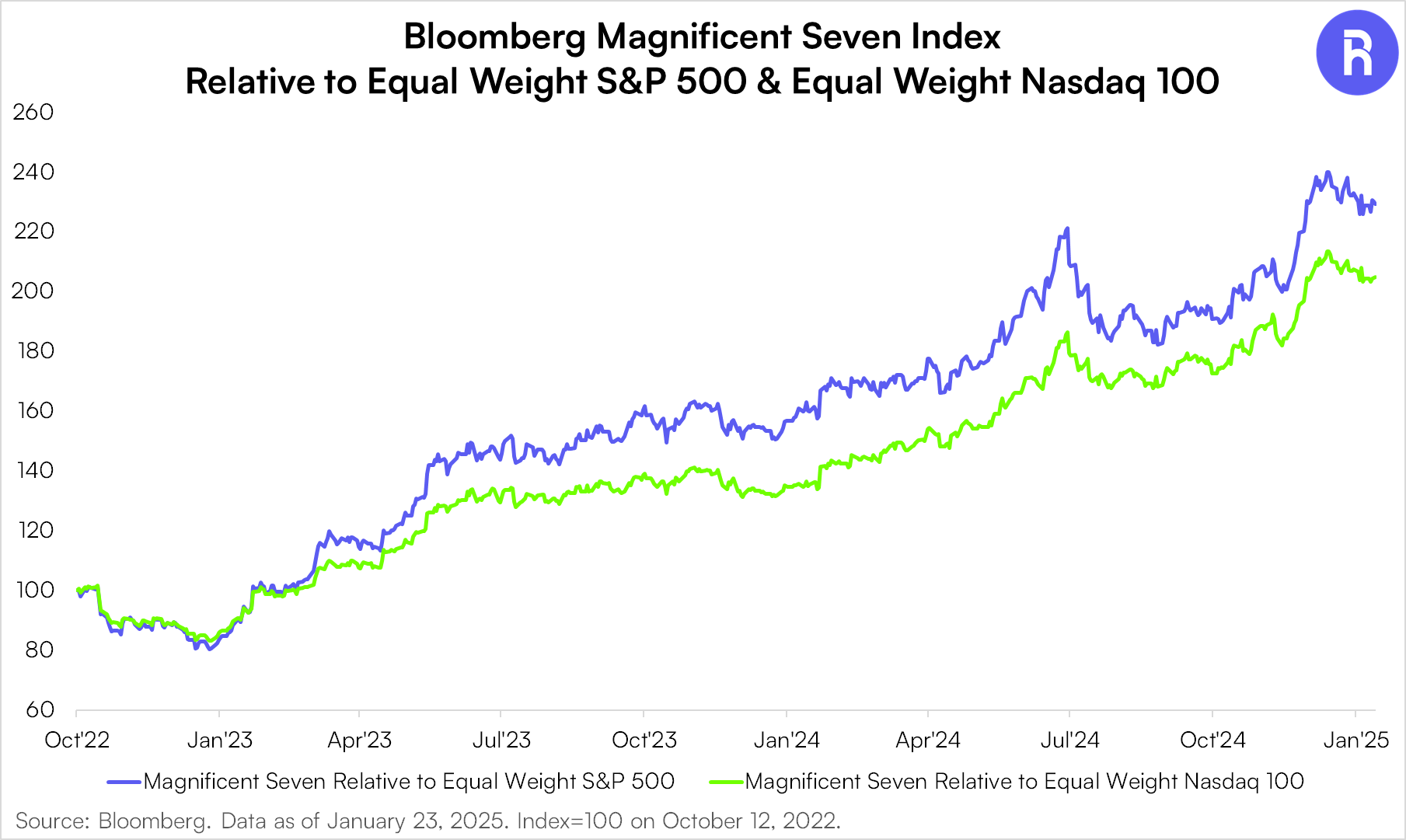
Of course, hindsight is easy. If you’d gone all in on FAANG, you’d have missed Nvidia, Microsoft, or Tesla. Not every tech darling keeps soaring. Check out the stock chart for Cisco or Yahoo!.
Plenty of investors have also blown up chasing the “next Nvidia.” Just owning more names doesn’t guarantee better returns. It often just ensures mediocrity. No one can follow 30 companies closely. Broaden too much and you dilute conviction. Buffett once said to invest as if you had a 20-slot punch card for life. With so few bets, you’d research harder and size positions meaningfully. If you knew a coin landed heads 80% of the time, why waste money betting tails just to be “diversified”?
If you’ve found a genuine edge, you shouldn’t just want its market exposure (Beta), you should want the company-specific risk too. Diversifying for its own sake pulls you toward market-like returns. If your goal is outperformance, pick your best ideas with conviction. If not, just buy the index.
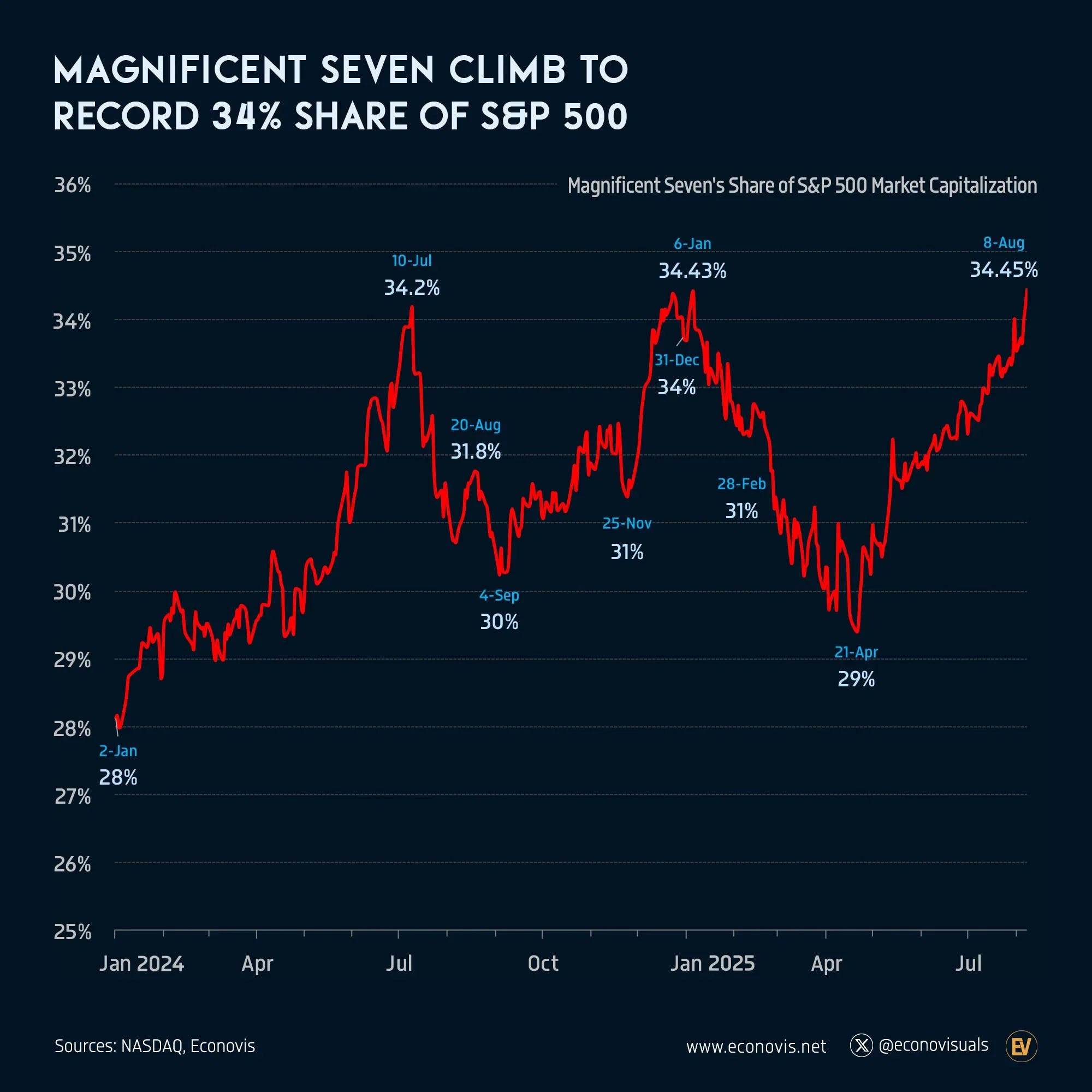
Ironically as I write this in 2025, The MAG 7 represents more than 30% of the entire S&P 500 market cap. Therefore this really begs the question. Is diversification really the free lunch we think it is, or just a way to prevent you from ever crushing the index? If the index funds themselves aren’t even that diversified anymore are they even worth holding? Whatever could you do…
Myth# 3 — Stay Fully Invested or Miss Out on Returns
Many experts will tell you it’s impossible to time the market. Nobody can confidently predict where the S&P 500 will be 12 months from now, and if you’re a long-term investor, it supposedly shouldn’t matter. Stay invested, let compounding work, and don’t pull out.
The logic behind this can make sense but keep in mind, finance professionals get paid based on their Assets Under Management (AUM), therefore if their clients don’t commit or deploy capital, they won’t get paid. So they don’t want you to pull out.
It’s true you can’t know the exact market level a year from now, but you can judge conditions and decide whether they look favorable. The bigger problem for most investors isn’t analysis but their psychology. Investors are not the rational decision makers economists believe them to be. People swing between euphoria and panic at the drop of a hat. When markets rise, they believe they’ll never fall. When markets fall, they panic-sell and miss the rebound.

Realistically the best you can hope for is to save you from yourself. Instead of sitting in front of your screen watching the ticker like a crazy person, you are better off making pre-determined decisions when you are in a calm rational state. We discussed this in our recent series How To (Actually) Think Clearly & How To Build Mental Strength.
When you aren’t liking the look of things, there is no shame in taking a step back, take some gains, cut some losers and re-base. Instead of having your entire portfolio invested during uncertain times, keep a portion invested, the rest in cash (or money market funds) and re-deploy into your preferred positions over a pre-determined set of months (6, 12, 18 whatever). This method is called Dollar Cost Averaging (DCA). The premise is pretty simple; if the market climbs, your earlier positions will go up and your newer deployments will be at a higher price. You would have missed out on some gains but the market is up so you can’t be too upset.
If the market drops, your new positions will be lower. By the time your deployment period is over, with luck your positions will be rallying or at least down less if you fully deployed before the selloff. Critics will counter over the long term the difference between DCA and full deployment nets out, but this claim can be easily data mined, since entry position matters.
You might not know this, but generally you should try to buy low and sell high (this is why you Subscribe to Serviceable Insights). In a perfect world you will know exactly when the low and high-point will be but unless you have a crystal ball you probably don’t have that luxury. DCA is at least a way to calm your nerves and reduce timing risk.
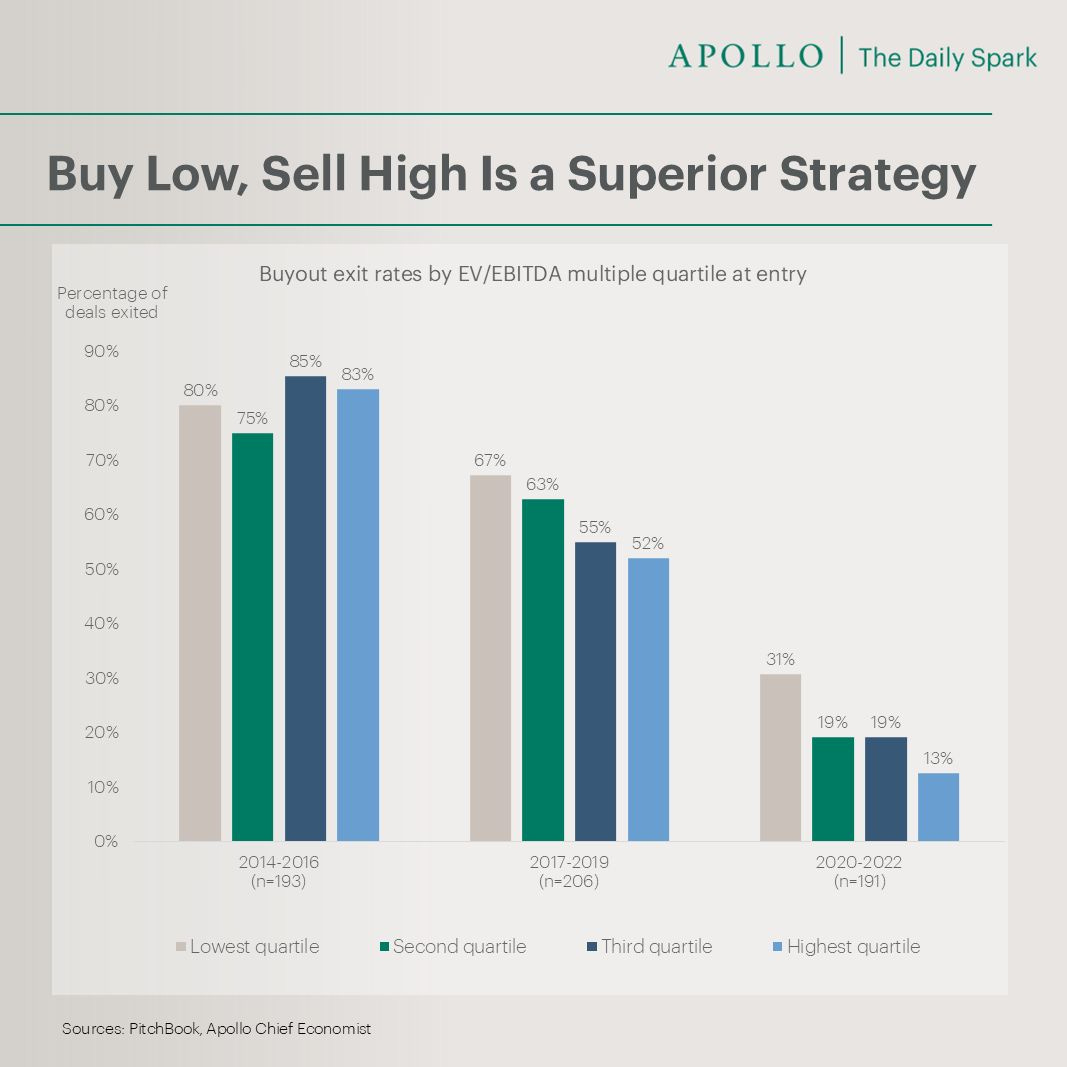
(This is a real chart Apollo put out this week )
Another tool you should use are stop loss orders. You can think of a stop as a trip wire; once a certain price point is reached, your market or limit order to buy or sell gets activated. Stop loss orders should be used in conjunction with a few other decisions such as:
Starting entry price
Exit price if you’re right
Exit price if you’re wrong
How long you’re willing to wait for either scenario
Start your stop loss near entry, then raise it as gains build. On volatile names, you might set it slightly below entry to avoid getting shaken out too quickly. Yes, stop losses can sometimes lock in pain before a rebound, but they also prevent catastrophic drawdowns.
If you are a believer in the asset you hold, an occasional selloff shouldn’t shake your resolve, but at the same time accept despite your confidence you might be wrong. You need a mechanism to control when things don’t go your way. Especially if you are holding a concentrated portfolio ripe with company specific risk. In Avoid Ruin with The Precautionary Principle: An Introduction To Nassim Taleb, we introduced some of Nassim Talebs risk principles. As an investor you want to ensure you don’t expose yourself to the risk of blowing up. This is why you should avoid trading on margin, writing derivatives, going short or leaving positions open without any stop losses to avoid losing all or your money.
You don’t need to master exotic strategies. You just need to structure positions so you’ll never lose more than you can stand. Sometimes that means not being fully invested, and that’s okay.
Conclusion
This article discussed why the biggest myths in investing are exactly that, myths. You can’t beat the market, you must always diversify and you should never hold cash are comforting stories that really only benefit investment advisors that gain from their clients who believe this. If your goal is to beat the market, you can’t invest like the market.
You need to think differently: accept risk when you have an edge, focus your bets instead of spraying them everywhere, and protect yourself from ruin with rules you set in advance. Most people won’t do this. They’ll keep chasing hot tips, diversifying into mediocrity, and holding through crashes with no plan.
That’s why most investors will never beat the market. There’s no shame just investing in index funds but if you decide to try to beat the market, you should learn to do it right.
“You've got to know when to hold 'em, know when to fold 'em,
Know when to walk away, know when to run.
You never count your money when you're sittin' at the table.
There'll be time enough for countin' when the dealin's done.”
Thank you for reading. If you liked this article please Subscribe below. I publish articles on a wide range of topics from business, books, current events or anything on my mind.
If you want to check out real investment experts on Substack, I suggest
Among others.
Solid breakdown. Most people want the comfort of diversification and staying fully invested, but that comfort usually just guarantees mediocrity. The edge is in knowing when to concentrate and when to step back — and having the temperament to actually follow through
Super thanks for the mention! Made my day! And great write up, I like how the myths you lay out all come back to trade-offs, the ones we have to reconcile before making the real trades.