Every year we ask ourselves the same question: where did summer go?
After a long winter and an increasingly short spring, the start of summer is marked by full golf courses and tennis courts, lakes filled with boats, and 45-minute lineups for terrasses. You make all these exciting plans. The places you’re going to travel, the friends you’re going to see, all the late nights and lazy days at the cottage. Then, seemingly about a week later, people are already talking about Labor Day.
It doesn’t matter if you spent the summer island hopping around Greece, discovering hidden gems in the Balkans, or chained to your desk churning out PowerPoint decks for your MD while they are busy doing business development in Saint-Tropez. This is a surprisingly universal experience.
You aren’t getting gaslit. At least not about this. There are physics and psychological explanations for why three months can feel dramatically shorter.
First the way we think about time is wrong. Most imagine something resembling a giant grandfather clock in the center of the universe ticking at a perfect Patek Philippe cadence capturing the passing of time. That’s not how time works.
There isn’t a universal clock, time passes at different rates based on a variety of factors such as gravity, velocity or location. A second elapses at a different speed for somebody underground compared to somebody aboard an airplane, on top of a mountain or trying to hold a plank position. The difference isn’t massive so digging a hole and living like groundhog won’t help you outlive Bryan Johnson.
There is not a universal time that everyone subscribes to. Even without Daylight Savings Time or time zones, humanity still would not be on the same time. This is still not an excuse for your friends to be consistently late for everything. The only way to end this, comes from a suggestion from FT. Invoice people when they show up late. People will become punctual very fast or stop returning your calls.
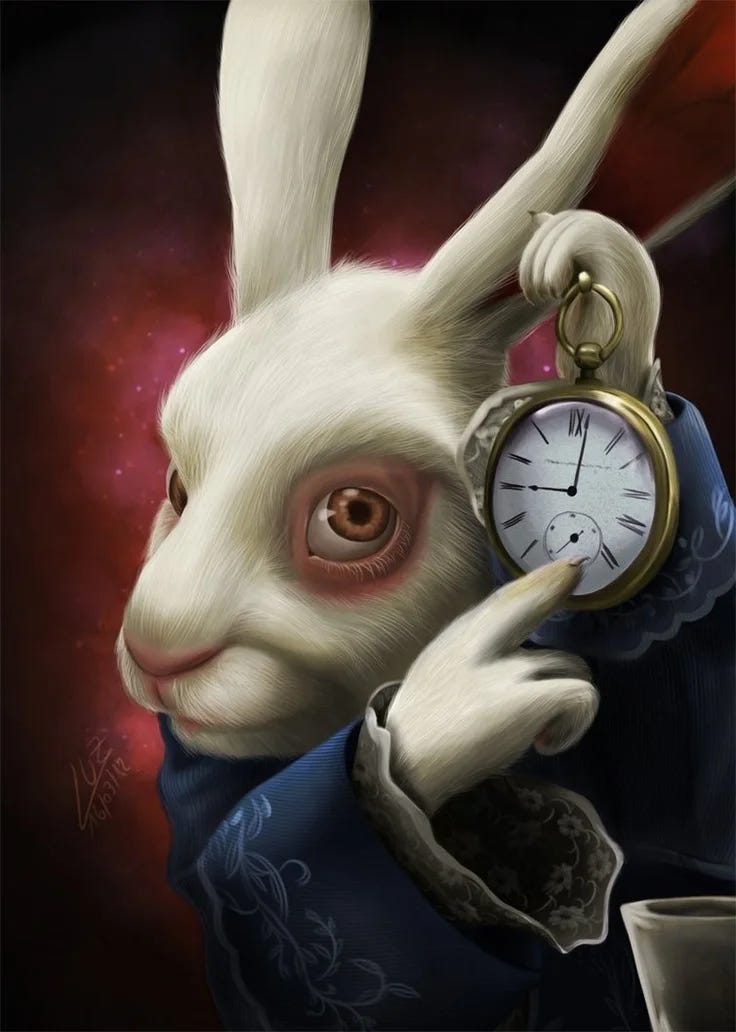
We’ve established that there is not a universal time and it doesn’t move at the same pace for everyone, but our understanding of time is still backwards. Our mental model usually grasps time as the independent variable which causes everything else to happen. Time moves forward which causes ice to melt, grass to grow, the arm of a clock to tick etc. This is also wrong.
We aren’t observing time, but rather how an entity changes. We see grass growing which captures the passing of time. The arm of a clock moving depicts a change which we interpret as time moving forward.
If you were locked somewhere without clocks, sunlight or any other reliable indication of the time, estimating how long you had been there would be surprisingly difficult. French researcher Michel Siffre tested this in 1962 by living alone in a cave without a clock, calendar or sunlight. When September 14 arrived, he thought it was August 20. He lost track of almost a month.
Tldr: Change is what gives time meaning.
(If you find this topic interesting, check out The Order of Time by Carlo Rovelli)
There’s a common belief that the way you experience time changes as you get older. This traces back to a theory from by Paul Janet in 1877. Janet proposed that we experience a period of time relative to how much life we have already lived. The logic is that for a ten-year-old, a year represents 10% of their existence. For a 50-year-old, it represents 2%. Each additional year therefore represents an increasingly smaller proportion of your life.
Additionally since you have more experiences your brain to save space, batches information together it doesn’t think is useful. That’s why you can’t remember every single day you’ve gone to the office, only the days something out of the ordinary happened. Your brain is designed to notice contrast. If every day is virtually the same, it’s as if you are stuck in a groundhog day loop. If every day is completely different, your brain won’t be able to batch things as easily.
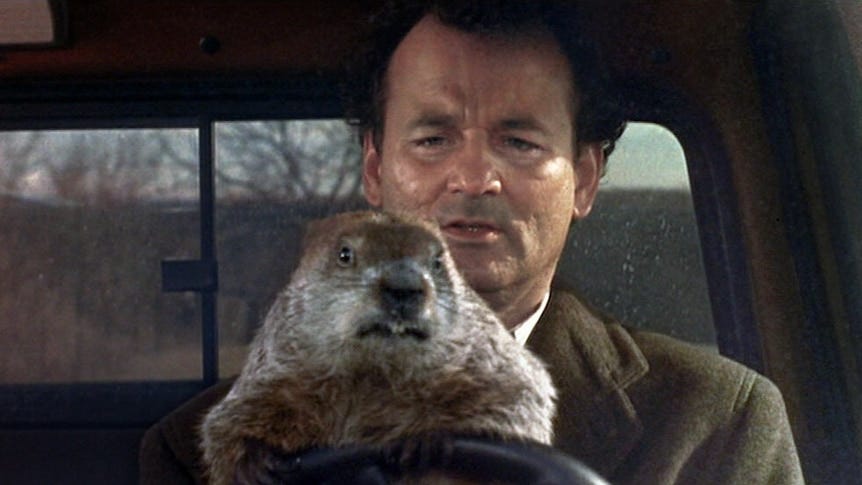
This is the disadvantage of a routine. It makes each day more similar because it’s efficient, and reduces decision fatigue. The downside is each day blends together so time feels like it’s passing together and when you look back, you don’t notice how quickly time passes. That’s why when you travel and you are constantly shifting environments, beach, mountains, forest, city etc. Your mind has to process and distinguish the environments creating the contrast. This explains why it’s possible for the paradox of feeling like you’ve been on vacation for a long time while the trip is going by quickly.
This is also why time flies when you are having fun and it can feel like time has stopped when you aren’t doing anything. You have no distraction or any change to observe. If every day felt the same, then your brain will batch them all together.
Which is why whether you had a busy summer or not, it likely flew by.
Thank you for reading. If you liked this article please Like, Comment and Subscribe below.