

“The Securities and Exchange Commission today charged Silicon Valley-based private company Theranos Inc., its founder and CEO Elizabeth Holmes, and its former President Ramesh ‘Sunny’ Balwani with raising more than $700 million from investors through an elaborate, years-long fraud in which they exaggerated or made false statements about the company’s technology, business, and financial performance.” — SEC, March 2018
Cheating is commonplace. You’ve done it, and you’ve probably seen or suspected someone else doing it too. People cheat regardless of the stakes. Some do it for fame, fortune, or a faster route to success. Others cheat because they believe the game itself is unfair, that they have to bend the rules just to compete. Some don’t even see their actions as cheating at all. For others, it’s simply not wrong. Which category a cheater falls into is something only they can know.
Last week, I watched a grown man claim to have parred a golf hole after hitting his ball out of bounds twice. Everyone in the group knew he was lying, but he confidently told us to “put him down for a four.” No money was on the line, just pride. His ego, I suspect, couldn’t bear to admit it took nine strokes to finish the hole.
Some will argue what’s the harm? If nothing is at stake, why not let someone protect the story they tell themselves? It’s a victimless crime, right?
The obvious answer is that cheating is wrong, but that answer is far too simple for how often it happens. People rationalize, justify, and moralize their behavior in countless ways, all of which ultimately orbit the same idea: the ends justify the means. Philosopher kings and queens can shop around until they find the right moral justification which eventually boils down to “the ends justifies the means.” Philosophers have debated that premise for centuries. This has kept many tenured academics employed and able to afford expensive vacations for decades.
We don’t have that much time for today’s article but will investigate motivates people to cheat and determine if it’s always bad. Is cheating ever victimless?
Keep reading if you want to understand the benefits and drawbacks of cheating!
But first, make sure to hit the Subscribe button to join 1,000+ other Subscribers that get Serviceable Insights delivered directly to their inbox each week.
If this week’s article does not interest you, please check out some other recent ones:


What is Cheating?
Cheating is when you explicitly break a stated rule without suffering the consequences. Moving a golf ball, crossing on a red light or forging numbers on a tax return are all unquestionably against the rules whether you agree or not. Failure to comply is illegal and carries penalties if caught. If you break a rule and accept the punishment, then you didn’t cheat but few people volunteer themselves for consequences when they aren’t caught.
Therefore we can define cheating as intentional rule breaking with the intent to avoid consequences.
Yet most of us break rules every day, sometimes without realizing it. There are countless laws and regulations, many of them outdated or obscure. Countries are littered with some that are centuries old. There are entire websites and Twitter accounts dedicated to this. People don’t necessarily break laws because they are dishonest. Sometimes it’s ignorance, but often it’s because there’s no deterrence. If there’s no consequence to breaking a rule, people won’t try too hard to follow it.
Therefore if there are no consequences to breaking a law, is it really cheating? It’s the responsibility of the governing body to define both rules and punishments that preserve the integrity of the system. If no consequence is attached, then deterrence clearly isn’t a priority. If there were no penalty for speeding, how many people would still follow the speed limit?

Some groups are more naturally compliant than others (see Germany) but rules only matter if noncompliance carries a cost. Penalties can come from two places:
The governing body (police, legal system, referees, home owners association etc.)
Other participants (Other citizens, members, players, home owners etc.)
If the governing body has made the rules clear and enforces them fairly, participants can’t claim ignorance. The rules must not only exist but also be enforced. When people feel it’s impossible to get caught, or that the consequences are mild, people won’t follow the rules.
Sometimes, adherence falls on other participants. This is why fighting is part of hockey. When players feel an opposing player did something that can’t be rectified by a penalty from the referees, they take matters into their own hands. They will expect the player to answer the bell by fighting, which serves as a pressure release valve, before players can move on with the rest of the match.
Private member clubs keep members aligned in similar ways. They may not break into a fist fight or challenge each other to a duel, but the threat of being blackballed or socially ostracized is a far greater deterrent than anything the club will punish them with.
The intent to avoid consequences is crucial. If someone voluntarily admits they broke a rule, they aren’t necessarily cheating. In golf, players often take penalty strokes to move their ball out of an unplayable position. In business, companies sometimes decide to pay fines rather than comply with a costly regulation. Neither is cheating unless they’re hiding the infraction to avoid the penalty.
Therefore, cheating is when somebody tries to break the rules without suffering the appropriate consequences but sometimes rules aren’t so cut and dry.
Grey Areas, Ambiguity & Gaining an Edge
If you ever speak to a lawyer, tax advisor or religious leader, you quickly learn there are few laws that are black and white; most operate in a grey zone that are highly context depend. This is why McKinsey consultants rarely give a straight answer. They usually first respond with “It depends”. Then charge for 1,000 hours of work to verify that trash cans are the best way to dispose of garbage.
As such, even our earlier maxim “Cheating is when you break the rules” doesn’t actually prevent that much.
In my youth, I played a bit of backgammon. I wasn’t great but I would wreck beginners. One of my regular opponents, was a friend that was new to the game. He considered himself to be far intellectually superior to me and everybody else. This wasn’t completely unfounded; he was very smart. Still is.
Unfortunately for him, this intellect wasn’t enough to avoid the beatdowns he would suffer from my hand. However, I noticed anytime he was falling behind, he would start loudly tapping on the table. He would do this intermittingly but increase the frequency during my turn. He was clearly trying to disrupt my concentration, hoping this might make me slip up.
Now there isn’t an explicit rule saying you can’t loudly tap the table during somebody’s turn. It’s poor etiquette but you wouldn’t be disqualified for doing it. Instead your opponent might have choice words for you or possibly hurt you physically (it doesn’t take much in heated matches). This is why other participants might feel the need to dish out penalties when they feel governing body missed something.
Of course, not everyone agrees on what qualifies as cheating, and not everyone wants to play the role of moral arbiter. As a result, many of these small transgressions go unpunished.
This leads to the real question: Where is the line between cheating and exploiting the rules?
Most people stop short of breaking a rule that carries real consequences or they make sure to do it when no one’s looking. Large corporations hire armies of lawyers and tax advisors to hunt for ambiguity, pushing every boundary they can find. They know only a small percentage of rule-breakers ever get caught, but those who do and lack plausible deniability are made examples of.
While most people agree that cheating is wrong, fewer will condemn taking advantage of vague or unspoken rules. In competitive environments, when the stakes are high, people will grasp at anything that offers even the slightest edge.
A philosopher or a game theory specialist might say you need to assume that everybody else will try to take advantage of ambiguous rules, so by not attempting this you are putting yourself at a disadvantage. Lance Armstrong and other Tour de France participants will argue this is why they needed to take performance enhancer drugs.
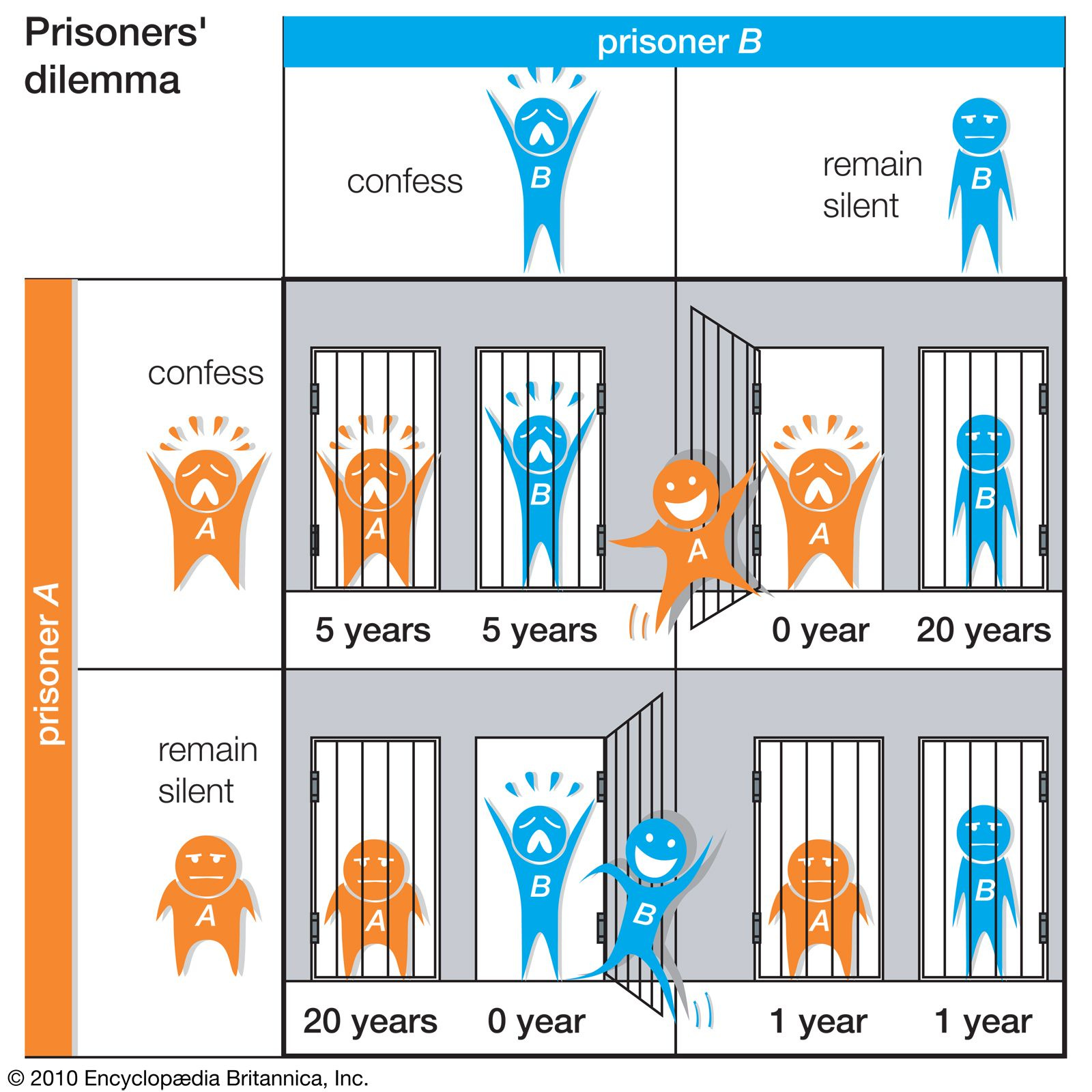
They would argue if the governing body hasn’t clearly defined what counts as a rule violation and actively deter it, they must consider this behavior permissible and acceptable.
Following this logic, it’s not illegal to cheat on your spouse (in most countries), but try explaining to them after you’re caught that they never clearly stated the punishment or didn’t do enough to prevent it. Let me know how that conversation goes.
Only the Weak, Deceitful & Insecure cheat
People cheat because they don’t trust themselves. When you are secure in your abilities, in your craft, your preparation, or your sense of self, you do not feel the need to manipulate the outcome. You can live with whatever happens because you know it reflects reality, not your worth.
Cheating is always an act of insecurity. It is the quiet confession that you do not believe you can reach your objectives within the rules. That insecurity is not limited to the underdog. Even the greats fall into it. Barry Bonds did not start taking steroids because he was bad at baseball. He did it because he feared being outshined. Lance Armstrong did not cheat because he was weak, but because he could not stand the idea that someone else might win La Tour de France. Cheating is an admission that you can’t handle the truth.
A secure person does not fear truth. They accept it as feedback. Losing does not humiliate them because it does not redefine them. Their value is not bound to results. It is bound to effort, growth, and integrity. That is why the most confident people are often the calmest under pressure. They have already made peace with the possibility of failure. Many great warriors of the past didn’t fear death on the battle field but they embraced it. The Vikings dreamt of a death worthy of Valhalla. The Spartans believed death on the battle field was the most noble way to perish. They were not shamed if they encountered a greater foe or lost because it was simply their time to die.
The insecure, by contrast, are terrified of facing reality. They need to control perception because their identity depends on it. Cheating gives them the illusion of mastery, but it is hollow. Pride in a victory you did not earn is fleeting. Even if they do achieve their goal, they will forever need to live with the sense of doubt if they could have won without cheating, further fueling their insecurity.
You see this dynamic everywhere. In sports. In business. In politics. The need to cheat does not come from hunger; it comes from fear. Fear of being seen as ordinary. Fear of being left behind. Fear of realizing you might not be as exceptional as you hoped.
This is why somebody that needs to resort to cheating is simply weak, deceitful or insecure. In other words: fragile.
This idea runs through the show Succession. Kendall Roy, can never be king because he’s not a killer. He lacks confidence. Beneath his polished exterior, he’s consumed by doubt. Everyone around him sees it, which is why they don’t believe in him either. Kendall ties his entire identity to becoming CEO of Waystar Royco, and when he can’t reach that goal on merit, he turns to manipulation and underhanded tactics hoping to compensate for what he lacks. His tragedy is ironic: If he were capable and secure, he wouldn’t have to resort to cheating and playing around in ambiguous grey areas. He would have achieved his goal, negating the need for the entire series.
Kendall Roy is a fictitious character but you see plenty of similar tragedies with people such as Elisabeth Holmes, Barry Bonds, Charlie Javice and half the Forbes 30 under 30 list. Their obsession with protecting the image they created pushes them to cheat and destroy their reputations. Instead of being content with being very good, they need to be the best. If they actually believed they were, they would not have needed to lie or commit fraud to prove it. The paradox is that they are both certain they are exceptional and terrified they cannot prove it without breaking the rules.

These might seem like extreme cases, but the same psychology plays out in smaller arenas. On any golf course, you will find players lying about their scores even when nothing is at stake. No money, no fame, no real consequence, only ego. They cannot bear to admit their handicap is higher than they claim. For the time, money, and effort they have invested, they should be better, or at least suck less than their rival Fred.
People cheat because they cannot accept the truth that they are not yet the person they believe, or wish, they could be. The culprit is pride.
Even Alexander The Great was not immune to this. He could not accept defeat to the Gordian knot, as it would have signaled he was not the future conqueror of Asia. As he had decided he would conquer Asia, he could not be defeated by the knot, therefore he simply cut it. He knew this was against the tradition but he also refused to let a barrier stand in his way. Cutting the Gordian knot, permitted him to fulfill his legacy, but by doing so, he acknowledged he lacked the ability to untie the knot in line with the tradition.
Did this action ultimately ruin his legacy? Certainly not. It showed Alexander was a human, with a large sense of pride and the need to achieve ambitious goals he set for himself. He didn’t suffer any consequences, indicating that any person was free to destroy this knot at any time. They would just need to be able to live with themselves afterwards.
Perhaps Alexander was at peace with that choice when he died. Only he could know. For everyone else, those not conquering Asia but instead inflating retention numbers to sell B2B software or shaving strokes off a golf card, the lesson is simple. Stop cheating, stop lying to yourself, and focus on being the best version of who you actually are. That is the only victory worth claiming.
Holmes, Armstrong, my annoying friend and the cheating golfer were all trying to protect a version of themselves they could not live up to. The real punishment for cheating is not the fine, the suspension, or the scandal. It is the quiet knowledge that you were not honest enough to face yourself. The world can forgive a loser. What it never forgets is a fraud.
Thank you for reading. If you liked this article please Subscribe below. I publish articles on a wide range of topics from business, books, current events or anything on my mind.
Nice grappling with a difficult issue, Ben. And I agree with your main point, which I would frame as the importance of living in reality. But it seems to me you only got a start on distinguishing cheating from insecurity from rule-breaking for other reasons, often also labeled "cheating."
I had a friend long ago who had to ship some hazardous material to a disposal site in California. If he followed California regulations, he would be violating both DOE regulations and EPA regulations. An DOE and EPA regulations were contradictory. So no matter what he did, he would be "cheating" according to 2 out of 3 agencies with authority.
The purpose, safe disposal of the waste, was worthy no matter which rules he broke. I myself broke dozens if not hundreds of administrative rules in my time within a big bureaucratic research lab, with the intent of producing something worthwhile. The bureaucrats in charge certainly would have viewed that as cheating. I didn't care; If they wanted to fire me over it I could find something else to do.
As to my friend, he followed CA regulations. They had the cops.
So true, most cheat or resort to trickery because they do not have the will and strength to confront the demands of reality, worse still if they don't admit weakness.
Super coincident my latest piece touches on succession too! 🙏