

Why do the Yankees always win? No, not because of Mickey Mantle, Mariano Rivera, A-Rod, Aaron Judge or whomstever. It’s because their opponents are too focused on the pinstripes1.
If this truism confuses you, it should. This logic only makes sense to con artists. Their act relies on deception, to others but most importantly themselves.
Deception happens everywhere. In the dating world, on social media, in professional settings but the highest stake deception relates to financial fraud to the tune of hundreds of billions each year.
You don’t understand banking or fintech unless you can identify all the ways a malicious actor can exploit them. Few people understand the financial system.
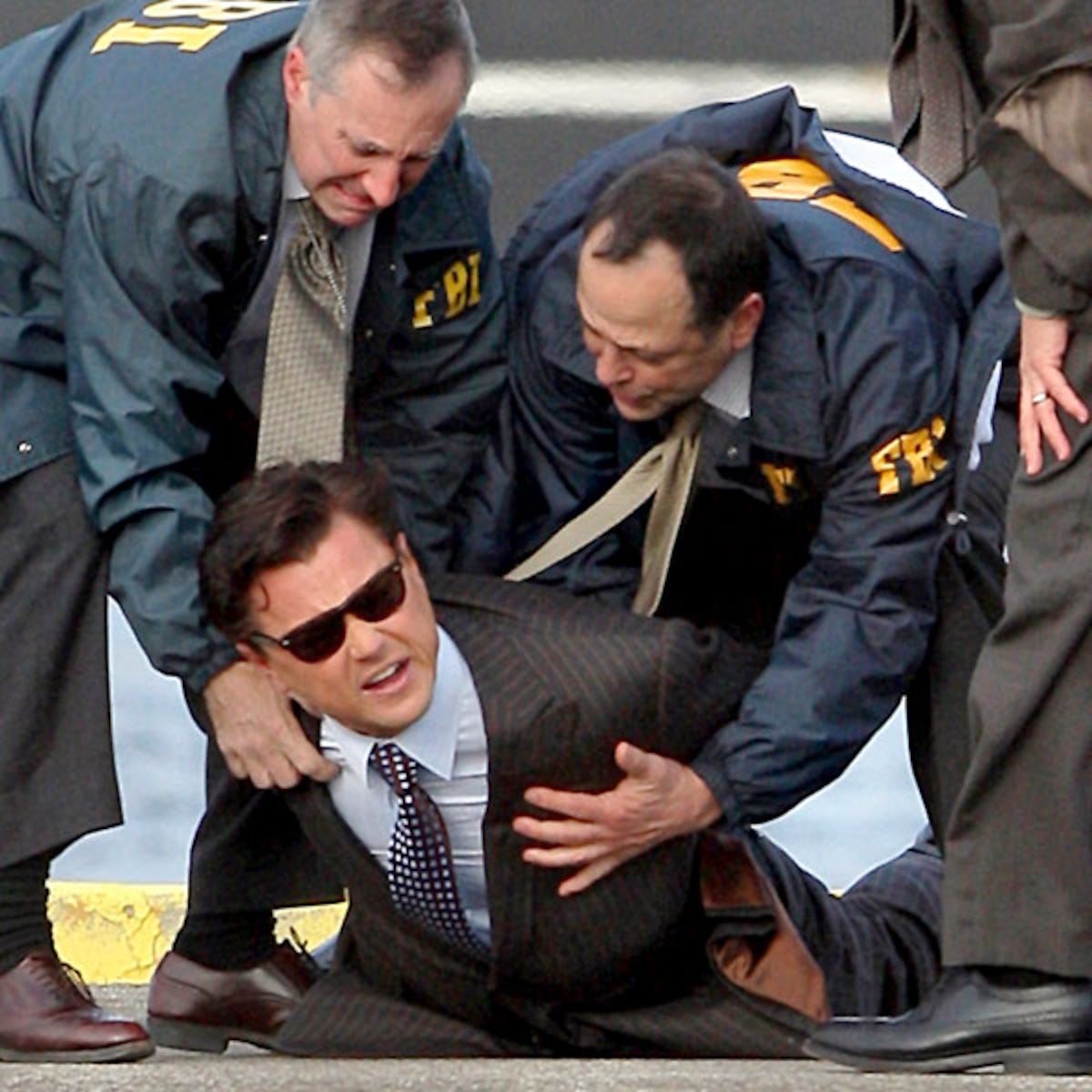
Most remember the film Catch Me If You Can as a cat-and-mouse game between two men who get it. Frank Abagnale Jr., played by Leonardo DiCaprio, is a teenager who manages to defraud banks of millions of dollars before his 19th birthday. Carl Hanratty, played by Tom Hanks, is the FBI agent assigned to track him down.

At its core, the film is about duplicity. Abagnale is the walking embodiment of the George Costanza maxim: “It’s not a lie if you believe it.” Combined with a strong instinct for identifying vulnerabilities and a burning desire to succeed where his father failed, he is a dangerous and highly successful con artist.
Outside of duplicity and the relationship between Abagnale and Hanratty, the film is a lesson on how the banking system works and how it used to rely on trust. As banking has gone global, fraud has become more widespread and it has become harder for financial institutions (FIs) to trust customers.
The late 20th century was centralization. Taking individual discretion out of local branch managers hands, instead putting it in software credit scoring systems (mostly just Excel). The crypto solution is decentralization and transparency. Both approaches have failed thus far, because fraudsters keep finding new vulnerabilities.
As long as money, incentives, and human weakness remain part of the system, there will always be Frank Abagnales. This article is about why fraud never disappears, despite the financial systems best efforts.
In case you missed them, here are some other recent articles to check out:


What are Con Artists?
While often depicted as attractive and oozing with charisma, confidence men and women come in various forms. Methods can vary but con artists look to exploit vulnerabilities, often psychological, to manipulate people.
To run a successful con, the victim needs to buy into the story they are being sold.
If you saw a beggar on the street asking for money while dressed in designer clothing, it wouldn’t align with your mental model of what a beggar would look like and you would question their legitimacy.
On the flip side, in Tenet, The Protagonist needs to convince people he’s a billionaire but as Michael Caine points out, Brooks Brothers won’t cut it.
Like an actor, con artists needs to walk, talk and dress the part. The better you do this, the more believable you will be, making it easier for people to accept your story.
There are countless complicated schemes, hustles and plays they might run to achieve this aim but it all comes down to deception, in order to manipulate.
In the case of Catch Me If You Can, Abagnale’s schemes are fairly straightforward. He identifies easy marks, often young single women and distracts them with his charm. At first he poses as an airline pilot with the aim of cashing fraudulent checks, amassing millions of dollars (in 1960s dollars). Then he decides to pose as a doctor then later a lawyer, all to impress a girl he meets.

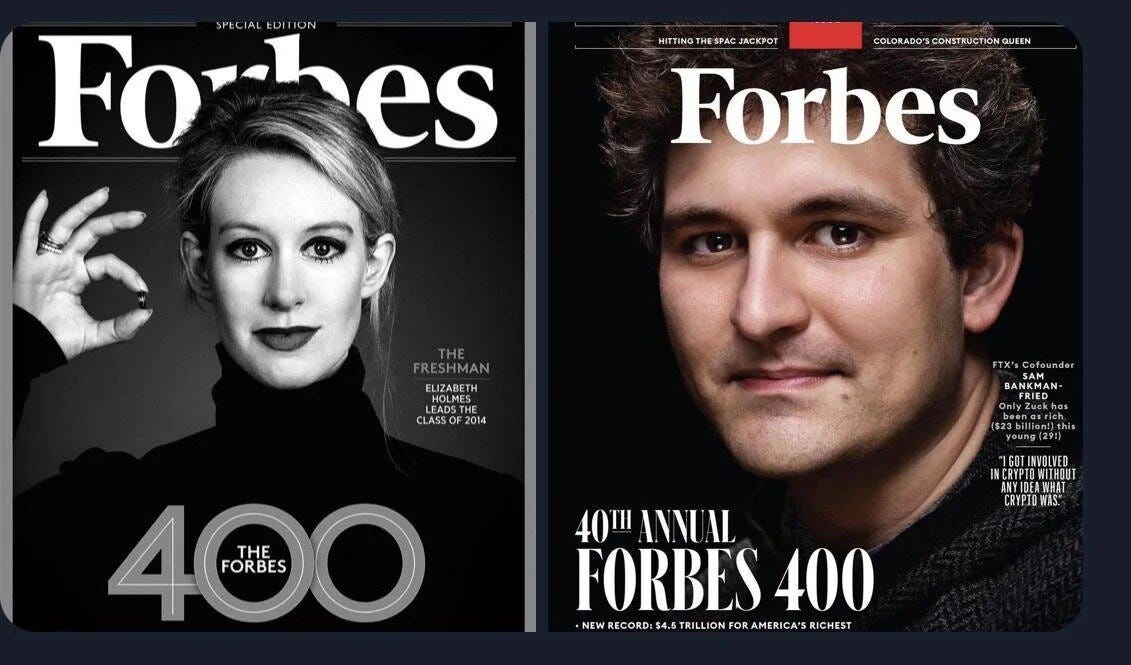
In reality, the facade he’s creating is not to impress her, but to feed his own growing ego. The more his schemes work and he evades capture, the more infallible he believes he is. Fraudsters and liars never quit while they’re ahead, they just keep building more elaborate lies until they eventually blow up and get caught. This is true for Frank Abagnale, Elizabeth Holmes, Sam Bankman-Fried and countless others.
Common Types of Financial Fraud
Abagnale engaged in cheque forgery, Elizabeth Holmes lied to investors and customers, SBF used customer deposits to fund trades made by his hedge fund.
The application is different but these are all examples of financial fraud. They deceived and manipulated people to enrich themselves. To perform their heist, they all told stories their victims wanted to hear. Bank tellers want to provide fast and efficient service to wealthy bank customers. Investors want to back category defining companies. Abagnale, Holmes and SBF all walked, talked and dressed the part of somebody that fit the model of what their victims believed they would be like.
Abagnale wore fancy clothes and drove expensive cars. Holmes did a creepy Steve Jobs impersonation while SBF positioned himself as the young math genius, saving humanity from the evils of capitalism with effective altruism.
These crimes happened in different decades, and despite the banking system getting increasingly strict on fighting fraud it didn’t matter. Although regulations and technology has changed, at the end of the day, human judgement comes into play and this can be manipulated.
Banking Then, Now and In The Future
Banking has always been less about moving money and more about trust. The old system relied heavily on paper trails, local knowledge, and human discretion. Checks moved through routing systems and branch staff knew their customers, because suspicious activity had to be caught before it was processed. It was very high touch and personal but unfortunately slow, inefficient, and vulnerable to manipulation. In Catch Me If You Can, Hanratty explains in the 1960s, if somebody cashed a cheque in New York assigned to the California Federal Reserve, it would take two weeks to confirm the money was actually there. All Abagnale had to do was change a digit in the routing number and charm a leggy bank teller.
Modern banking replaced much of that with wires, ACH, card networks, and digital payments. Money moves faster, at a larger scale with less friction, but to enable this trust was industrialized. Instead of a branch manager making a judgment call, software scores the risk, compliance teams review the flags, and customers are forced through KYC, AML, and endless verification steps. Banking became more efficient by centralizing decision making to fewer people and financial actors.
This didn’t eliminate fraud; there’s an estimated ~$500 billion committed each year. It can take years to uncover these criminal actions, the real number can be much higher. Even if they’ve reduced paper, scammers have adjusted by hacking software systems or convincing gullible people to pay money for useless online courses, often taught by young dudes living in their parents basement. Fraud and Social engineering lives on.
The next shift is trying to further automate trust. Born out of dissatisfaction with the banking sector, Crypto aims to decentralize financial actors, and eliminate the need for trust, via transparency. Crypto and stablecoins promise faster settlement, at lower costs, on programmable rails. Stablecoins are quickly becoming must haves for financial actors, with many large players trying to quickly offer them to customers.
Now autonomous payments aim to take that further, with software agents transacting directly on behalf of users or businesses. This theoretically further reduces the need for individual trust, but so far Crypto has not managed to eliminate fraud, and it’s only a matter of time before somebody figures out how to hack autonomous payments.
This is because wherever money moves, someone will try to game the system.
Why Fraud Will Never Disappear
Every financial system is, at heart, a machine built to process trust at scale. That was true during Abagnale’s time and it’s true now. The infrastructure changes. The game does not.
Catch Me If You Can endures because it captures something permanent. Abagnale is not just exploiting a flaw in 1960s cheque processing. He is exploiting a flaw in human beings. People want the story to be true. They trust uniforms, credentials, status, confidence, and whatever best fits their mental model of legitimacy. That was true for bank tellers then, and investors in Theranos and FTX now.
Despite all the technical advancements, fraud survives every upgrade. This is because good sober judgement cannot be automated for every scheme, hustle and play that con artists can dream up. The method and applications will change, but fraud will never disappear because the incentives are too great. It’s will only a matter of time before the next Abagnale shows up.
Thank you for reading. If you liked this article please Subscribe below. I publish articles on a wide range of topics from business, books, current events or anything on my mind.
This statement was made before Moneyball and advanced analytics
Love this one, Ben!