

Wes Anderson is a genius. For three decades he has captivated audiences with his distinct aesthetic, eccentric characters, and sharp storytelling. From The Grand Budapest Hotel and The Royal Tenenbaums to The Darjeeling Limited, Anderson has built a world entirely his own. He convinces megastars like Bill Murray, Scarlett Johansson, and Timothée Chalamet to take small roles for minimal pay, all in service of the craft.
As his films have earned more praise and awards, Anderson’s willingness to experiment has only grown. He plays with framing, light, pacing, surrealism, and sometimes pure absurdity. On the spectrum between Marvel and Terrence Malick, he has leaned closer to the latter. His movies are strange, funny, and unmistakably precise.
His latest, The Phoenician Scheme, is no exception. It is less outlandish than Asteroid City or The French Dispatch and more in line with The Grand Budapest Hotel. The story follows Anatole “Zsa-Zsa” Korda, a wealthy industrialist wanted by global authorities. His latest venture, a sweeping infrastructure overhaul of Phoenicia, promises enormous profits for his partners and ruin for everyone else.
The plot unfolds around Korda’s schemes, family tensions, and fragile alliances. I will not spoil the details, but it is excellent.
What caught my attention were the books Anatole keeps reading throughout the film. Each title is bizarre, precise, and perfectly Andersonian. As it turns out, these are entirely fictional creations. So I decided to imagine what these books might be about, their real-life parallels, and what they reveal about Korda’s mindset.
You do not need to have seen the movie to enjoy this, but you should. It is Wes Anderson, after all.
Keep reading if you what books the greatest businessman in the world was reading!
But first, make sure to hit the Subscribe button to join 1,000+ other Subscribers that get Serviceable Insights delivered directly to their inbox each week.
If this week’s article does not interest you, please check out some other recent ones:


The Anatole “Zsa-Zsa” Korda Reading List
Great Botanical Collections of Western Europe
A richly illustrated compendium cataloguing the eccentric gardens and forgotten greenhouses of Europe’s aristocrats, from medicinal herbs grown in Venetian courtyards to the sprawling orchid mania of Victorian England.
Closest real-life parallel: The Brother Gardeners by Andrea Wulf (on Britain’s 18th-century plant collectors) or Orchid Fever by Eric Hansen.
For those who intend to one day amass sizeable fortunes, it comes in handy to have a working knowledge of botanical gardens. Whether this is to donate a public trust or to set one up in one of your properties. When you own a lot of land, you will need to do something with it after all. You may scoff at this but it’s one thing to manage a small patch of grass on your front lawn, a botanical garden is an entire different ordeal.

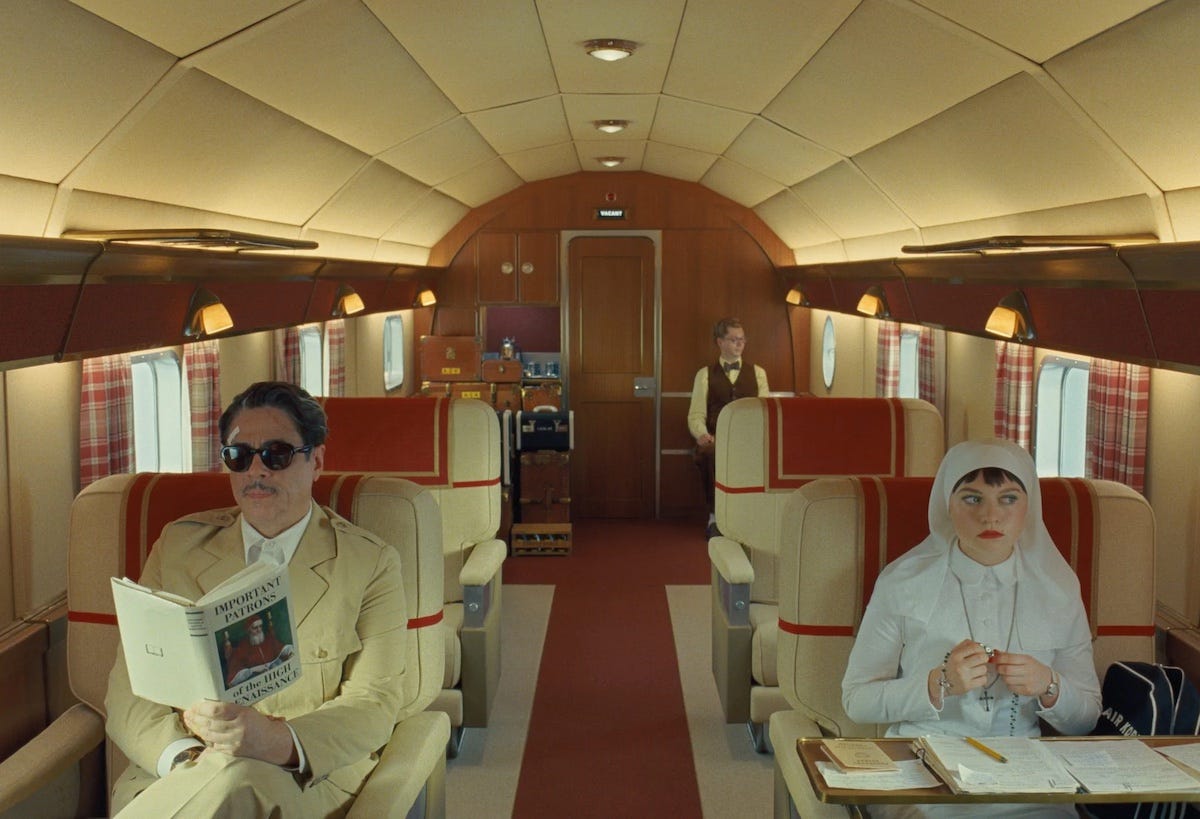
Important Patrons of the High Renaissance
Profiles of wealthy bankers, dukes, and cardinals whose commissions reshaped art history and whose vanity projects occasionally rivaled the masterpieces themselves.
Closest real-life parallel: The Agony and the Ecstasy by Irving Stone (a biographical novel of Michelangelo) or Patronage in Renaissance Italy by Mary Hollingsworth.
Closely related to Great Botanical Collections of Western Europe, Anatole is likely seeking inspiration from other great philanthropists of their day. Already wealthy at the start of the film, and expecting to add further to his fortune, he has begun planning how to use the proceeds from his venture. A man can only spend so much during his lifetime, and it is difficult to trust what will become of any money left to charity or the state. Naturally, he settles on becoming a patron of the arts, following in the rich tradition of the Borgias and Medicis. At this point, belief in the success of his mission is still high.
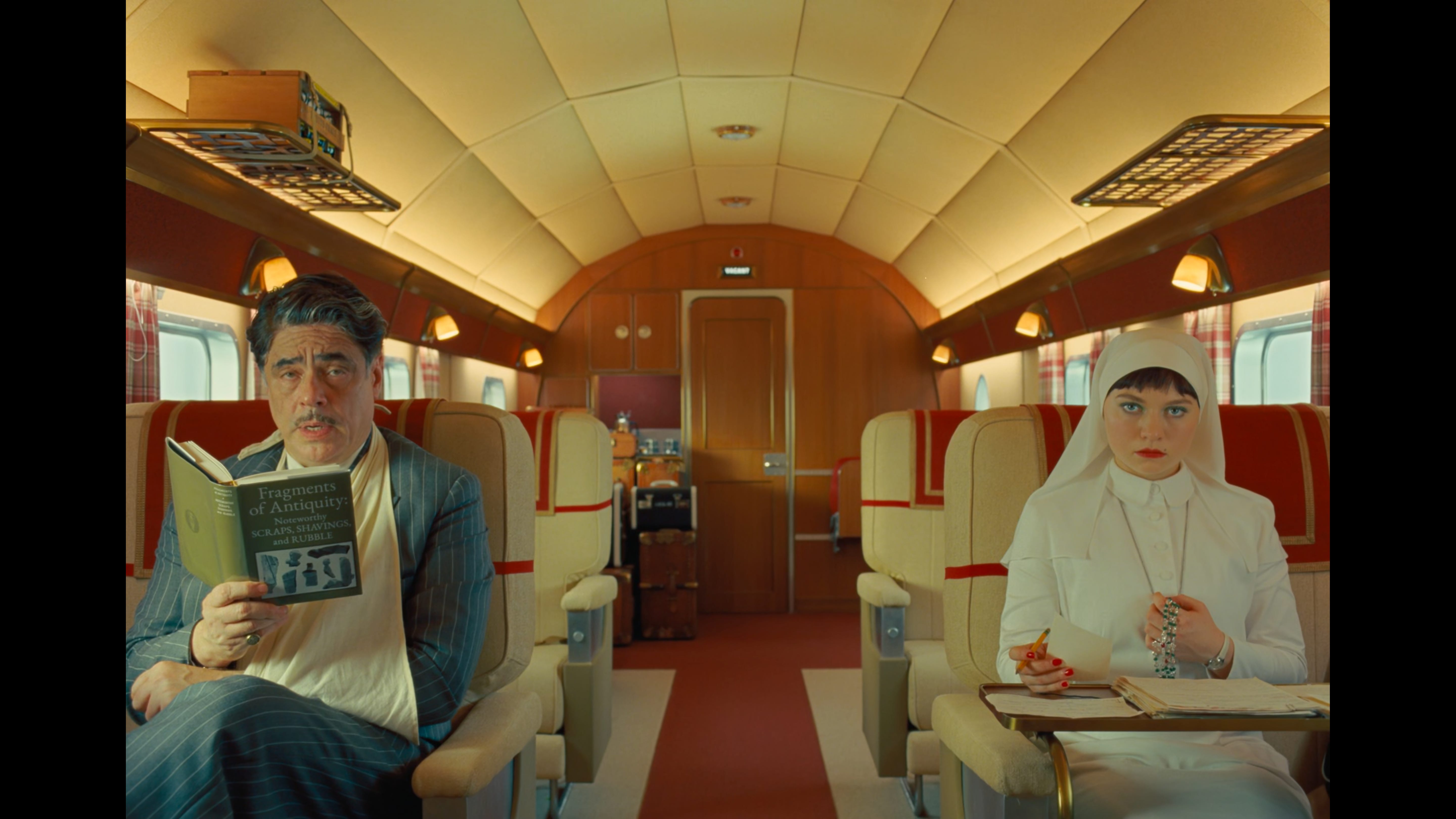
Fragments of Antiquity: Noteworthy Scraps, Shavings, and Rubble
A serious-minded survey of the minor relics archaeologists trip over: broken amphora handles, chipped mosaics, and the world’s most celebrated pile of marble dust.
Closest real-life parallel: Fragments: Lost Words of the Ancient World by Tony Harrison or Lives of the Ancient Greeks by François Chamoux, with sections on archaeology’s smaller finds.
Anatole reads this book during a quieter, more introspective stretch of the film. His plan has run into complications, and the path forward looks uncertain. The book’s focus on broken relics and forgotten pieces mirrors his attempt to make sense of a plan now in shambles. It also reflects the literal excavation required as part of his scheme. In a way, the act of reading becomes a metaphor for self-excavation: studying the ruins to understand what went wrong.
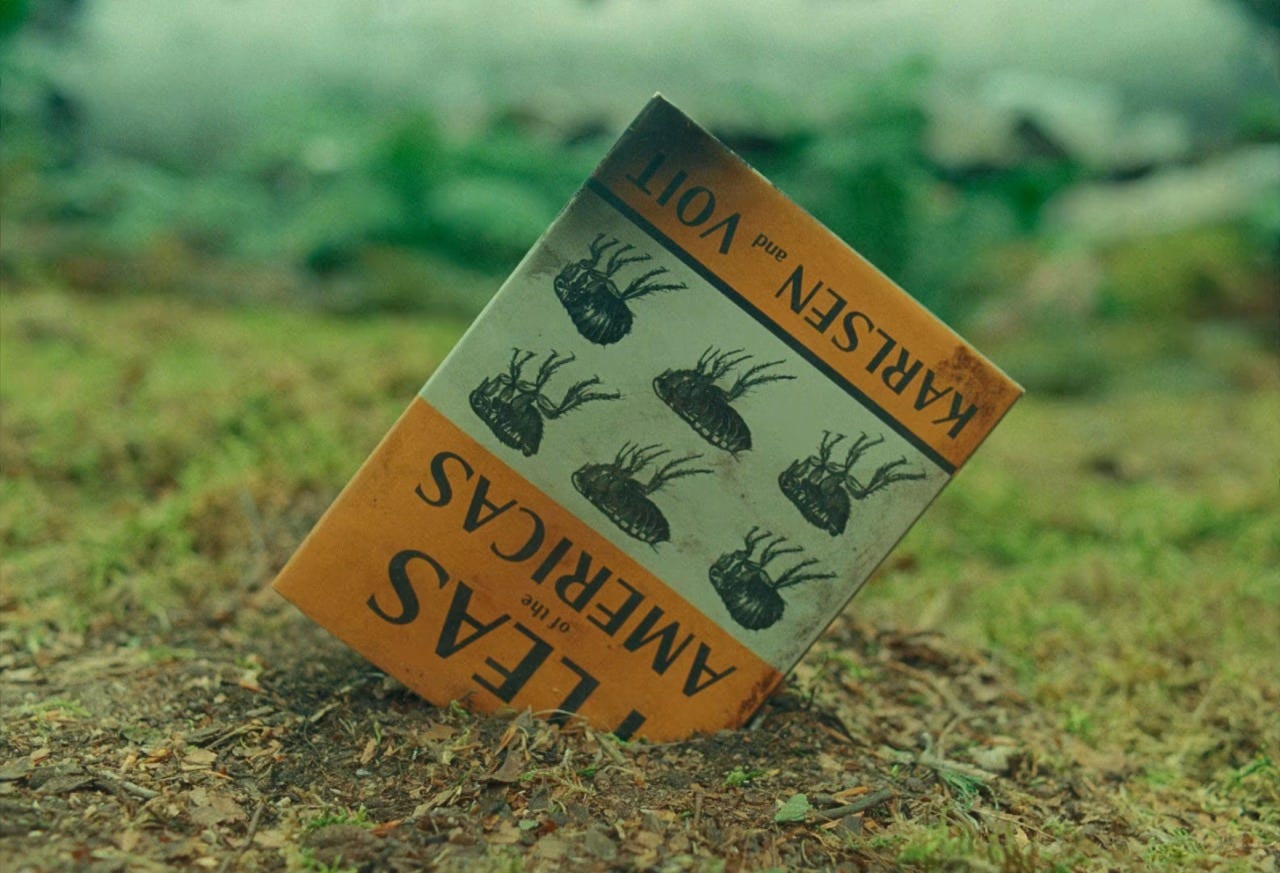
Fleas of the Americas
A pioneering entomological atlas of New World fleas, complete with intricate engravings and overly in depth detail on everything there is to be known about everyone’s favorite Siphonaptera.
Closest real-life parallel: The Flea: The Amazing Story of Leo Messi by Michael Part (unintentionally!) or more seriously, Fleas: Biology and Control by K. Mehlhorn.
Michael Cera’s character, Bjørn, is first hired as a tutor to Korda’s children and later becomes his administrative assistant. Bjørn is a trained entomologist, which might seem like an irrelevant quirk, but it serves as a quiet commentary on Anatole and his associates.
Fleas are parasites that occupy hosts without their knowledge or consent. Korda’s scheme does the same to the people of Phoenicia. He and his partners feed on the land and its resources, enriching themselves at the expense of those who live there. The book functions as both a metaphor and a mirror, hinting at the predatory nature of Anatole’s world.
Depictions of Blasphemy in Gouache (Vol. III: 16th Century)
An illustrated catalogue of religious controversies, spotlighting forgotten painters who dared smear heresy in opaque watercolor across Europe’s church walls and tavern ceilings.
Closest real-life parallel: Art and Heresy in Renaissance Siena by Fabrizio Nevola or The Forbidden Image by Alain Besançon (on iconoclasm and blasphemy in art).
This book is a reflection of Sister Liesl, Korda’s daughter (played by Mia Threapleton) current dilemma. She is a devout believer, now faced with the choice whether to live like an ordinary nun or to become her father’s heir and beneficiary to his estate. On one hand, the trappings of wealth goes against her teaching but she could do a lot of good with this money.
The book’s subject is about artists who defied doctrine in pursuit of higher truth. This parallels Sister Liesl crisis. Like those painters, Liesl risks being seen as a heretic if she acts on conviction rather than dogma. To accept her inheritance might feel like blasphemy, yet refusing it could waste an opportunity to do genuine good. In both art and faith, purity and corruption are not easily separated, and this ambiguity defines her struggle.

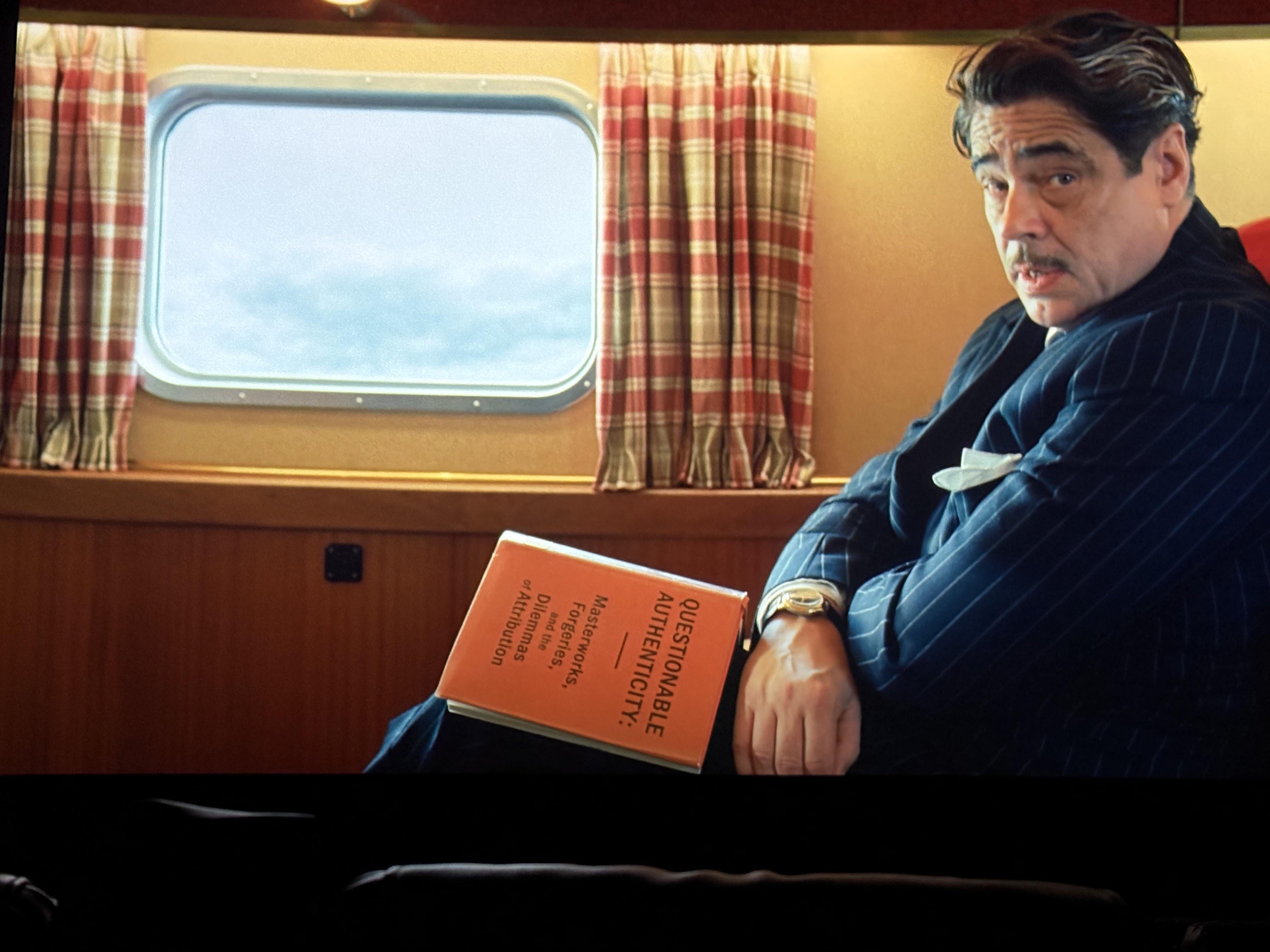
Questionable Authenticity: Masterworks, Forgeries, and the Dilemmas of Attribution
An exposé on the shadowy middlemen and clever forgers who blurred the line between genius and counterfeit, with entire chapters devoted to paintings now hanging in respectable museums.
Closest real-life parallel: Provenance by Laney Salisbury & Aly Sujo (on one of the biggest art frauds) or The Forger’s Spell by Edward Dolnick.
Anatole is a world-renowned arms dealer, forever balancing alliances with partners, suppliers, and rivals. He is accomplished, but his success depends on maintaining appearances. To make the Phoenician scheme work, he must stay one step ahead of both the CIA and his own associates. The risks are growing, and one misstep could expose everything.
This book reflects Anatole’s dual nature. Like the forgers it profiles, he operates in the gray zone between authenticity and deception. His life, built on negotiation and illusion, is its own masterpiece of controlled deceit. He reads not to learn how to lie, but to understand the psychology of those who do it best. Even after years of survival and near-death encounters, he continues to study, convinced that mastery requires constant refinement. Reading, for him, is both education and confession.
Arms and Armour: Princely Works from Around the Globe
Lavishly detailed portraits of jeweled swords, ceremonial shields, and impractically ornate helmets designed less for battle than for dazzling rival monarchs at banquets.
Closest real-life parallel: Arms and Armor of the Medieval Knight by David Edge & John Miles Paddock or Swords and Swordsmen by Mike Loades.
Anatole’s fascination with this book reflects his obsession with power, image, and legacy. The ornate weapons described here are not tools of war but symbols of status, precision, and intimidation. Like the princes who commissioned these works, Anatole treats business as both spectacle and combat. He’s already very wealthy but continues to engage in these schemes despite the many assassination attempts against his life.
It’s not just about amassing wealth. It’s about leaving an enduring legacy that will persist for centuries. Evidentially his many children alone are not enough.

Pavement Engineering in the Post-Roman Era
A technical yet oddly lyrical history of medieval road-making, complete with diagrams of cobblestones, trade routes, and the political collapse caused by potholes left unrepaired.
Closest real-life parallel: On the Road to the Ancient World by Etruscan scholar John Haywood, or Roman Roads: A Study of Infrastructure and Society by Raymond Laurence.
Anatole reads this near the end of the film, when his empire begins to show cracks. The book’s focus on infrastructure and decay mirrors his growing awareness that every system, no matter how sophisticated, eventually erodes. Roads once built to unify kingdoms crumble under neglect; so too do his alliances and ambitions.
It is a fitting choice for a man who profits from rebuilding nations he helped destabilize. In studying ancient roads, Anatole seems to understand, perhaps for the first time, that foundations matter more than façades. Whether that realization comes too late is left for the viewer to decide.

Although these books are fictional, I hope you enjoyed these summaries and how I think Anderson was trying to use them to signal what was happening in the film. If you haven’t seen The Phoenician Scheme yet, you definitely should. If you aren’t a fan of Wes Anderson’s movies, please re-evaluate your life choices. For those interested in a reading list containing real books, I will release mine in December but in the meantime, here’s a collected list of titles I’ve previously shared.
Thank you for reading. If you liked this article please Subscribe below. I publish articles on a wide range of topics from business, books, current events or anything on my mind.
Great list of real (and fake) books