

There I was strolling the floors of the Venetian casino. Invited for a bachelor party, never before had I been to Las Vegas. After an outrageously overpriced pool party, I decided to try my hand at the poker table.
Like many men, I played many home games with friends in my late teens and early 20s. I even briefly tried my hand online. I was decent enough to win at the home games or low stakes online tables but against professionals and people earning a living from poker (grinders) I was overmatched. I could occasionally win a hand against them but over a long session, eventually the talent difference took over.
I sat down at the lowest stakes table available and before long I realized everybody at the table was a grinder. The smart thing would have been to get up and leave but since I didn’t know the next time I would be playing poker in Las Vegas, I decided to stay for the novelty of it and make a kind donation to the grinder fund.
After mostly watching hands unfold, eventually my patience was rewarded with a premium starting hand. I slow played my cards and trapped somebody. I won a large pot, angering him greatly as he didn’t think I had that move in my bag. To quote George W Bush: He misunderestimated me. I should have gotten up and ran but I hadn’t been at the table long so I decided to stick around. A few hands later, I was in a coin flip situation with the same player. I had the flush draw, he had the low pair, putting our odds at around ~50% each. We both went all in, I didn’t get the card I needed so my session ended there.
Poker theory, would have said I made the right move but I still lost. Even if I played perfectly that night, the outcome would have likely been the same. I was at a table against sharks but with a lower bank roll (especially after the pool party) and tolerance for risk.
Now you might be wondering why you should care about my gambling losses and what this has to do with financial markets? While gambling is never investing, sometimes investing looks a lot like gambling. At least in the casino you know your odds.
This article will share a few gambling anecdotes that will hopefully help you make better decisions in financial markets or at a minimum, a slightly more conscious gambler.
Keep reading if you want to try to lose less money!
But first, make sure to hit the Subscribe button to join 1,000+ other Subscribers that get Serviceable Insights delivered directly to their inbox each week.
If this week’s article does not interest you, please check out some other recent ones:


Find Games You Can Win
In a casino, not all games are created equal. Some are designed to entertain while slowly emptying your wallet. Others, while still stacked in the house’s favor, give you a fighting chance.
Blackjack, when played correctly, has a house edge of about half a percent. Craps and baccarat are close behind. Roulette takes about five percent of your money before the wheel even spins. Slot machines are the worst, you might as well light your money on fire. The flame might last longer than your playing session.
If your goal is to make money at the casino, your best move is not going. The second best move is to play games with better odds, that you understand. Good gamblers, like good investors, understand one simple truth: you do not have to play every game. You just have to find one where the odds tilt slightly in your favor.
For the average individual with no knowledge of finance or business, their best bet is buying exchange traded funds (ETFs) which will provide returns on par with the general market. Since most retail investors lag the market by 6-8% annually this would be the smarter move. (We discuss this concept and more in:
The 3 Biggest Lies in Investing

Most people are terrible at investing. They like to imagine themselves as Michael Burry or Gordon Gekko, but in reality they’re much closer to Nick Leeson, the rogue trader who single handedly blew up Barings Bank. At least he got played by Ewan McGregor in the movie adaptation. In your case, losing your life savings probably won’t get you an A lister f…
However, this doesn’t mean you should never buy individual stocks or make other investments. You should invest in areas where you have an edge.
The brilliant minds on Wall Street regularly end up on the losing of a trade. If you tried to go up against a hedge fund on every tradeable asset, you would definitely lose. If you stuck to industries or instruments you know very well, you have more of a chance. Most equity research or hedge fund analysts need to cover dozens, potentially hundreds of stocks, their job requires it. As a retail investor, you can concentrate on a handful and learn everything there is to know about them. It’s not a stretch for a non-professional investor to know more about a company than a full time investor. Gambling is no different. However edges don’t last forever.
How I got banned from betting on hockey
I was early to discover advanced statistics for hockey. Baseball had already gone through its analytics revolution after the Oakland A’s Moneyball success, but in the late 2000s hockey was just getting started. Only a handful of bloggers were writing about it, and the audience was small. As one of their few readers, I could message them directly and they would actually reply. At fifteen, I was far from a statistician, but my love of hockey pushed me to learn enough math to keep up with their work.
Advanced analytics in hockey do not predict single games very well because the sport is too noisy. Over a full season, however, they used to offer an edge. I learned to use that advantage to dominate fantasy hockey pools and long-term prop bets. As an unemployed teenager, my bankroll was tiny, so the money never amounted to much. However in percentage terms, my returns were absurd. For five straight years, I won or finished in the top three of nearly every fantasy league I joined, usually against ten to twenty other people. My prop bets were hitting around thirty-three percent when the odds implied less than a ten percent chance.
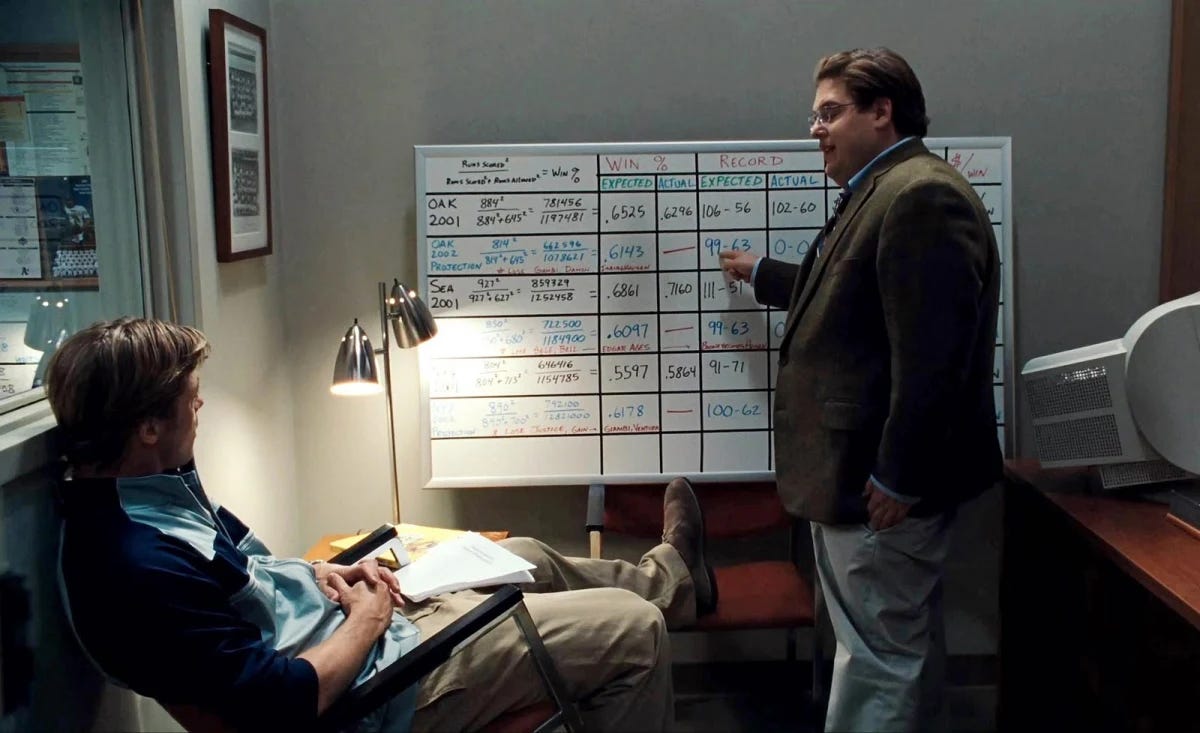
I was driven more by pride than money. Still, after a few seasons of crushing the competition, my invitations to hockey pools began to disappear. The final league I joined included several of the analytics bloggers I had followed for years and a few employees from fantasy hockey websites. The competition was too strong. I quickly realized my advantage was gone and decided to retire from fantasy hockey to focus on my homework.
As analytics became mainstream, sportsbooks and fantasy platforms started using the same stats I had been using. My edge vanished overnight. I walked away with a small profit and a much deeper understanding of how you can find an advantage and why you need to pick your opponents wisely. This is why you don’t drop out to gamble fulltime.
Sometimes it’s better to be lucky than good
During that same trip to Vegas, a member of my party turned $200 into $10,000 at the Blackjack table. I was there when it happened. Let’s call this person Greg. Greg was not a regular gambler; he’s normally a fairly straight laced individual. In the night in question, he was not. While a few of us were having dinner, Greg joined, already quite inebriated and impatiently wanted to play Blackjack.
He reluctantly waited for us to finish our dinner then struggled to walk in a straight line between the restaurant, which was located next to the casino floor, and the blackjack table. We were unsure if they would let him play in this state but we quickly realized people like Greg were their ideal customer profile (ICP). If they were licking their chops before he sat down, they certainly weren’t for long.
Greg started hot and never cooled off. Hand after hand went his way. He doubled his bets, then tripled them, even played two spots at once. Sometimes he made the right decisions, other times he didn’t, yet the cards kept rewarding him. He hit endless blackjacks and high hands while the dealer kept busting. Multiple pit bosses came to observe but quickly decided he was far too drunk to be counting cards (or was as good an actor as prime Daniel Day-Lewis). Within an hour, Greg had ten thousand dollars in chips stacked in front of him. He also couldn’t sit upright anymore, which was our cue to call it a night.
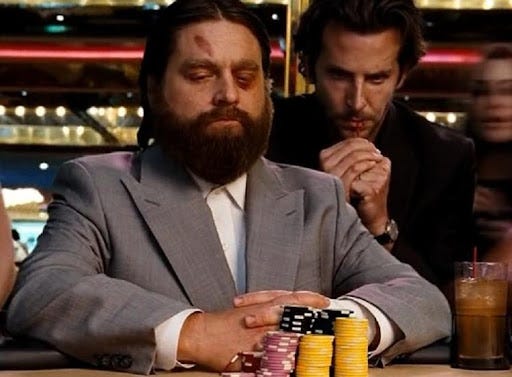
By the next morning, Greg woke up next to his mountain of chips and a puddle of his own making, unsure how either got there. His winnings did not come from talent. He rode a streak of pure luck and happened to cash out at the top. Greg won by far the most, but everybody had a profitable session, largely because the dealer kept busting. Greg could benefit because he was by far the most aggressive, which was largely a result of his inebriated state.
Most investors think they are Michael Burry, seeing patterns the world misses. In reality, many are closer to Greg. A few lucky streaks can feel like skill until the cards stop falling your way.
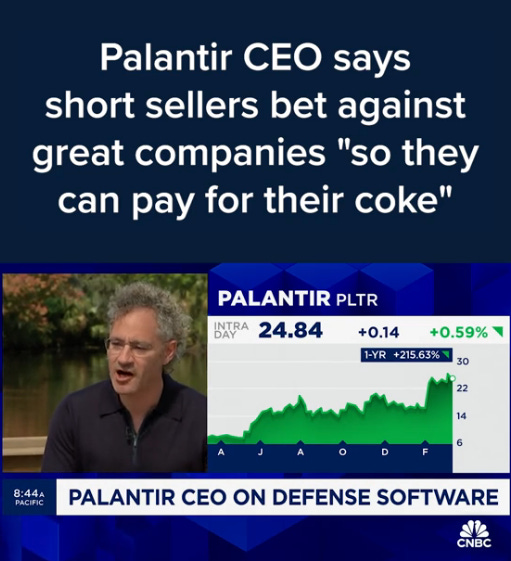
Don’t Invest Like a Gambler. If you do, be smart about it
Like our friend Greg, many people try to earn outsized returns by being aggressive during a bull market. I know plenty of people who boast about triple or even quadruple-digit gains from trading crypto or leveraged ETFs on margin. Sometimes those trades work. When they don’t, the same aggressiveness that creates wealth can erase it overnight. Just the other week, many crypto whales got margin called liquidating years of investment gains. You can think of this as Greg betting his $10,000 in winnings, borrowing another $10,000 from the casino, and losing it all on the next hand.
If Greg had another $100,000 sitting in savings, he could afford to be aggressive. Losing ten or twenty thousand would sting, but it wouldn’t ruin him. If that original $200 was all he had, he would be finished. Investing works the same way. If you trade on margin without enough capital behind you, one bad swing can end the game.
Aggression in investing is not inherently bad, but it must be calibrated. If you want to take big swings, you need to design your portfolio so that one mistake cannot bankrupt you. Nassim Taleb popularized what he calls the barbell strategy: keep one part of your portfolio extremely safe and the other part aggressively risky. This approach lets you pursue large upside while protecting yourself from total ruin.
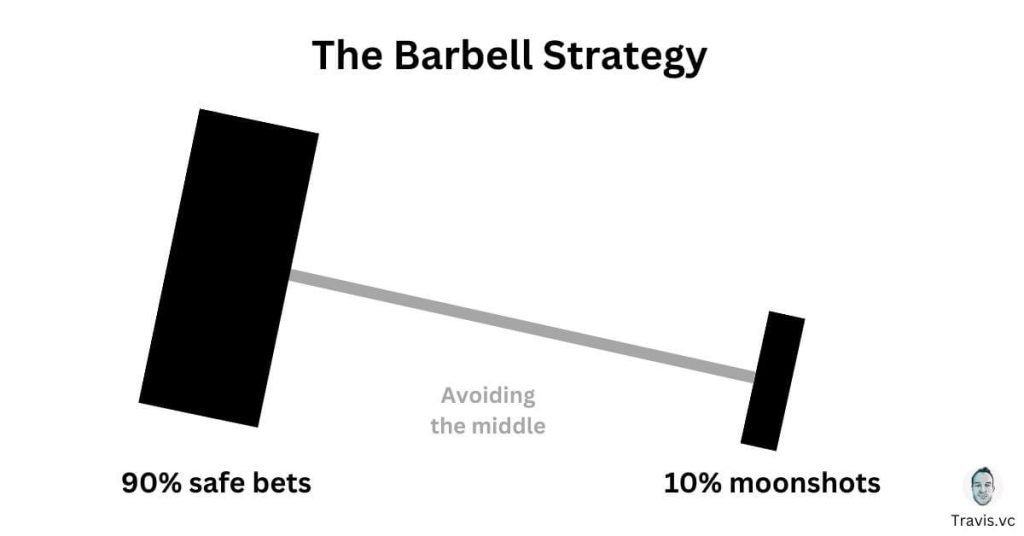
Taleb is a trader, not a gambler, but he has seen countless traders blow up because they behaved like gamblers. The difference between the two is not luck or confidence; it is risk management.
Conclusion
Every gambler believes they can beat the odds until the cards stop going their way. Investors are no different. The smartest ones know the game is never about winning every hand, it is about surviving long enough for the math to work in their favor.
You cannot control luck, but you can control your exposure to it. Whether you are sitting at a poker table or watching your portfolio, the same rule applies: protect your bankroll, play the games you understand, and leave the table before the house reminds you who is in charge.
Thank you for reading. If you liked this article please Subscribe below. I publish articles on a wide range of topics from business, books, current events or anything on my mind.
Annie duke would have been proud of this piece!