

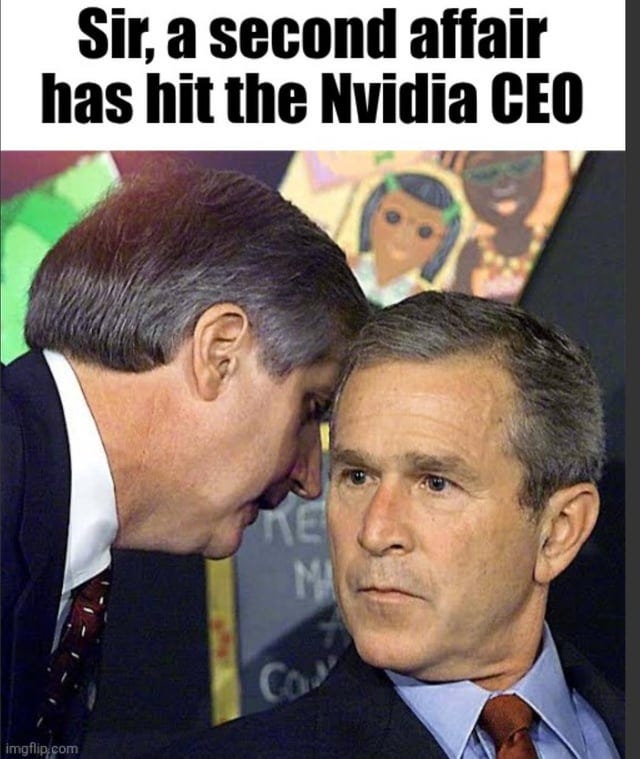
In late October, reports began circulating that NVIDIA founder and CEO Jensen Huang had been involved in a romantic relationship with a woman suspected of being a Chinese intelligence asset.
This allegedly came from sources at the highest level of government, concerned that the leader of the world’s largest processor company gave a foreign rival critical information. Naturally the internet treated such grave allegations with all the seriousness you would expect.

Before it could be confirmed if the woman was a Chinese asset, more allegations of Jensen’s impropriety came to light, next with a NVIDIA employee. Within hours, Huang gave his resignation to the board of directors, concluding his tenure lasting more than 30 years. He had no shortage of potential suitors, with Elon Musk jokingly creating a job posting targeted specifically for him. Meanwhile NVIDIA named their CFO Colette Kress as interim CEO but are actively seeking a permanent successor.
It didn’t take long for stakeholders to propose that the best fit for CEO was still Jensen Huang. Thousands of NVIDIA employees, many of which became millionaires under Huang’s leadership signed a petition requesting his reinstatement. Prominent investors like Brad Gerstner and others publicly questioned if the move had happened to hastily. David Friedberg suggested the decision to leak the affair was a conspiracy to give government the oversight and concessions Jensen was unwilling to provide.
This is a developing story but as of November 16th, the board of directors is reportedly not considering reinstating Huang. Although he is not charged with having committed any crimes, the standard for being the CEO of a publicly traded company is not limited to illegality. In fact the overwhelming majority of CEO departures are not related to criminal behaviour.
The most common reason relates to poor stock/financial performance. In the case of Jensen, you can’t really accuse of him of that. Before the scandal NVIDIA was the most valuable company on earth, although it’s a bad look, cheating on your wife is not illegal.
The problematic aspect is that his alleged affairs came with a customer and one of his subordinates. Although he’s certainly not the first (see Larry Ellison, Elon Musk, Bill Gates and others), in 2026 that sort of thing is no longer brushed aside. A company the size of NVIDIA has an HR team with a code of conduct that would require the disclosure of any relationships amongst employees, vendors/customers or government officials. Jensen might have managed to violate all three.
A board member wouldn’t be doing their job if they didn’t question if this fraternization went against the best interest of the shareholders. Regardless of what people say, this is why they are elected into these positions. For some that might be a narrow lense focused exclusively on financial performance, others might include a greater societal purpose tied to environmental, social or governance goals (ESG).
Jensen is not your average CEO. He’s among the very few founder CEOs to have scaled his company to over a trillion dollars making this the most extreme example of financial and ESG performance coming in direct conflict. Looking at financial performance in a vacuum, nobody would disagree that Jensen is still the best person to lead NVIDIA. He’s already done it. However, from a social and governance perspective, keeping him on could be disastrous.

What kind of a message would it send if shareholders tacitly sanctioned such behaviour? Could every CEO sleep with an employee with impunity? Where do you draw the line? While most say bosses should not have relations with their employees, nearly 50% of surveyed employees claim to have had a workplace relationship, with a majority of claiming to have kept these relations from colleagues or HR.
It’s so common during my MBA, one of the chapters in our textbook was a scenario where a top salesmen was sleeping with multiple women at his company while creating a toxic work culture. As the head of HR, you had to assess the situation and recommend to the company CEO what to do. You would think the solution was obvious but as you read the case you quickly see it’s a bit more complicated.1
Depending on if you subscribe to Kantian versus utilitarian reasoning you might have differing views of this question but undoubtedly once the news broke, turning a blind eye was no longer an option. The board has to decide between financial and non-financial risks. Jensen made the decision for them but with people calling for his reinstatement, the board has the opportunity to reevaluate.
Companies firing CEOs or top executives for similar actions have mixed results when it comes to financial performance. When Mark Hurd was dismissed from HP in 2010 and Brian Krzanich from Intel in 2018, the companies stock performance suffered. Around the same time, with Best Buy, Lululemon, Wynn Resorts and McDonalds, they benefitted.
There are plenty of studies demonstrating a correlation between sound corporate governance and greater stock market returns. When you look at examples such as Enron, WorldCom or Lehman Brothers, it would be foolish to argue poor corporate governance would help. While those cases had to do with accounting fraud and there is some nuance around what proper governance looks like, nobody would suggest sleeping with subordinates or vendors would qualify.
They don’t need to be a Chinese agent to get Jensen fired. He doesn’t control the board meaning they can vote to replace him even if he didn’t violates the law or the code of conduct. There are many instances of a visionary CEO being fired in part because of their behaviour whether that was Travis Kalanick from Uber, Jack Dorsey from Twitter or Steve Jobs from Apple. Good behaviour and governance won’t protect your job if your financial performance is lacking but the case of Jensen Huang proves even the best financial performance doesn’t mean you can’t be fired.
Ironically one solution to ensure absolute job security is by not having a board or at least controlling it.

This does pose an interesting question, what if this happened to a CEO with control? Elon Musk impregnated one of his employees and he wasn’t replaced at any of his companies. Despite this and other controversial decisions that hurt Musk’s favourability, his companies are up massively since then. Similarly despite negative sentiment after the Cambridge Analytica scandal and a seemingly never ending onslaught of media criticism, META has remained one of the best performing public companies of the last decade. Perhaps it’s not a coincidence that Musk and Zuckerberg are also Founder CEOs of Trillion Dollar plus companies.
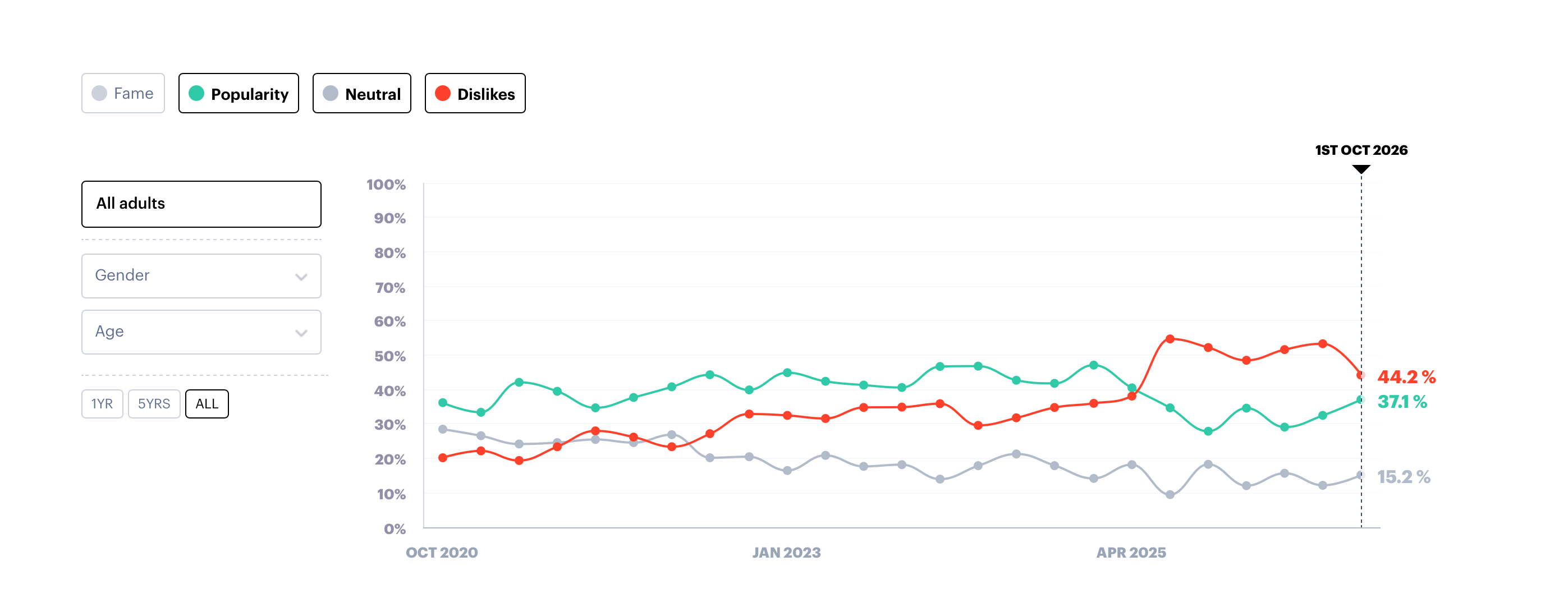
(Musk Opinion polls over time. Source Yougov.com)
These examples would indicate that a negative public opinion of a company CEO doesn’t necessarily translate into worse financial performance. As long as they need the product/service, does the average customer care about the conduct of the CEO? In the case of monopoly or clearly superior product, it would appear not. NVIDIA currently enjoys arguably a more dominant position than either META or any of Musk’s companies, if Jensen stayed on, their sales wouldn’t suffer in the near term.
The damage wouldn’t be immediate but the greater risk is alienating key stakeholders, whether that’s critical suppliers, employees, shareholders or regulators. TSMC, the Taiwanese semiconductor company is one of the critical producers of chips that NVIDIA and other companies rely on. They might not want to work with Jensen if they believe he was colluding with a Chinese spy. Perhaps key employees at NVIDIA wouldn’t want to work for Huang because of indiscretions. Anthropic was started by a group of former OpenAI employees who disagreed with the direction of leadership. If enough shareholders decide they would prefer not to hold NVIDIA despite their great financial performance, that would create enough of a drag on returns shareholders could feel compelled to act. If NVIDIA loses favour with the respective governing bodies, this could be especially damaging to to their future prospects.
Nobody can know how serious these potential risks might be, but they need to be weighed against the enormous value Jensen Huang has demonstrated he can create for NVIDIA. Bringing him back might be the best financial decision or it might expose shareholders to risks that far outweigh the benefits. Ultimately, the board isn’t deciding whether Jensen deserves to have his job back but whether NVIDIA is worth more with him or without him.
In this hopefully made up scenario, you learn the company would likely go bankrupt without this salesperson. The women he sleeps with aren’t in his department and he doesn’t hold any formal authority over them. To further complicate matters, he impregnates one of these women who is already a single mother. She’s devoutly religious and unwilling to have an abortion so intends to have the baby. Firing him would render him unable to pay child support payments. I wish I was making this up. Clearly the authors of this textbook were trying to stress the moral conundrum of doing what feels right morally versus the cost others need to bear.
My professor unfortunately chose not to cover this chapter in class; apparently in previous years the class discussions became too heated.