

Anyone who turned on the financial news or opened their brokerage account last week experienced more red than Bryan Johnson or any skin care specialist would ever recommend.
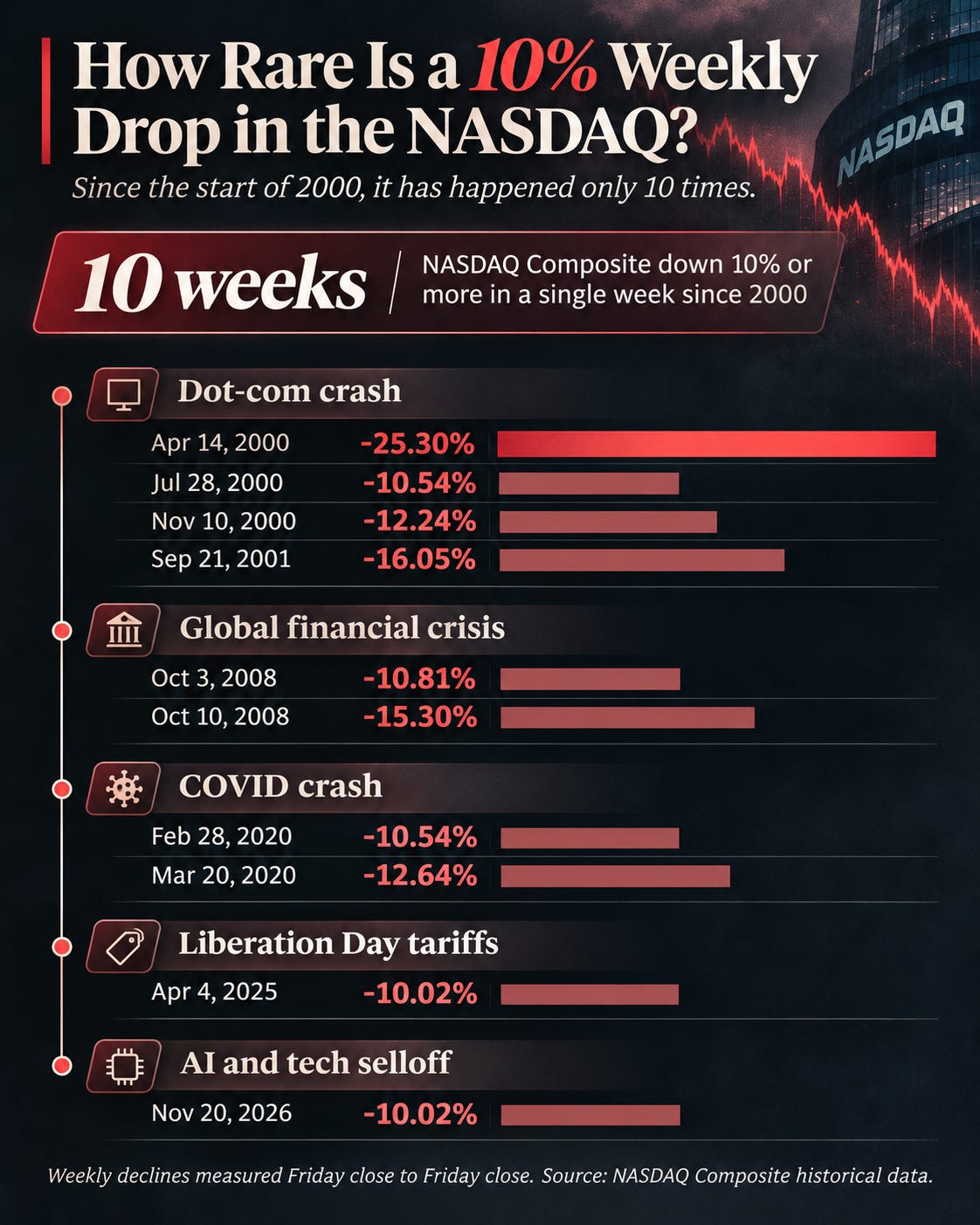
The NASDAQ dropped 10% last week, zooming out its down ~14% in the past six months as of Friday close. A 10% decline within 5 trading sessions is a slow day for crypto traders but for a broad market index like this, it’s especially rare.
Since the start of 2000, there have only been ten weeks in which the NASDAQ Composite fell 10% or more. Almost every previous occurrence coincided with a major global event: the bursting of the dot-com bubble (three times), the September 11 attacks, the Global Financial Crisis (twice), COVID-19 (twice) and last year’s Liberation Day tariffs. The fallout is rarely good1.
In comparison Anthropic’s IPO and Jensen Huang’s infidelity are relatively minor affairs. Then again, perhaps Jensen is the tech world’s Franz Ferdinand. Imagine how finance textbooks will one day need to explain how the AI bubble popped because of the tech CEO’s libido.

(Note: I wrote this before NVIDIA reinstated Jensen Huang as CEO on November 23)
Does this selloff tell us anything about how the broader economy is doing? Not really.
While AI linked stocks have seen an incredible run, they have also been volatile at times. Leopold Aschenbrenner was briefly dubbed as an investment genius before getting liquidated this summer. Although vowing to remain focused on private markets, some reports have indicated he returned to public markets only to get wrecked again last week. He still hasn’t figured out the hedge part.
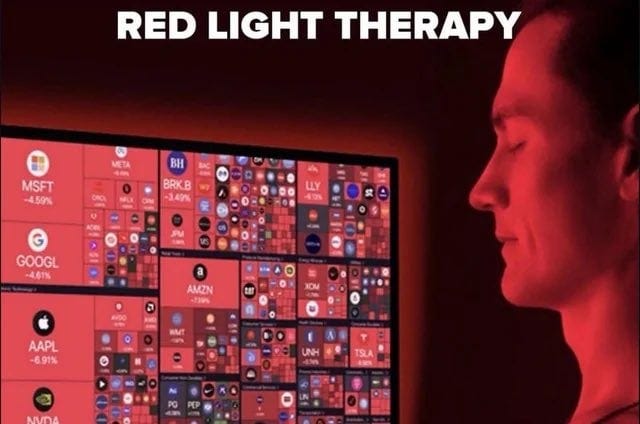
Few people feel bad for Leopold but should we be more weary of people suffering heavy losses? Do stock market sell-offs and corrections lead to lower spending across the total economy, causing recessions? Like most questions in economics, the answer is: sort of and sometimes.
The stock market is not the economy. Stocks going up doesn’t mean everything’s great and declining share prices doesn’t mean the economy is in trouble. The economy is different actors exchanging goods and services, whereas financial markets reflect investors exchanging assets based on their expectations of the future.
However they aren’t completely detached. When the economy’s doing well, companies have more profits, people have more money to spend and invest, which pushes up asset prices. If asset values increase, people can theoretically afford to buy and speculate more and on and so forth.
Take Anthropic as an example. Started only a few years ago, the company’s already generating billions in revenue but it’s not profitable unless you accept their creative accounting. Nonetheless, investors are willing to look past this because its rapid growth trajectory and the expectation that it will be very profitable in the future. Investors are buying shares implying Anthropic is worth trillions today believing they can sell them for a higher price in the future.
Existing shareholders including founders, employees and private market investors can sell or borrow against their shares to buy things in the real economy. Whether that’s expensive San Francisco real estate, trips on private jets or $60 sourdoughs.
They can only buy these things if they can find investors to buy their shares. If demand for Anthropic stock dries up, employees need to go back to Lean Cuisine.
The price of ANT 0.00%↑ doesn’t directly tell you how the economy is doing but it’s a bellwether indicating how investors look at AI adoption. The price reflects investors' optimism in how quickly the company will grow.
The recent selloff says investors expectations of AI adoption is becoming less bullish. Meanwhile sovereign bond yields have been rising since the start of the year reflecting investors have more bearish expectations of growth, inflation, future borrowing needs and the ability of these countries to repay their debt.
If the market is selling off and the bond market is pricing in higher inflation and lower growth, does the evidence point to that we are entering a recession?
The Recession Only Investors Can See
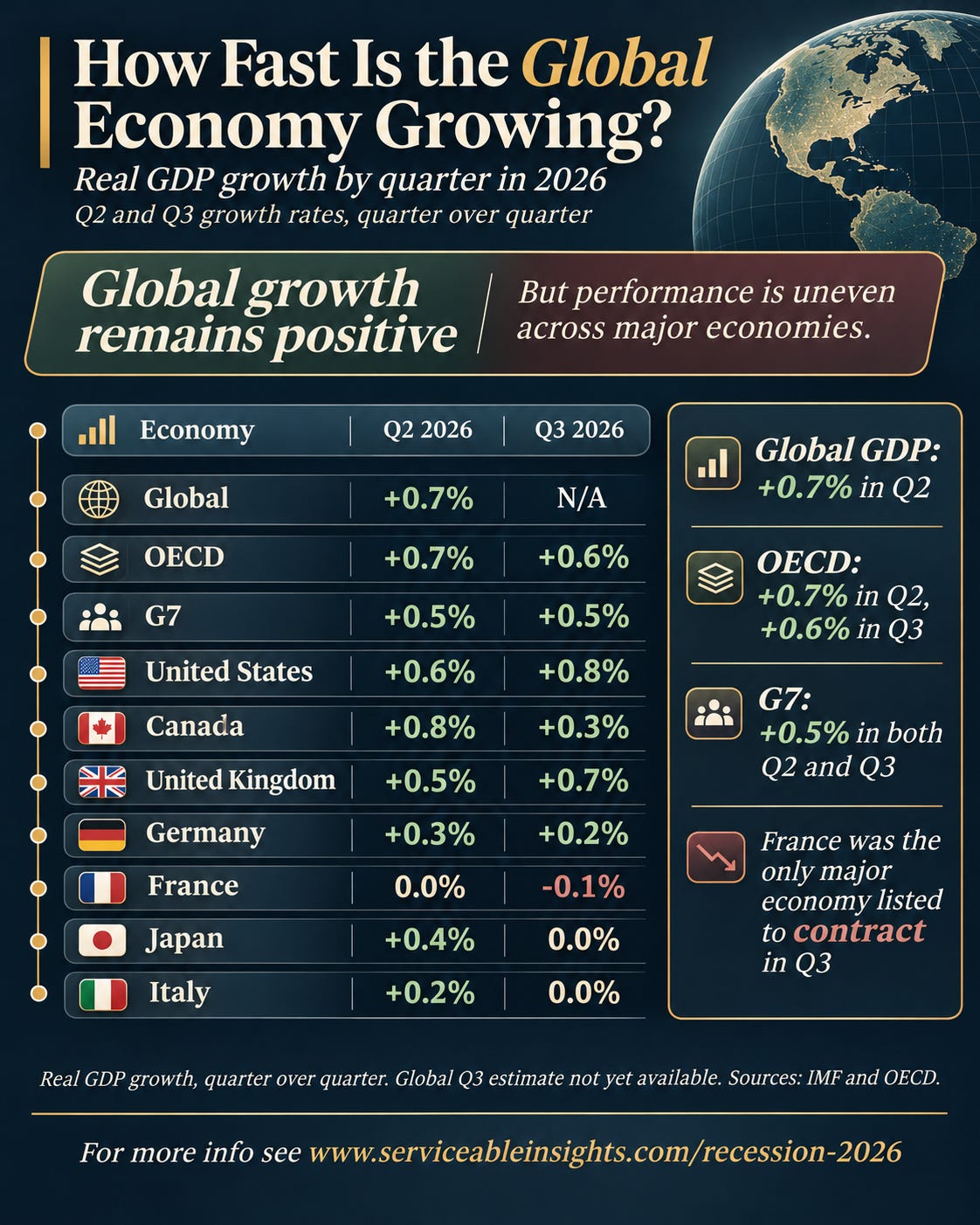
The technical definition is two consecutive quarters of negative GDP growth; by this measure we are not in a recession. Global GDP growth for the first half of 2026 was positive but declining, most major countries still have positive GDP growth, through the third quarter. The notable exceptions were France with negative 0.1%, while Japan and Italy had zero real growth. Part of the slowdown is attributable to the oil shock from the Iran war, while governments are happy to blame everything on this, these low growth countries were on a weak trajectory before the conflict started.
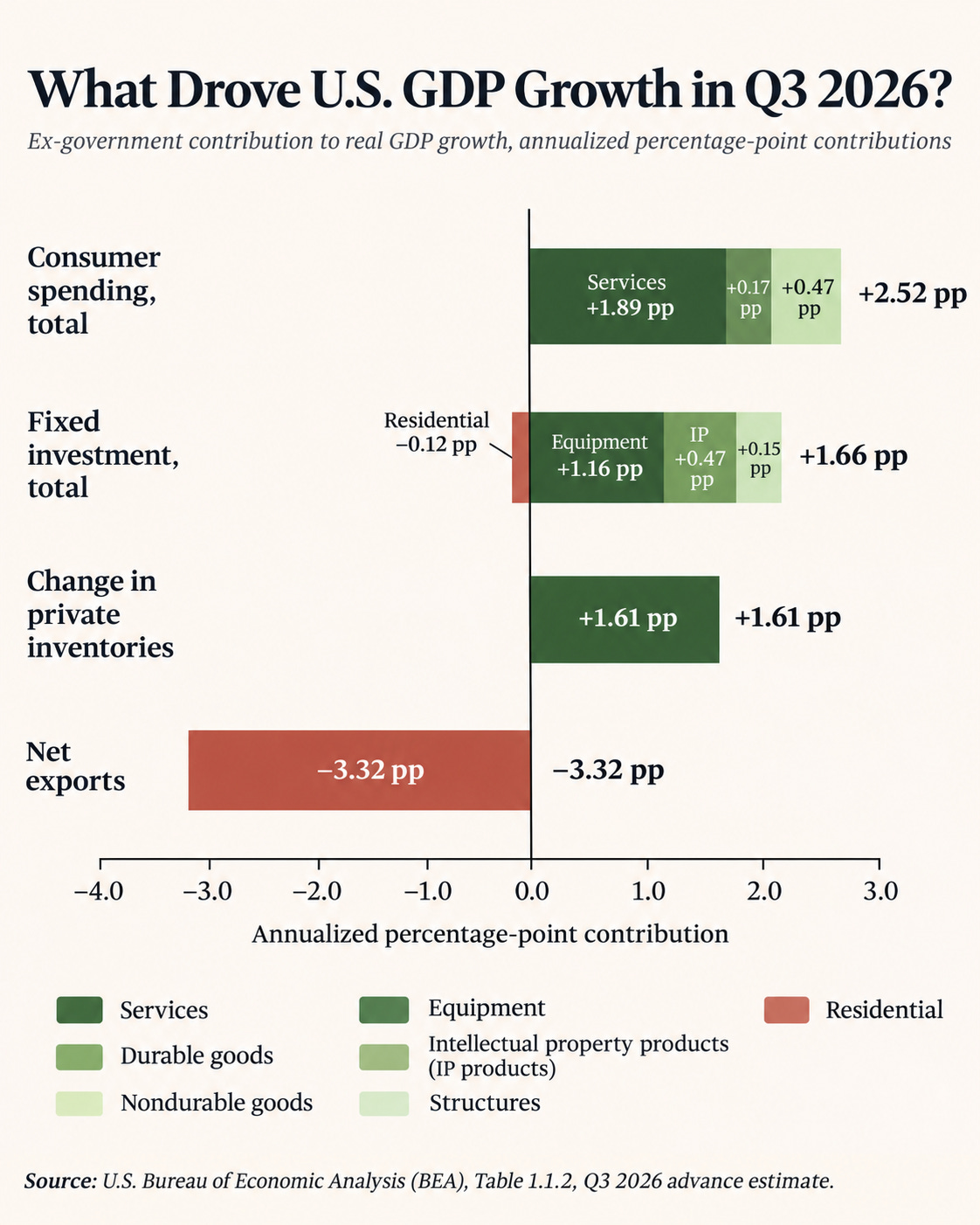
Looking at the US alone, it’s hard to see a recession. Despite a sharp reduction in exports, they are growing at a healthy rate and it’s not because of data centers.
Consumer spending was the biggest area of growth and it’s not from where you would expect: Healthcare, Restaurants, Housing and Prescription drugs. I thought Ozempic was supposed to reduce restaurant bills and losing the weight would cut down on hospital visits. Apparently not.
Among business investment data center investment is contributing anywhere from 0.3-1% annualized growth, depending how you categorize it. This is meaningful but not as consequential as headlines suggest. The larger concern is the major lending from the hyperscalers is believed to be crowding out borrowing from other borrowers, including governments.
The strange case of the US economy is that each category appears reasonably fine in isolation, with the exception of net exports which have plunged because of the trade war. Even if data centre investment’s contribution was zero, the US would still be outgrowing most of their peers, weakening the recession case.
Corporate earnings don’t show a weak economy either, they are still growing at a healthy rate. The S&P 500 saw earnings grow 33% and the NASDAQ grew 44% for Q3, which was down from Q2 but still among the highest of the past two years, and triple the 30 year average of 10 and 15%2. None of this would be consistent with a recession. The bigger issue relates to market multiples.
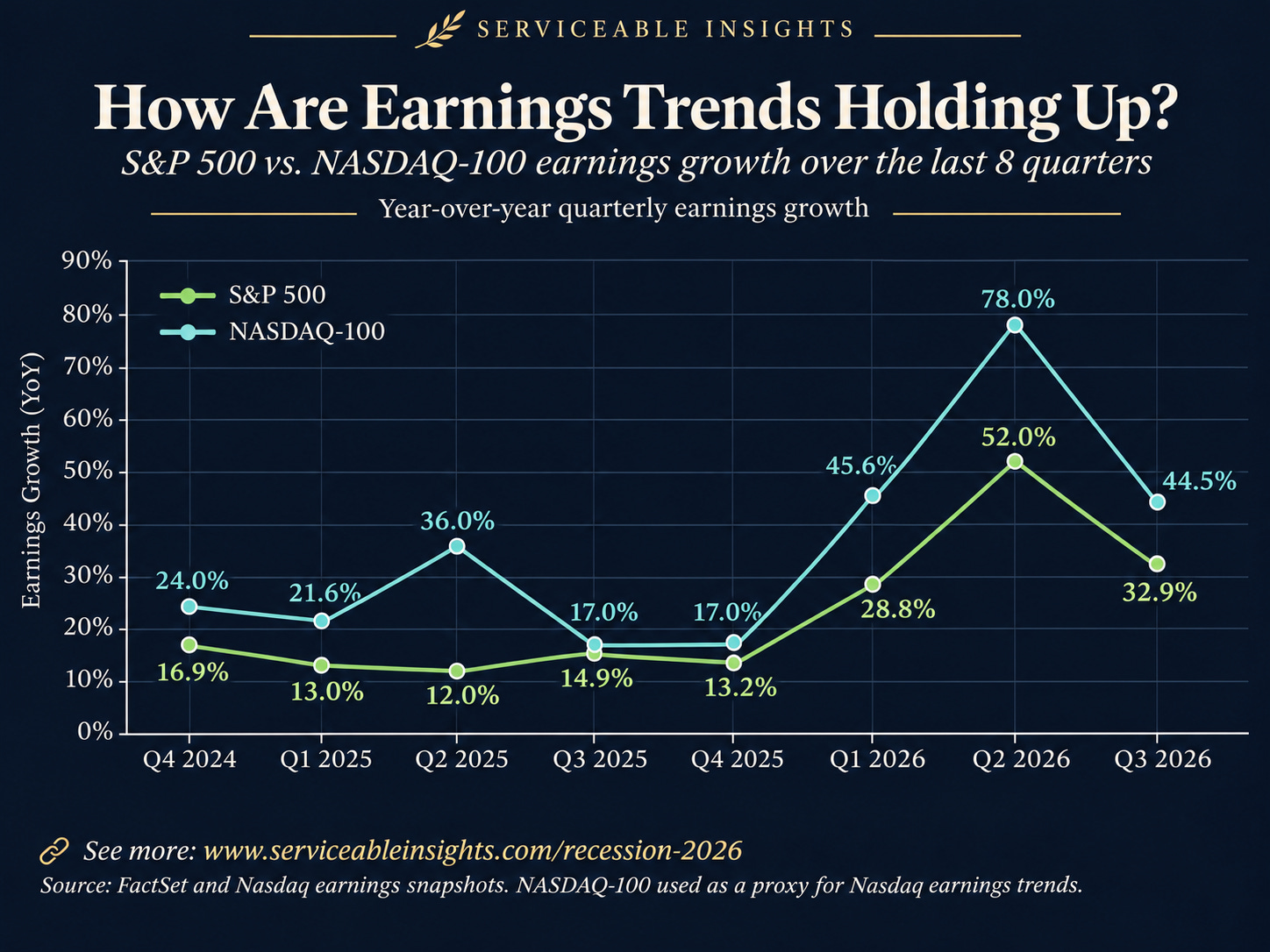
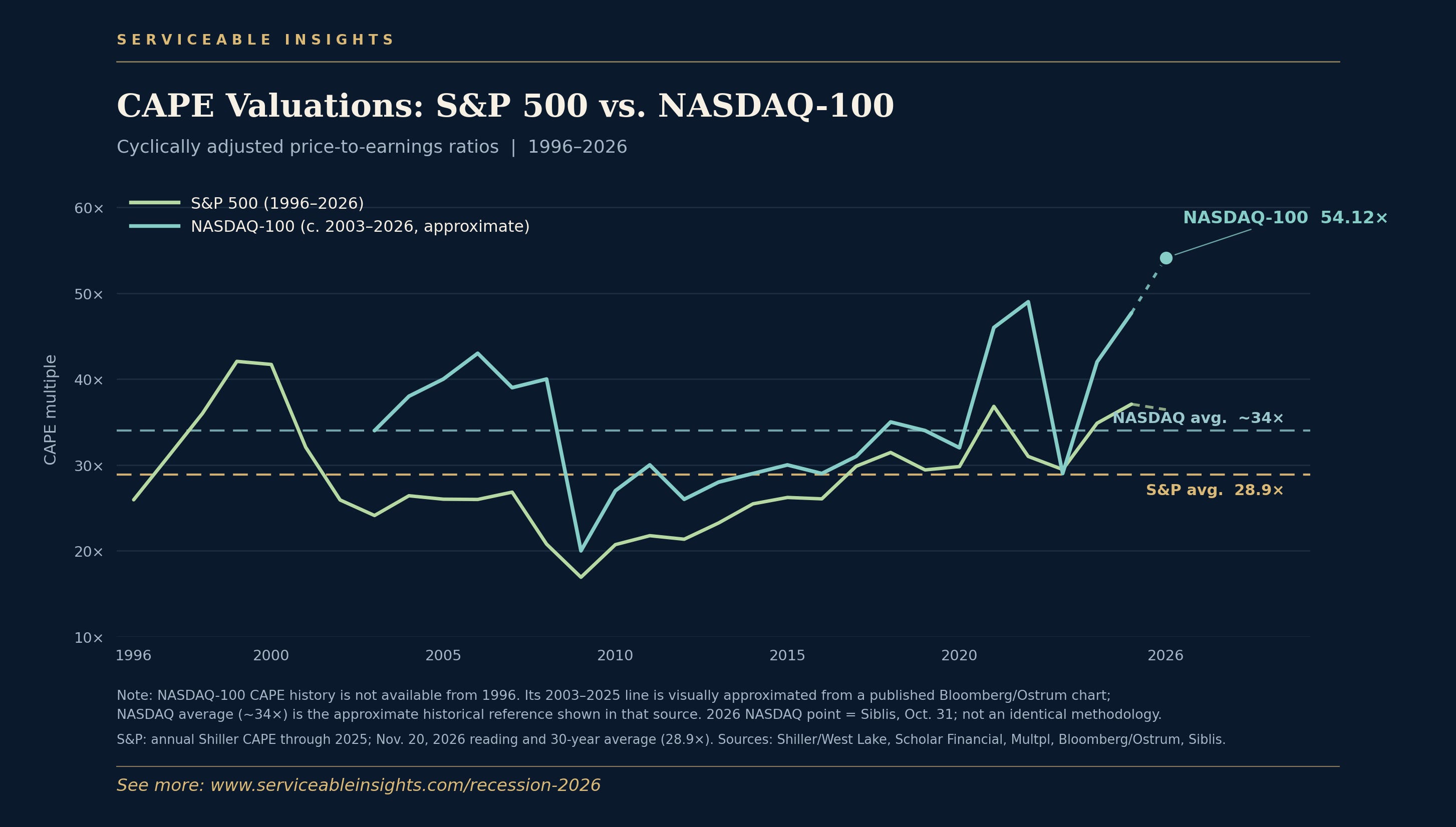
Despite strong earnings growth, both indexes are trading well above their 30 year averages. When the average stock in an index trades at 30-50X earnings, investors are banking on rapid and persistent growth. A company can perform well but still disappoint investors. The recent selloff appears to be this. Most companies are still performing well but if last quarter they were growing at 50-70% but now 30-45%, that’s seen as a letdown.
An additional concern is leverage. Americans had borrowed nearly $1.45 trillion against their brokerage accounts, if the market starts to fall, levered investors can be forced to liquidate holdings, accelerating the selloff and potentially transmitting financial-market stress into the wider economy. This happened in South Korea just before it happened to Leopold earlier this summer.
The combination of leverage, high market multiples and declining earnings growth has set the market up to be a powder keg; it doesn’t take much to ignite. In recent weeks we’ve had the election, the Anthropic IPO and Jensen’s resignation, all of which are capable of creating a spark.
So, are we in a recession? Based on the latest data no. The US economy is still expanding, consumer spending remains strong and corporate earnings are growing faster than historical averages.
The more immediate problem seems to be the stock market itself. Years of exceptional returns, increasingly ambitious earnings expectations and growing leverage have left investors vulnerable to any disappointment. The recent selloff may have been triggered by a handful of noteworthy events, but the conditions for a correction were already in place.
We shouldn’t be surprised if markets fall further before recovering, but it doesn’t necessarily mean a recession is coming. Sometimes investors decide stocks have become too expensive, even if their underlying businesses are performing well.
The danger is if the prolonged selloff begins to hamper business investment long enough to impact spending in the real economy. At some point, investors’ expectations can become self-perpetuating. For now it doesn’t appear that the recession has started yet but don’t be surprised if this recent selloff was the early warning sign that it will.
For people hoping for a quick reversal, history isn’t on your side; in each of the nine previous instances, the NASDAQ fell further before reaching a bottom. In the case of Liberation Day, the rebound was relatively fast but in some cases, it took stocks a long time to retrace their peaks. It took Cisco 25 years and 300% revenue and income growth to reattain their March 2000 share price by December 2025.
One thing to keep in mind when looking at this data is that the constituents of these indexes change over time. Poorly performing companies drop out and better companies take their place.