

When people think about excessive leverage and financial calamities in the mid-2000s, their minds naturally go to mortgage bonds. The housing bubble pushed financial institutions to pour billions into subprime mortgages and complex derivatives. When delinquencies began to rise, the bubble burst and insurance companies, investment banks, and shadow lenders caught on the wrong side of those trades were cooked.
Paulson, Geithner, Bernanke, and others stepped in with bailouts and money printing. I don’t need to explain that story. You’ve probably seen The Big Short or Too Big to Fail.
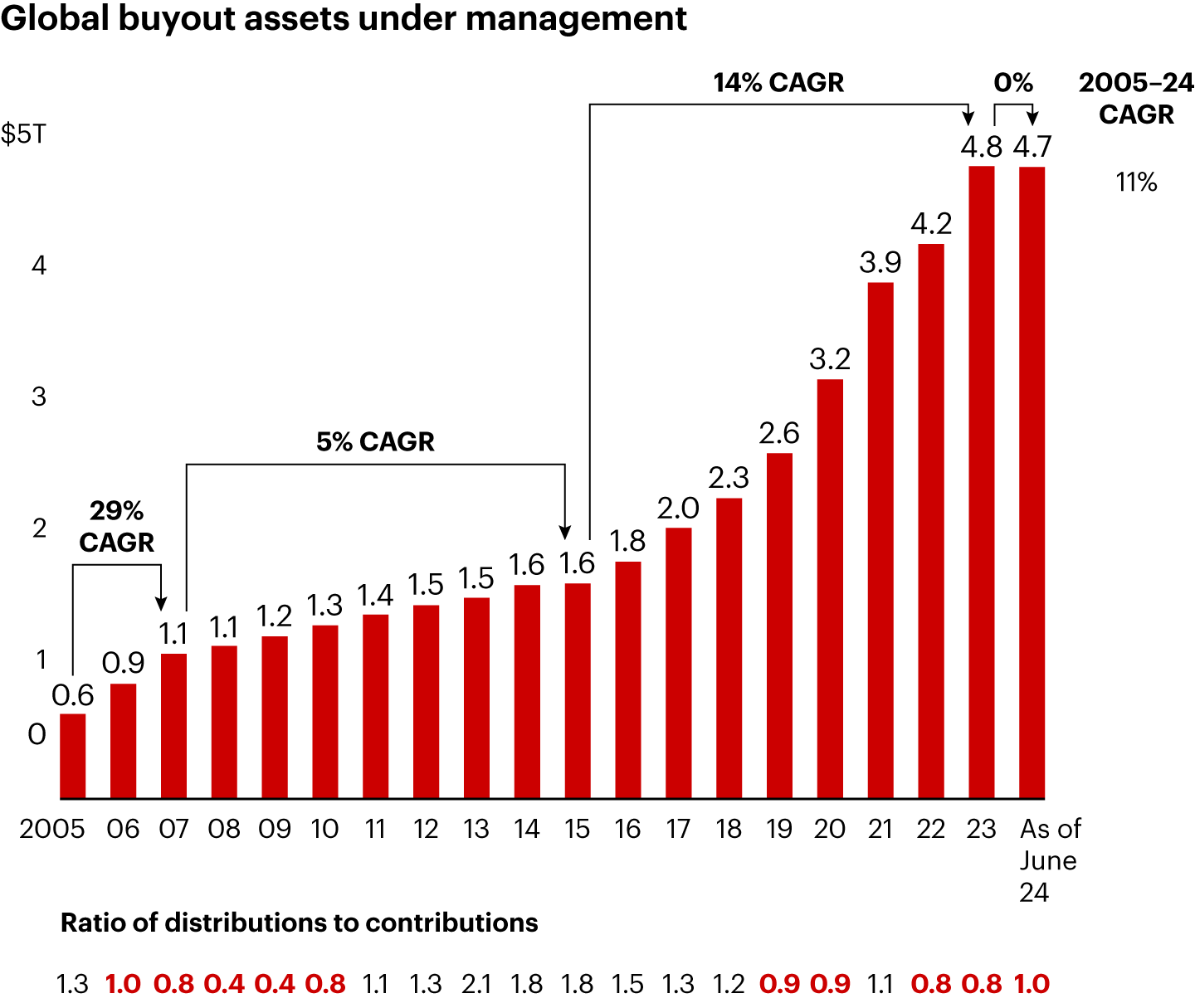
What if I told you that between 2005 and 2007, a similar wave of reckless risk-taking was happening elsewhere, in the beloved private equity (PE) industry?
Today, most people have heard of private equity. They are the ones who buy your favorite brands, load them with debt, cut costs, send the quality to sh!t and somehow still end up in bankruptcy court. Twenty years ago, PE was still fairly obscure.
The industry first rose to prominence in the 1980s, fueled by the junk bonds of Michael Milken and Drexel Burnham Lambert. The battle to take RJR Nabisco private was immortalized in the classic Barbarians At the Gates. After Milken’s arrest in 1989 (documented in Den of Thieves), activity slowed, but by the early 2000s, funds were larger than ever. With debt markets chasing yield, PE firms could once again take some of the biggest public companies private.
That period saw a wave of megadeals involving well-known brands such as Toys “R” Us, Hilton Hotels, and Harrah’s Entertainment (later Caesars Palace).
I picked up The Caesars Palace Coup on a transatlantic flight and could not put it down. The investigative work by Max Frumes and Sujeet Indap outlines the leveraged buyout of Caesars by Apollo and TPG, the internal turmoil that followed the 2008 crisis, the financial engineering used to avoid breaching debt covenants, and the years-long legal battles among creditors, Caesars, and the private equity sponsors.
The book perfectly captures what happens when private equity overpays and overleverages. It also explains why debt covenant contracts today run thousands of pages long, earning law firms substantial fees.
In this piece, I will summarize the key lessons from The Caesars Palace Coup and explore what it reveals about private equity, debt, and how great businesses can be destroyed by financial engineering.
Keep reading if you want to learn about the private equity industry, debt, business management and bankruptcy courts!
But first, make sure to hit the Subscribe button to join 1,000+ other Subscribers that get Serviceable Insights delivered directly to their inbox each week.
If this week’s article does not interest you, please check out some other recent ones:


Basic Primer on Private Equity
Private equity firms raise funds that pool capital from investors known as Limited Partners (LPs). The private equity firm itself acts as the General Partner (GP). These funds are structured as partnerships for tax reasons. This is the whole carried interest tax loophole libs are always clamoring about.
The GP takes the committed capital from LPs and uses it to identify and acquire businesses it believes are undervalued. Once under their ownership, they usually make changes to the company’s management team, operations, and capital structure (more on that later) to increase the value of their stake before selling it.
A typical private equity fund targets between 6 and 15 investments. Unlike venture capital firms, which make dozens of bets expecting only a few to drive returns, private equity funds rely on more consistent outcomes across their portfolio. Their investments usually have a lower upside but less binary risk, so each deal must generate a meaningful return. (Click here for a long winded explanation of VC)
The LP commitments represent the equity that the private equity fund invests in its portfolio companies. The rest is financed with debt. In most cases, buyouts are funded with 60 to 80 percent debt, depending on credit conditions and the risk tolerance of lenders. This is why they are called Leveraged Buyouts (LBOs).
Covenants are restrictions placed on a company until its debt is repaid. They typically include financial ratio requirements such as EBITDA or operating cash flow needing to exceed interest payments by a certain multiple (anywhere from 2-6X). Covenants can also limit asset sales, dividend payments, or additional borrowing. They exist to protect lenders and ensure that equity holders don’t plunder the business and get reckless with borrowed money.
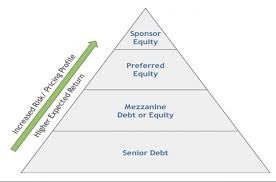
Debt is often issued in multiple tranches, each with a different level of seniority and repayment priority. Senior debt sits at the top of the capital structure and is often secured by specific assets or the company as a whole. Junior or subordinated debt sits below it, is often unsecured, and carries a higher interest rate to compensate for the greater risk of non-payment in the event of default or bankruptcy.
If everything goes according to plan, the private equity firm acquires the company, raises the necessary debt, makes operational changes (cost reductions or asset sales), and uses the company’s cash flow to service the interest and gradually pay down principal. When the firm exits the investment, the lower debt balance means the equity value has increased, similar to how a homeowner builds equity by paying off a mortgage.
Unfortunately, just like with mortgages, companies can fall behind on their payments or even default. When that happens, they must negotiate with creditors or file for bankruptcy. This is when the real fun begins. Creditors, management, and the private equity sponsors all fight to protect their claims, and if no settlement is reached, the battle moves to bankruptcy court, where lawyers argue over who is entitled to what.
Normally it doesn’t come to that, but when it does chaos can ensue. Just like it did in the case of Caesars Palace.
A Short Overview of The Caesars Palace Coup
I will now try to summarize a 300 page book in a few short paragraphs, if you find this remotely interesting, check out The Caesars Palace Coup.
Harrah’s Entertainment had been operating regional casinos for decades until a Harvard professor named Gary Loveman came along and realized there was a massive opportunity to use data and analytics to improve the customer experience. Other casino operators focused on real estate and spectacle, building ever-larger resorts, while Loveman focused on understanding customer behavior. He launched a loyalty rewards program that proved to be a gold mine for Harrah’s. Instead of returning to academia, Loveman stayed on and eventually became CEO.
Under Loveman, Harrah’s revenue grew consistently across all locations and business segments. Yet Loveman could never understand why the market wasn’t rewarding the stock with a higher valuation multiple. The stock seemed perpetually cheap. He wasn’t alone in thinking that.
Private equity giants TPG and Apollo group shared Loveman’s view. Harrah’s had all the qualities of a perfect private equity target. Strong management team, low debt in it’s capital structure, consistent cashflow and the casino business was believed to be recession proof.
In 2006, Harrah’s had at a market cap of ~$15B and $10B of outstanding debt giving it a total enterprise value (TEV) north of $20B. Acquiring a company of this size would have previously been unthinkable but in the early 2000’s PE firms had taken several large companies private such as Hilton Hotels ($26B), Toy-R-US ($6.6B) and Texas Instruments ($44B). PE funds were raising larger funds and there were many interested lenders willing to fund these large LBOs.
TPG and Apollo paid a total of $28B to acquire Harrah’s, which they later renamed Caesars Entertainment, after their most visible asset. From that purchase price, about $4B of that was equity with the rest coming from debt financing (85% debt). Some of the existing lenders rolled over their debt but TPG and Apollo had to raise ~$20B from the market. They had to do this during 2007 as banks and lenders were starting to become skittish about lending. Nonetheless, they got it done and the deal closed in January 2008. Just months before the financial crisis.
The debt carried pretty much no covenants. The only one was they needed to maintain an Interest Coverage Ratio (EBITDA / Interest Expense) greater than 2.0X. That’s not asking for much. Sign of the times. Probably why the financial system nearly collapsed a year later. As such, TPG and Apollo’s thesis of the Casino business being recession proof was put to the test.
Turns out, during a crisis, people don’t have money to go to Vegas and gamble. After years of steady growth, suddenly Caesars revenue was getting wrecked. This is after loading up with $20B of debt, much of it high yield. It wasn’t long before they started to flirt with the 2.0X Interest Coverage Ratio Covenant. TPG and Apollo needed to reach deep into their bag to stem the tide.
TPG tried to help streamline operations by reducing costs anywhere they can; not easy in a heavily unionized environment. The net result, Caesars stopped investing in hotel upkeep and they started to look shabby. Guest and employee satisfaction took a hit. Meanwhile Apollo took care of financial engineering. They created a maze of subsidiaries and special-purpose entities, transferring assets among them to raise cash and to protect certain properties from creditors.
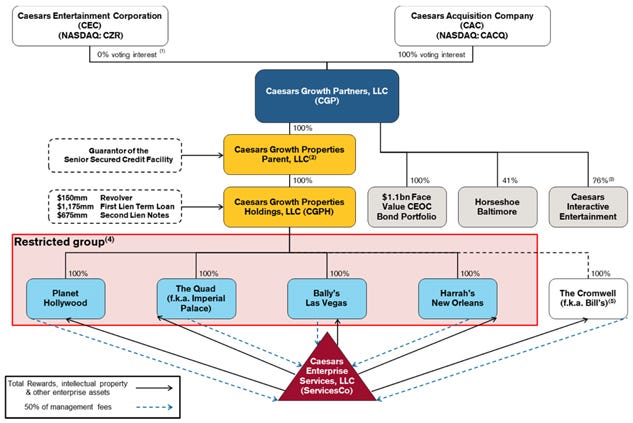
These maneuvers were meant to buy Caesars time to weather the storm and get back on track but it didn’t happen as quickly as they had hoped. Caesars revenue continued to slump, underinvesting in maintenance wasn’t helping things. The debt burden kept growing and it eventually became clear Caesars was going to default.
Apollo’s use of these entities was not exclusively benefit of the Caesars parent company, they were trying to keep some of the better assets out of the reach of creditors in the event of bankruptcy proceedings. When creditors found out about this, they were pissed. These creditors they were upsetting were some of the largest and sophisticated firms in the financial world, such as Oak Tree Capital (led by Howard Marks), Appaloosa (David Tepper), Elliot Management (Paul Singer), GSO and many others.
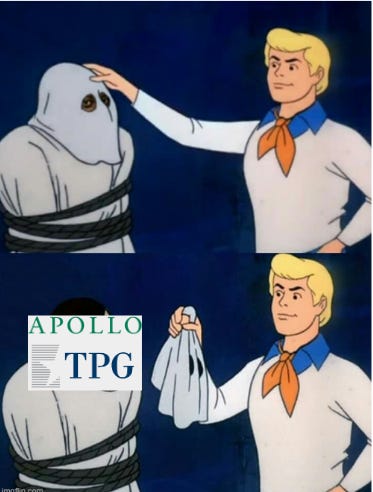
In the years long legal battle that followed, Apollo and TPG lost badly. In 2017, the creditors were made whole and the partners working the deal for Apollo and TPG were lucky they weren’t personally held liable. Despite the stumble, neither firm really suffered. They continued to raise larger funds, their efforts to avoid bankruptcy was well received by LPs. Caesars Palace still exists today and they did eventually grow into the valuation Apollo and TPG expected it to, it’s just that the excess value went to the debt holders and none went to the investors, employees or other shareholders. Loveman lost his job but at least a bunch of law firms earned millions in fees from all their litigation efforts.
How Private Equity Impaired a Healthy Business
Harrah’s Entertainment was thriving under Gary Loveman’s leadership. The company was steadily growing revenue each year, customers were loyal, and employees were motivated.
Unfortunately, Loveman’s frustration with the company’s stagnant share price led him to fall prey to the same siren song that lured F. Ross Johnson into the ill-fated RJR Nabisco buyout. He was not only enticed by the financial upside of the deal but also believed that the expertise of Apollo and TPG would help take Harrah’s to the next level.
Harrah’s was performing well, it was not a distressed asset. That meant the private equity firms had to pay a high price to acquire it. The timing, however, could not have been worse. Revenues began to decline almost immediately after the deal closed. Apollo and TPG had contributed only a small amount of equity, relying on extreme leverage to create value.
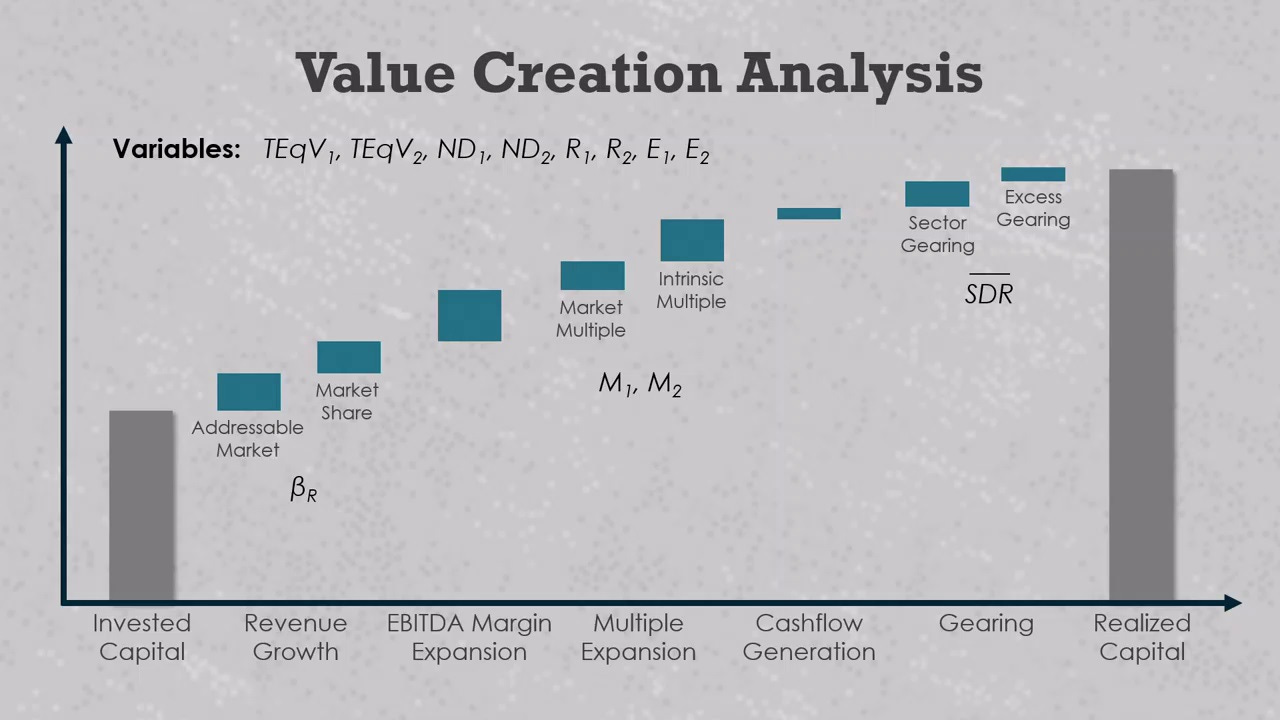
As growth slowed, valuation multiples compressed and profitability fell. The company could no longer service its massive debt load. It was a perfect storm of everything that private equity investors fear: falling revenue, tightening credit conditions, and debt levels too high to sustain.
Their cost-cutting measures provided short-term relief but did little to address the deeper issues created by excessive leverage and a collapsing economy. The absence of strong corporate governance allowed the private equity sponsors to run Caesars with minimal regard for other stakeholders, treating it more like a balance-sheet experiment than a living business.
If not for the intervention of Oaktree, Appaloosa, Elliott, and the court system, Apollo and TPG might have escaped accountability. Instead, they were forced to confront the consequences of their own financial engineering and the value destruction it caused.
Still, both firms were large enough to move on. Within a few years they had raised billions more and were back to buying new companies. For them, Caesars was a lesson, not a scar. For everyone else, it was a warning.
Private equity can work when executed with discipline, patience, and aligned incentives. The asset class has produced genuine success stories. This was not one of them.
The Caesars Palace Coup highlights its dark side: when greed, leverage, and misplaced confidence combine, even great companies can be hollowed out from within.
The next time you see a beloved brand “go private,” remember that it might not be for its own good.
Thank you for reading. If you liked this article please Subscribe below. I publish articles on a wide range of topics from business, books, current events or anything on my mind.
"These creditors they were upsetting were some of the largest and sophisticated firms in the financial world, such as Oak Tree Capital (led by Howard Marks), Appaloosa (David Tepper), Elliot Management (Paul Singer), GSO and many others."
Wouldn't mess with Elliot https://www.businessinsider.com/hedge-fund-elliott-capital-management-seizes-ara-libertad-ship-owned-by-argentina-2012-10
To quote a friend who builds PE deals:
“There has never been a story that ended with ‘and then private equity got involved and everything got better.’”