

When faced with a perceived injustice it’s common to see the blame placed on some external entity. For some it’s the Illuminati, others Mossad but most commonly regardless of politics, many are quick to point the finger at corporations.
They’re easy targets. Contrary to what Mitt Romney tried to convince us, corporations are profit seeking non-sentient beings. They don’t need to make friends, their primary aim is to maximize shareholder value.
Depending on how extreme somebody’s view of this runs, this could justify actively making the planet worse. Whether that’s Big Tobacco lying about the link between smoking and lung cancer or factories dumping toxic waste into a towns water supply, there are many examples of this.
Yet contrary to what many say, corporations do not run the world. Between the different levels of government, regulators and legal systems, there are checks and balances limiting how much corporations can have over a population or territory.
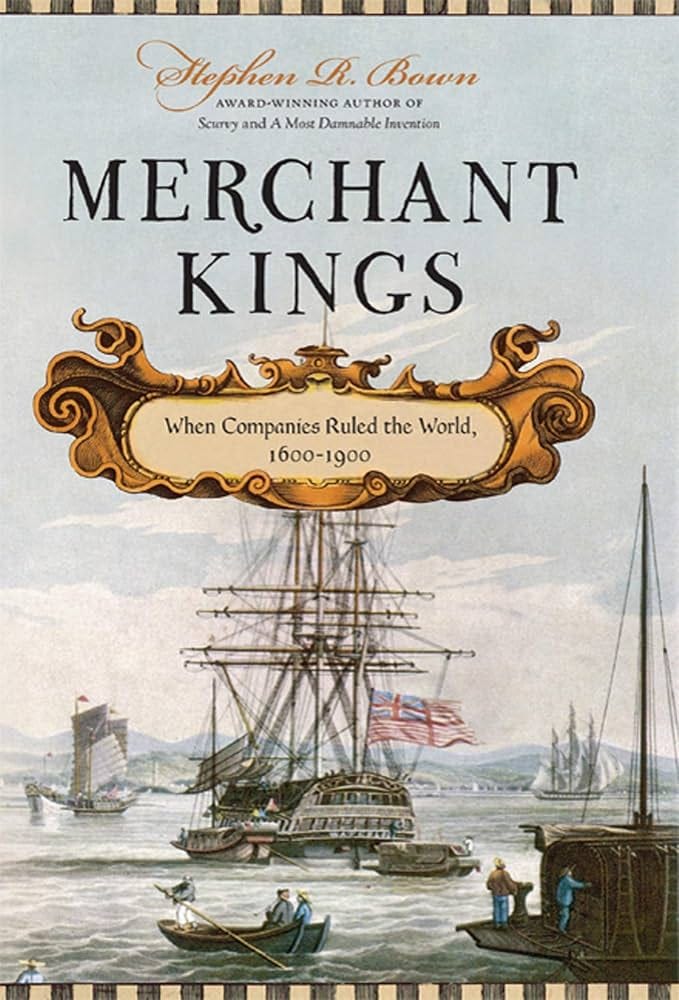
Although it has not always been this way. From the 17th to early 20th century, there were several limited liability corporations that held dominion over lands while effectively operating as the local government:
Pieterszoon Coen of the Dutch East India Company — Indonesia
Pieter Stuyvesant of the Dutch West India Company — New York
Robert Clive of the English East India Company — India
Aleksandr Baranov of the Russian American Company — Alaska
George Simpson of the Hudson’s Bay Company — Canada
Cecil Rhodes of the British South Africa Company — Rhodesia (modern-day Zimbabwe and Zambia)
These companies were motivated by profits, primarily through trade, whether it was spices, beaver pellets or diamonds they were focused on expanding their network to generate more dividends for shareholders. In some cases this meant colonizing sparsely populated lands, in others they had to displace locals through military might.
These were not companies in the modern sense. European governments in search of revenue granted trade monopolies over large geographic areas to private companies. Beyond trade rights, they were granted powers beyond what modern companies are permitted such as maintaining armed forces, construct forts, signing treaties or waging war.
Colonization was a risky and capital intensive investment that took years before it started to pay off. Governments could not finance it themselves, since they were too busy warring with their European rivals. Even if they had the funds, this type of exploration was not for the faint of heart. This was effectively the most extreme version of entrepreneurship; the probability of success was low and likelihood of dying was high.
As the leader of one of these trade companies you had to board a ship to travel to a part of the world you knew nothing about, then with minimal support build a trade network without getting killed from a rival nation, local population or disease. If you asked Claude at the time, it would have decided it was impossible. Grok would have suggested to YOLO it.
Somehow despite the odds being stacked, some of these explorers succeeded because of their sheer force of will. While their personalities differed, they were all extreme individuals. They also weren’t free market competition loving capitalists. They were monopolists, that ensured nobody could infringe on their government granted monopoly so they could expand their teritories. If that meant burning down villages or breaking up communities to avoid trade competition, so be it.
The Dutch East India Trade Company wasn’t trying to be the biggest player in the spice market, they were trying to be the only one.
Establishing and maintaining a colony becomes increasingly expensive. As you start to exhaust the low hanging fruit, you have to keep venturing deeper into the territory making it increasingly expensive to maintain supply lines. You have to import more food, supplies and people from the mainland. Employees wanted to be paid. Contrary to what you would think, it wasn’t a picnic for the average person living in one of these colonies. They had all the risks of death and boredom without the upside of being a company director or shareholder. Before long, the explorers had to spend as much time maintaining a community as they did managing their trade network. Whether that was dispensing justice, coordinating infrastructure projects or coordinating military campaigns, they were wearing multiple hats. Some were better than this than others.

Some just wanted to focus on war others were forced to send any and all revenue back to the corporation in Europe. With few exceptions, they prioritized trade at the expense of building a self sustaining colony. George Simpson lost Oregon to the United States because he didn’t want people to settle the lands to avoid over hunting the beaver population. When Americans started migrating north, they quickly outnumbered Canadians1. When President Polk came to office with the slogan “54°40′ or Fight!”, the British quickly decided it wasn’t worth engaging in a conflict to preserve a territory with only a few hundred of their colonists.
A consistent theme was the original explorer did a decent enough job of making the colony work well enough that sizeable trade profits could be maintained, but as soon as they died or retired, the operation began to go sideways. Succession is a problem in politics and business. Eventually these private companies lost control over the colonies they established, having to hand the reins over to their home governments.
The English East India Company became so politically important, and its governance so problematic, that Britain took over its Indian territories following the rebellion of 1857.
The Hudson’s Bay Company transferred Rupert’s Land to Canada in 1870 and increasingly became a retail and real estate business.
The British South Africa Company incurred enormous costs administering Rhodesia, struggled to deliver financial returns and eventually lost its administrative authority in 1923–24.
It turns out bureaucrats living thousands of miles away with a limited understanding of the colonies they are presiding over, did not fare much better. Unlike a corporation, governments have to abide by more strict code of conducts and human rights2. While they were in some cases more interested in nation building, eventually the financial and logistical commitment was too great. Not to mention international pressure.
Although the legacy of these companies still shapes these nations today, corporations do not control them like they once did. While the profit motive is powerful and was certainly a key reason for why European sailors decided to establish new colonies, making decisions through the lens of profits alone is not the right way to govern.
When corporations ran the world, they proved remarkably effective at expanding empires and considerably less effective at governing them. It turns out maximizing shareholder value is not the same as building a functioning society.
They weren’t really Canadians yet.
At least for their own citizens