

A mogul who built an empire from nothing, dominated the media and business worlds, and still shapes international politics in his eighties is trying to pass his kingdom to one of his children. It is not going smoothly.
The problem is simple. Men like this cast enormous shadows. Their children are not just competing with one another, they are competing with the force of the founder himself. He advises presidents, knows every major tech leader personally, and owns media assets that can be used to advance both personal and business interests.
That description fits Logan Roy, the patriarch of Succession, one of the most iconic characters in modern television.
The Roys were widely understood to be modeled on the Murdochs, the family behind Fox and News Corp, who controlled major parts of the media landscape for decades while publicly fighting over the future of the empire.
The creators and cast have said as much.
But what if the real person closest to Logan Roy is not Rupert Murdoch? What if there is another living billionaire who fits the role even better?
A man who has been divorced many times, owns major media assets, recently fought a proxy battle, and is now trying to hand parts of his empire to his children.
That man is Larry Ellison.
Ellison, the co-founder of Oracle and the self-styled samurai of Silicon Valley, was close with Steve Jobs, has spent years operating like a kingmaker in tech and media, helped finance Elon Musk’s takeover of Twitter, recently acquire a stake in Bytedance US (TikTok) and has recently backed his son David Ellison’s bid to help take control of Paramount through Skydance.
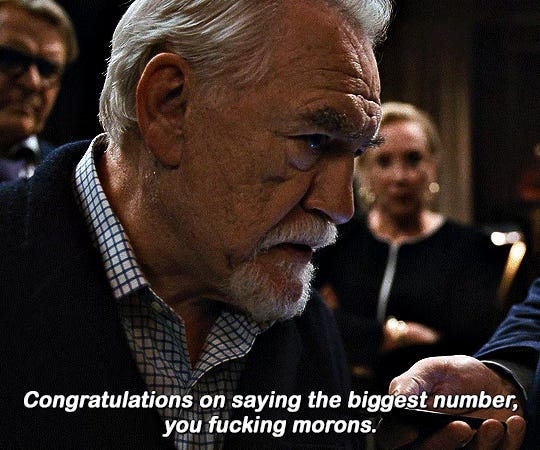
Even some of the public commentary around him feels like it belongs in Succession.
The similarities do not stop at the surface level. In temperament, ego, family dynamics, and the instinct to treat business, media, and power as one seamless game, Ellison may be the closest thing America has to a real Logan Roy.
Don’t believe me? Keep reading.
If this week’s article does not interest you, please check out some other recent ones:


Early life/ Upbringing
Logan Roy was born in Dundee, Scotland, (where Brian Cox is actually from), sometime around 1939. Due to the war, he and his siblings were sent to Quebec to be raised by their aunt and uncle. Logan lost his sister to tuberculosis, which his uncle blamed him for. That same uncle beat him, and the scars were still visible when Logan was in his eighties in Succession. He had a strained relationship with his brother Ewan, and his own children seem to have few happy memories of him.
Larry Ellison was born in New York in 1944. At nine months old, he was given up for adoption to his aunt and uncle, who raised him in Chicago. He did not learn they were not his biological parents until he was a teenager. His adoptive father may not have been physically abusive like Logan’s uncle, but he once told Larry he would never amount to anything. That became fuel Ellison would burn for much of his life.
Like many founders and industrialists, both men seem to have drawn energy from the need to prove a father figure wrong.
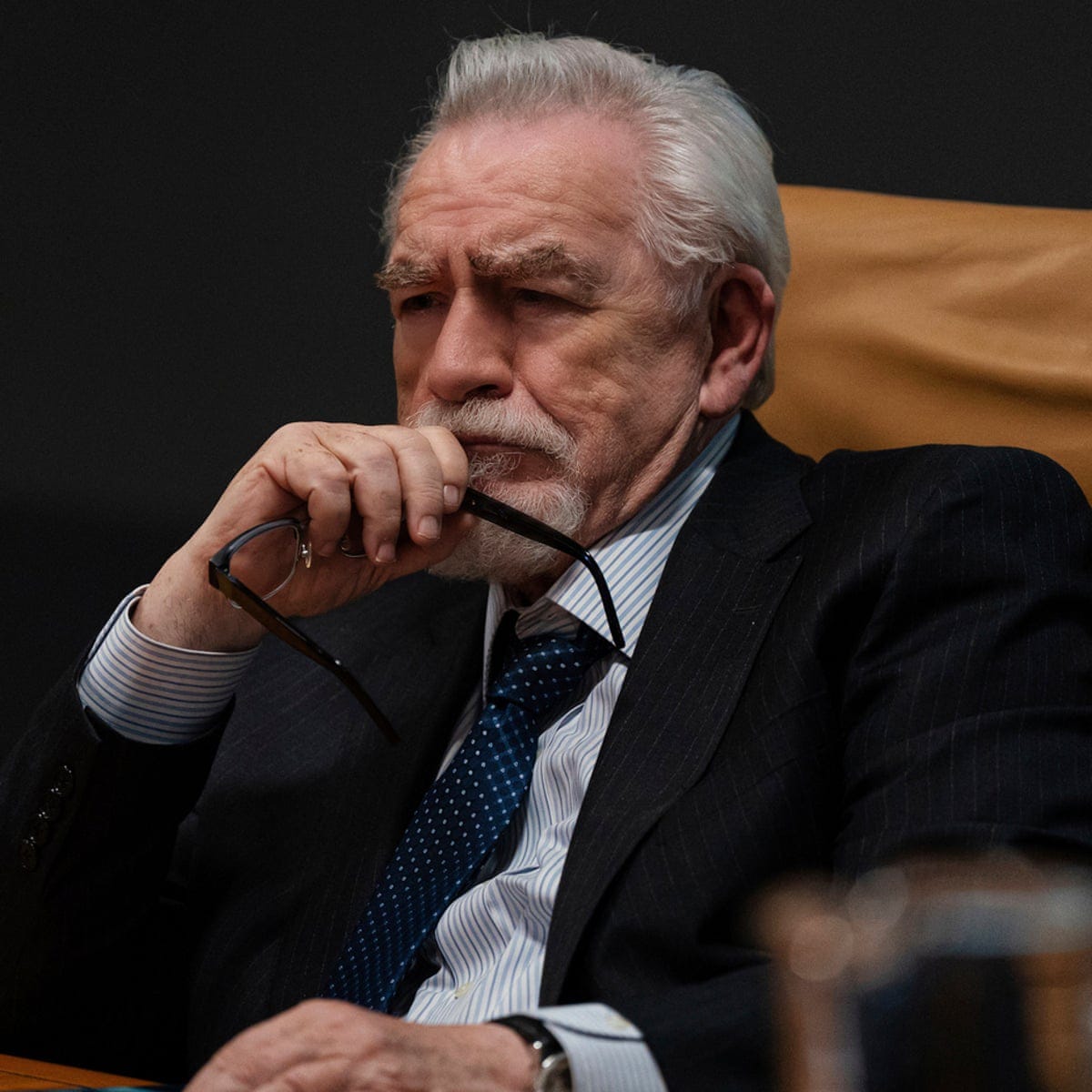
Both built vast empires, but neither followed a conventional path. It is unclear whether Roy attended university, but his rise began with an advertising business that he scaled into a conglomerate. By the start of Succession, Waystar Royco spans cable news, newspapers, film studios, theme parks, cruises, and more.
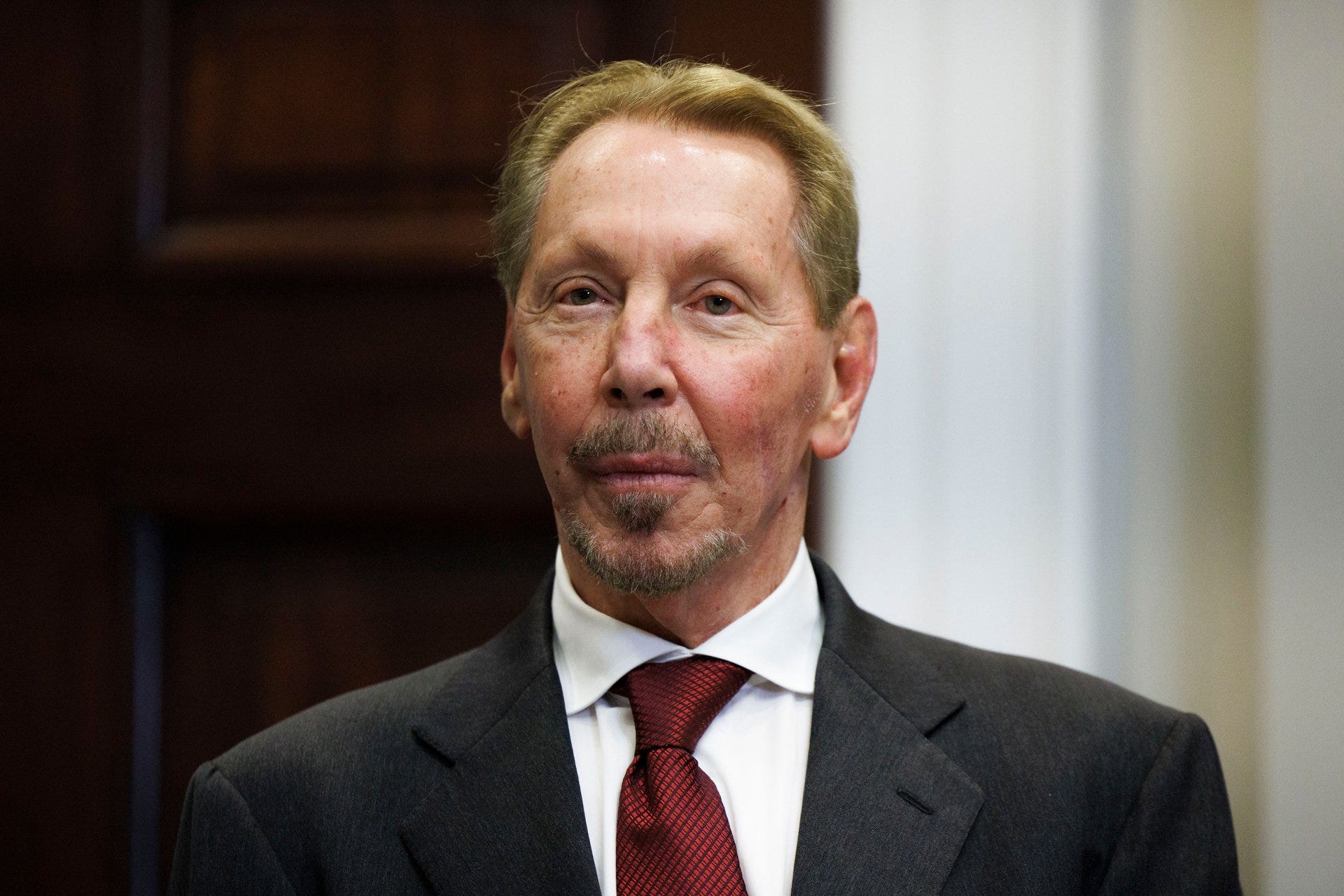
Ellison was a strong student, but dropped out of pre-med and headed to Silicon Valley to work in tech. After stints at several companies, he started a venture with former colleagues selling consulting services. He then came across a relatively obscure IBM research paper on relational databases, which became the basis for what would later become Oracle. Ellison realized IBM did not fully appreciate what it had and was too large and bureaucratic to move quickly. A smaller, leaner company could build the future faster.
IBM had made this mistake before. A few years earlier, it had let a handful of engineers walk away with another software idea it did not care much about. That company became SAP.
It is never entirely clear what motivated Logan when he started Royco. Ellison, by contrast, initially thought he might one day build a company with about $10 million in revenue and 50 employees. He overshot that pretty quickly. Then the ambition changed. The goal was no longer to build a good company. The goal became being number one. Not the number one database company, but the number one technology company in the world.
Competitive Fervor
One of the central themes in Succession is that to succeed at the highest level, you need to be a killer. Logan clearly believes this and tries to hammer the lesson into his children.
In the first episode, while explaining to Kendall why he is delaying retirement, Logan tells him: “I know that you’ve read a lot of books about business management and this and that. But sometimes it is a big dick competition.”
He makes the point even more explicitly in the season two finale. When Kendall asks whether Logan ever thought he could do the job, Logan replies: “You're smart, you're good, but you’re not a killer. You have to be a killer!” It is one of the defining lines of the series and helps set up one of the best season finales in television history.
We only meet Logan after the empire is already built, but by every account, he took no prisoners getting there. He is estranged from his older brother. His rivals fear him as much as they hate him. Even the President of the United States is wary of crossing him. He threatens to grind people’s bones into his soup. He is willing to sacrifice loyal employees when it serves his purposes. There is never much doubt that, once Logan wants something, he does not believe anything should stand in his way.
“I see him as a driving force. He gets what he wants. And when he focuses on something, he gets it.”
That’s not a line from Succession, that’s Marc Benioff talking about Larry Ellison.
“Larry has his foot on the accelerator to the floor trying to drive 150 MPH leaving his competition behind him. He knew eventually he would shoot the car over the cliff but like James Bond, the car will break into 10,000 pieces but he will still be on the other side.”
Ellison was not always like this. One of the things that initially attracted him to technology was that it gave him time to hike and left room for leisure. That changed after Oracle. By his own telling, his first wife left him because he was not ambitious enough. His second wife left him because he was too ambitious. Some would call that growth.
One turning point Ellison often cites was a trip to Japan, where an executive told him Americans were too comfortable with second place. For many of the Japanese businesspeople he met, you were either first or last. Wait, no, that is Ricky Bobby. Still, somewhere along the way, Ellison became obsessed with crushing the competition. It was never really about hitting a revenue target. He wanted Oracle to be number one.
What began as a mission to build the top pure software company, at a time when most firms bundled hardware and software together, evolved into something even bigger. Ellison wanted Oracle to become the largest technology company in the world. Bigger than IBM or Microsoft.
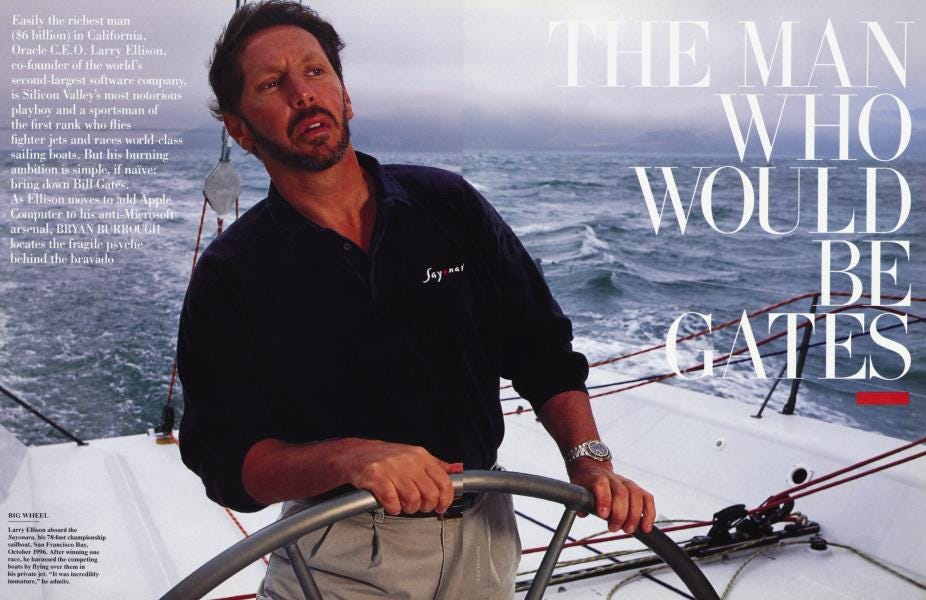
He would openly taunt competitors, put up billboards outside their offices, and run ads that depicted Oracle as superior fighter jets. Ellison had no problem taking direct shots at Bill Gates at the height of his powers. This was the antitrust-era Bill Gates, not the softened, philanthropic version most millennials and Gen Z know.
While Ellison was more of a sprinter Gates was a marathon runner type of psycho. He removed the radio from his car so he wouldn’t be distracted during his commute to and from work. Ellison would sail yachts and stay busy with hobbies outside of work.
Oracle never quite became the number one technology company, but for a long time it was one of the most formidable players in the industry. That is a remarkable achievement for a business-to-business software company competing across decades against Bill Gates, Steve Jobs, Larry and Sergey, Zuckerberg, and pretty much every other titan of modern tech. Despite this, with Ellison’s reluctance to sell Oracle stock, in 2025 he briefly surpassed Elon Musk to become the world's richest man.
Contrarian
Before Peter Thiel, Ellison was Silicon Valley’s contrarian.
Oracle succeeded in large part because Ellison repeatedly saw something others did not and was willing to bet the company on being right. Few people initially believed relational databases would become a major category. Later, Oracle moved aggressively away from client-server applications and toward internet-based systems in the 1990s, before most people thought the internet would matter much for enterprise software.
Ellison’s logic was simple. This was the only path to number one. If Oracle stayed in client-server, SAP would remain ahead. If the internet reshaped enterprise computing the way Ellison thought it would, Oracle would be best positioned to ride the wave. There were many other examples like this. Ellison was rarely afraid to act on his own view of where technology was going, even when the rest of the industry and most analysts disagreed.
Logan made similarly bold calls in media. When others thought home video would kill movie theaters, Logan invested in theaters because he believed people would still want to go to the cinema. While Kendall and others were drawn to flashy websites and trendy digital assets, Logan preferred regional newspapers and local affiliate channels. These were aging businesses, but they still held influence and had sticky audiences, much more so than websites that could come and go with the seasons.
When he faces a proxy fight, Logan entertains two very different ways out: acquiring a politically opposed legacy media rival or buying a newer, buzzier tech-media company. His preference was the legacy media rival because that’s what he understands and value. Logan appreciates technology, but he never mistakes it for power itself. In his worldview, technology can amplify influence, but it cannot replace it. Real power still comes from controlling media assets that can shape opinion and pressure politicians into submission.
Influence
While Logan’s influence on politics is explicit, Ellison’s was more bespoke until recently.
In a fairly short stretch, Ellison went from being a rich political donor with strong connections to becoming a far more direct player in the machinery of information and influence. He helped finance Elon Musk’s takeover of Twitter, Oracle became deeply embedded in TikTok’s U.S. structure, and his son David Ellison now runs Paramount Skydance, which gives the Ellison orbit meaningful control over a major Hollywood studio and a broad set of media assets.
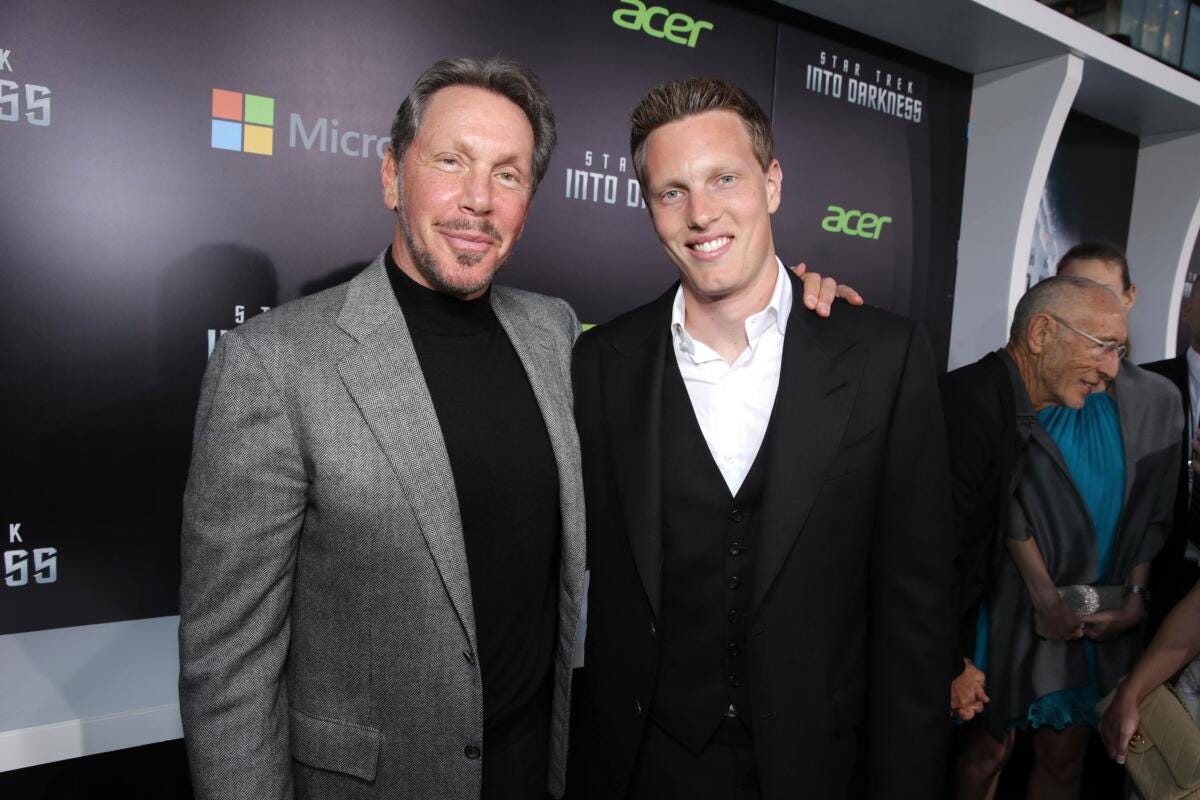
Ellison is the elder statesman of Silicon Valley. He was close with Steve Jobs, is viewed as a mentor by figures like Elon Musk and Marc Benioff, and is probably no more than a second-degree connection away from almost any important person in tech. He has spent decades accumulating not just money, but proximity to power.
It is also quite clear that he has unusual access to President Donald Trump. Ellison hosted a fundraiser for Trump in 2020, joined a post-election call about strategies for contesting Trump’s loss, and appeared beside Trump at the White House for the Stargate AI announcement in January 2025. Oracle was also central to both the earlier TikTok negotiations and the newer TikTok U.S. joint venture. None of this proves that Ellison is writing policy himself, but it does suggest something simpler and probably more important: when Larry Ellison wants something done, he can pressure politicians into making it happen.
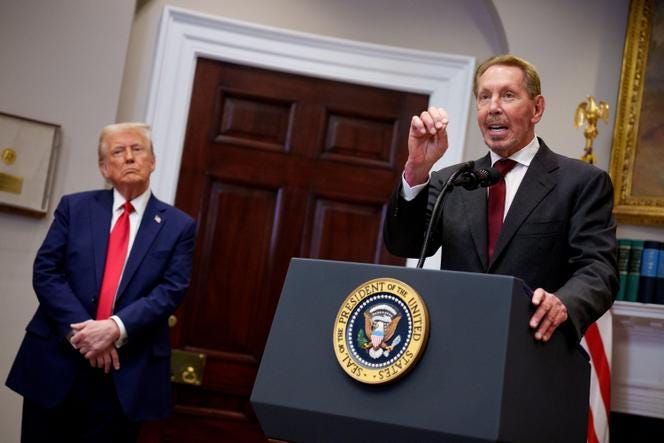
That feels very Logan Roy. Logan may be fictional, but one of his defining traits is that he does not need formal office to exercise power. He can call the administration, intimidate rivals, shape narratives, and make politicians behave as though he outranks them. Even decide who the next President will be. This makes him hated by many politicians and the general public alike.
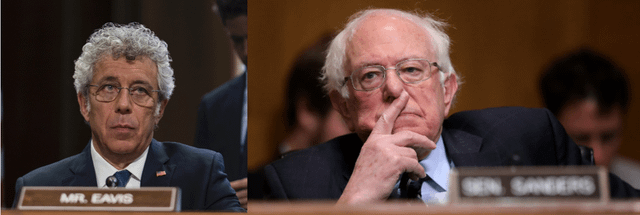
Ellison is not loved by everyone, either. The Paramount-Skydance deal drew heavy scrutiny from Democrats who preferred Netflix acquire Paramount.

This sounds exactly what Gil Eavis says of Logan Roy throughout Succession. It’s quite clear the Eavis character is at least partially based on Bernie Sanders, and although Sanders was not calling out Ellison during Succession’s filming run, he now is.
So this raises the real question. Was Logan Roy always closer to Larry Ellison than Rupert Murdoch, even if the writers did not fully realize it? Was this simply a question of time catching up with the character?
Here you have two men raised by relatives rather than by their biological parents, both marked early by hard and often humiliating father figures. Both built empires through bold, contrarian bets. Both obsessed with winning and treat business as a theatre of dominance rather than a vehicle for profits. Both understood that money alone is not enough. To bend the world to your will, you need power, money and influence.
That is why I submit that Logan Roy may be less a portrait of Rupert Murdoch than an accidental prophecy of Larry Ellison.
Or maybe Ellison saw Logan Roy and decided the resemblance was an aspiration.
Thank you for reading. If you liked this article please Subscribe below. I publish articles on a wide range of topics from business, books, current events or anything on my mind.