

Every other announcement is about AI.
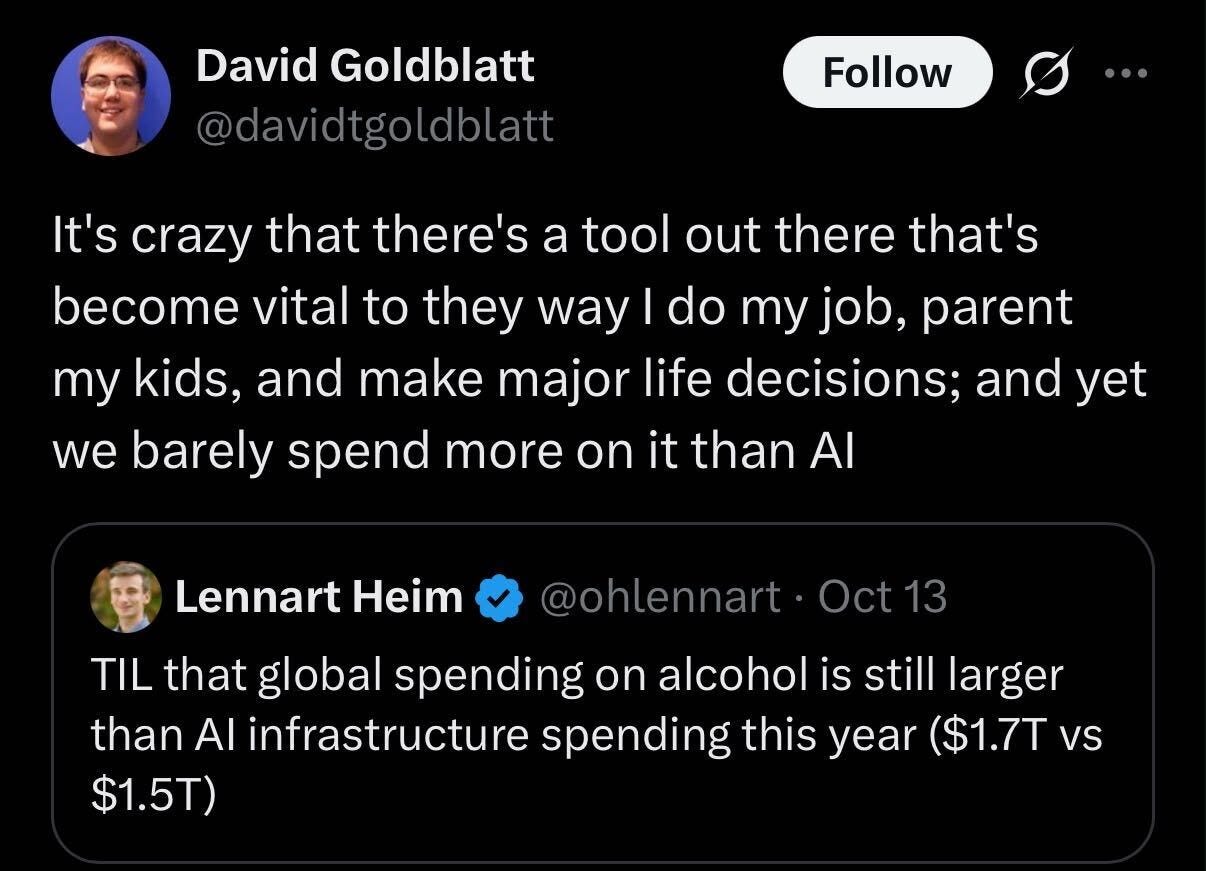
Either a new model release, some newly launched company getting valued in the billions of dollars, people getting angry over data centres or just general AI anxiety. Yet there remains a disconnect between the hype and investment and its penetration into the routine of the average person.
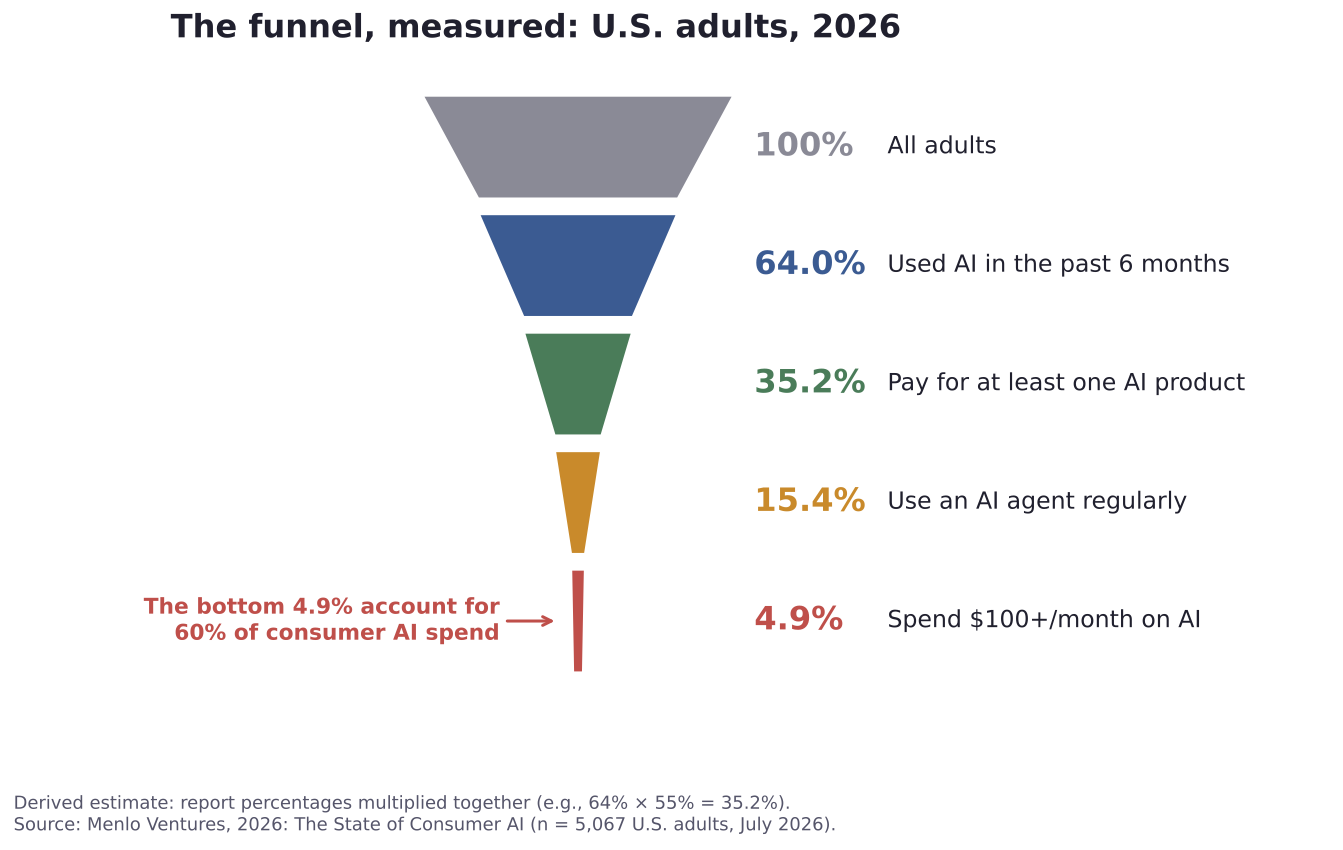
While estimates report a majority use AI on at least a weekly basis, most are effectively just substituting Google search or web browsing. Few are using agents or paying for it. A small group of power users are driving the majority of consumer AI spending. While startups and tech companies have embraced AI, adoption for meaningful workloads inside most other companies remains much shallower. Most organizations report regularly using AI but less than half have it implemented companywide and even less are using agents. Letting Claude or ChatGPT draft an email you still review and send is not the same as trusting it with an entire task end to end without supervision.
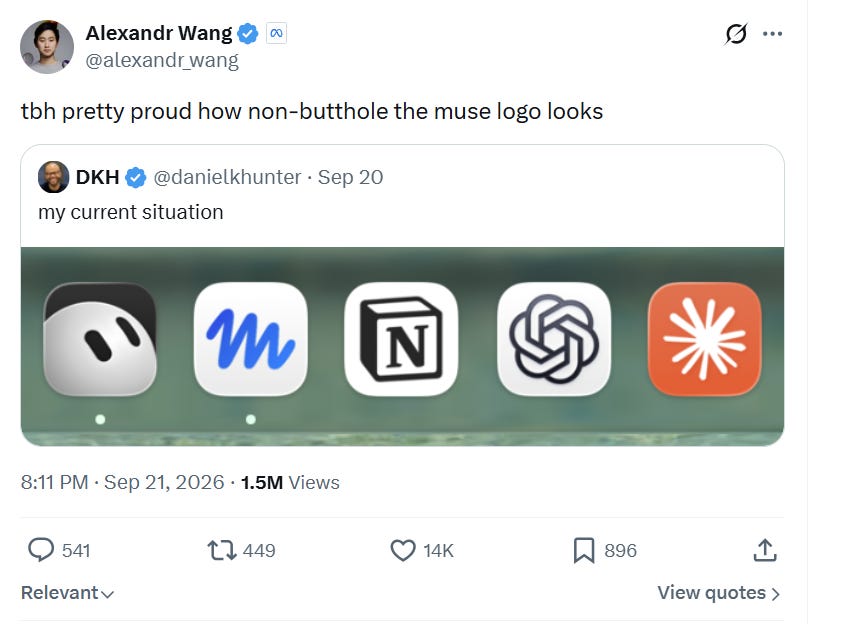
Despite many showing ambivalence to trusting an autonomous system, big tech has bet their companies futures on the belief that agents will increasingly carry out more tasks. Meta’s recently released Muse product, has quickly amassed millions of active users, and is reportedly proving to be very sticky for a consumer product.
Instinct, whose invite-only service launched in August, has already raised $1 billion at a $10 billion valuation. The company still doesn’t disclose its user count, but they claim growth of 10–11% daily without paid marketing while approaching $1 billion in annualized transaction volume.
Both work by connecting to your Gmail and using your interactions as context. They can suggest things to take off your plate, or you can simply give them something to do and, as if you were texting a personal assistant, they attempt to take care of it.
People in the tech world are raving about it. Many claim to use Instinct or Muse multiple times per day and keep finding new use cases. I can’t say I share this view.
For some things, they do pretty well. Sending emails for scheduling, cancelling subscriptions or executing fairly simple tasks in software you’re already signed into. You can even configure a wallet with Stripe’s Link to let them pay for things on your behalf. This is an application of agentic payments that everybody in fintech is hyped about. Yet it’s still far from fully autonomous.
My first test was to help me reschedule my passport renewal. It emailed the consulate from my email account since you can’t book your appointment online. Somebody called me the next day to arrange the appointment. The confirmation was sent to me via email, which Instinct could automatically add to my calendar and check for potential conflicts, of which there were none. So far so good.
My next test was to have it book a flight for me. I gave it my dates and itinerary and it found suitable flights, but it wasn’t able to book the flight alone. It brought me to the web page and entered some of the information, but I ultimately still had to click through and provide my payment details, resulting in trivial time savings.
I tried to have it book a haircut, but a similar issue arose since the salon requires a signed-in account to book an appointment. To grant it access, I needed to sign in, at which point it’s only about four or five more clicks to book the appointment myself.
This was the consistent theme. Anything that could be handled while remaining in email it did well, but once you had to start logging in to different sites, you still needed to be in the loop, which for me kind of defeats the purpose. If you are already logged in to everything and don’t need to re-authenticate it works better but you’d be surprised how often you still need to scan your face or enter a password.
It also fell short on simple tasks like reminding me when it’s somebody’s birthday because it only had access to records in my Gmail or contact list, where I don’t store people’s birthdays. For that, it would need to go to Facebook, which it can’t access.
My most AI pilled friend told me Muse was much better, so I gave that a try as well. Since it already has access to Facebook, it knew everybody’s birthdays and and saw upcoming events. At a minimum meant I wouldn’t miss things sent to me on Facebook or Instagram which I don’t use anymore but I can still benefit from the Meta suite.
Case in point, with minimal direction and a few photos, it could list a few Patagonia fleeces I haven’t worn since before COVID on Marketplace. I told it to handle the listing, negotiations, etc. and only alert me when somebody was ready to meet my conditions. I didn’t want it to give people my address to pick up the goods. Some people forgot to specify that condition and were startled to find strangers ringing their doorbell.
I also tried to have Muse book one of my flights. It did a bit better than Instinct, but it almost booked my flight under the wrong name. It’s not entirely its fault. I don’t go by my legal name Achilles Cato on the internet.
Where it did a good job was helping me book a few hotels for an upcoming stay. I just needed to enter my credit card information because I didn’t want to create a Link vault. When my wife didn’t want to stay at the hotel I selected, Muse was easily able to cancel it.
Outside of that, I can’t say I’m using Muse or Instinct every day because they just aren’t useful enough yet. I don’t blame them, but right now they don’t know enough about me to anticipate my needs. Despite all the data they have access to from Gmail and Meta’s apps, it’s still a fairly incomplete picture.
I don’t think they can get there with data alone. Even if they plugged into my financial data, they would be about as useful as a newly hired personal assistant. They can’t drop your dry cleaning off at your home if they don’t know where you live. Nor can they buy your wife flowers if they don’t know what kind she likes. They can still try but they risk messing up, exposing the scheme and creating more trouble than they sought to save you.
This isn’t an inditement on these AI tools. Just like with human assistants, it takes a while to excel at their job because they need to know the person they are working for. These AI apps are trying to hack familiarity by ingesting emails, but it’s still not enough. It’s reminiscent of when Harvey Spector needed to find a replacement for his longtime assistant Donna. The person he hired was perfectly competent but it was unrealistic to expect she would be as good as Donna on day one. Whether it’s human or AI, you need to invest time telling them what you want so they know for next time.
AI is not magic. It needs data and it needs to be trained. The idea is that it gets more useful over time as you correct it. Perhaps if I am willing to stick with it eventually it will become as useful as a personal assistant but in the meantime, it’s not saving much time and it’s not reliable enough for me to fully trust it with anything remotely consequential. The era of autonomous personal assistants isn’t here yet, but it’s coming very soon.