
Around me was a sea of people in matching uniforms. They were chanting in a dark room lit by flashing red lights. The music was loud enough to make your ears ring. There was yelling, a bit of crying, and at one point somebody abruptly spat on the floor. What had I gotten myself into?
As the music built, the leader shouted, asking for a final seance. She counted down from ten, the room erupted, and then everything dropped into silence. Some people let out a primal roar. Others collapsed onto the floor.
I just finished my first Barry’s Bootcamp class. I missed the memo about the matching sports bra and shorts uniform, but otherwise I did fine. For such a simple format, treadmill intervals plus weighted floor work, it delivered a solid workout to the 40 or so participants that Sunday morning. Not everyone staggered out gasping, but the structure lets anyone dial with the intensity, from first timers to elite athletes.
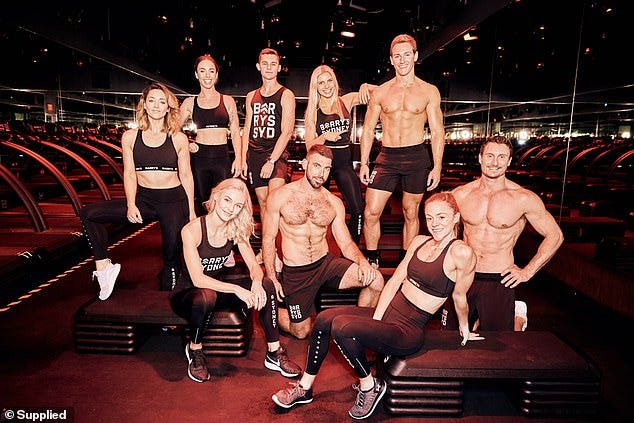
What really stood out was the culture. The waiting room walls were lined with photos of members who have completed 100, 500, even 1,000 classes. They remembered birthdays. They wrote handwritten notes for newcomers. It is all part of the Barry’s formula. Build a community that feels supportive, slightly obsessive, and just cult-like enough to make it hard for people to quit once they start.
Now, I’m in a pretty good place in my life and not feeling like I’m missing something, so I’m not a prime candidate to join a cult or organized movement. It was a decent workout but not revolutionary, so their siren song was ineffective on me.
Which begs a few questions. How did a simple workout class become a global fitness phenomenon? Surely, there business model can’t be entirely reliant on preying on impressionable fitness enthusiasts looking to fill a void (or can it?). What propelled Barry’s from a small studio to one of the leading brands in the boutique fitness industry? Is the workout actually good, or is it just hype?
Keep reading to learn the story behind Barry’s and if it’s worth checking out!
But first, make sure to hit the Subscribe button to join 1,000+ other Subscribers that get Serviceable Insights delivered directly to their inbox each week.
If this week’s article does not interest you, please check out some other recent ones:


Origins of Barry’s Bootcamp
Barry’s began in 1998 in West Hollywood, long before boutique fitness chains were a thing. There were large chain gyms and some individual studios but beyond bodybuilders and powerlifters, people definitely didn’t make workouts a part of their personality the way they would for fine dining, clothing styles or travel destinations.
The founder, Barry Jay, was a fitness instructor in Los Angeles that saw an opportunity. Gym classes were missing something. They were either all cardio or all weights, which would get predictably stale for even ardent fitness enthusiasts. When you would find a class with both, the atmosphere was lacking. This prompted high turnover, making it difficult to cultivate a community feel.
Jay believed there was room for something more intense, and communal. Something blending the best of personal training with the motivation of the group fitness environment. He partnered with John and Rachel Mumford, and the three of them launched what would become the first Barry’s Bootcamp.
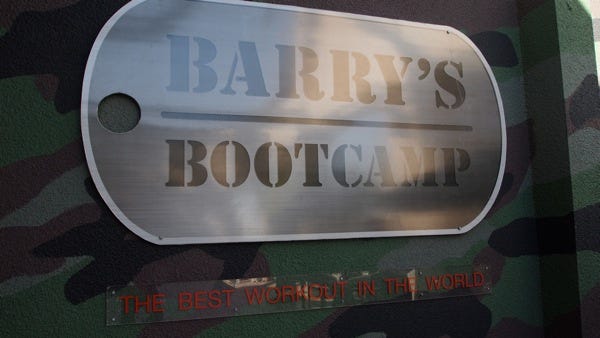
The original studio looked nothing like the polished Barry’s locations you see today. It was grungy and leaned into the military bootcamp theme. Camo wallpaper, netting on the ceiling, and participants were given dog tags after classes. Joining the actual army is hard, but for an hour you can get some of the fitness benefits. It’s not all fun in games, the lightning sucked back then, making it difficult for good Instagram posts.
Beside the gritty aesthetic, the workout format itself was novel. Barry’s combined treadmill intervals with floor strength work in rapid rotation, using high-energy music, red lights and a drill-sergeant-style instructor. The idea was simple: hit every major muscle group, spike your heart rate, demand total focus and give people a feeling that they had survived something meaningful together.
The timing was perfect. Barry’s was part of the wave in the late 90s and early 2000s that saw many concepts take off and form what would eventually become the boutique fitness boom. Whether it was SoulCycle, Crossfit or CorePower Yoga, people were looking for specialized classes rather than generic gym memberships. Group classes were getting more creative, and fitness brands were starting to embrace personality, identity and community. Barry’s was one of the first to understand how powerful that combination could be. Instead of selling access to a room with equipment, they were selling an experience. Barry’s was closer to Soho House than 24 Hour Fitness.
Barry’s was exclusively an LA and eventually a California thing until they expanded to New York in 2011. The NYC studio helped transform Barry’s into a national trend. It proved the model could work even in markets saturated with gyms and fitness concepts. From there, Barry’s expanded to Europe, starting in Norway, before opening in other major cities. The brand gradually shed its military decor in favor of a more premium, early 2000s Enrique Iglesias music video nightclub-style design. They kept the original red-room but made things more contemporary and Instagram pic friendly.
By the early 2010s, Barry’s had become a blueprint for modern boutique fitness. It validated there was a large market for people willing to pay premium prices for high-intensity classes in exchange for results and a community. The format didn’t change much from the original studio, but the audience became global. It turned out, it’s not only West Hollywood types that loved the combination of intensity and social connection it created. Barry’s became a culture, a ritual and for many people a defining part of their identity. In a pretty annoying way.
Is It a Good Workout?
Short answer, yes. If your goal is fat loss, conditioning or general fitness, doing Barry’s consistently will get your heart rate up, burn a lot of calories and build a decent amount of muscular endurance. The combination of lifting and treadmill intervals is effective. Because you alternate between the two, you can push harder during the running segments than you would if you were only running for a full hour. It is a form of HIIT whether they describe it that way or not.
The strength portion is high rep with relatively light weights. It will not make you explosive and it will not make you huge, but it does help with muscular endurance and basic strength. People who use Barry’s as their primary workout are usually not very muscular, but they tend to be fairly lean with good conditioning. That is exactly what the format trains you for.
Ignoring the economics, depending on your goals, Barry’s is best used as a 1-2 day per week supplement to an existing strength training and cardio program. There’s declining benefits to exclusively HIIT style workouts every day, especially if it comes at the expense of strength or other types of training (like Pilates, which is definitely not just a girl exercise). The problem, which is not specific to Barry’s, is that these boutique fitness concepts are cost prohibitive on a per class basis (anywhere from $30-60), so people opt for the monthly memberships (closer to $150-400). To justify spending this much, need to go almost every day but then they aren’t exposing themselves to other kinds of training formats. Ideally you should be doing a combination of different workouts, to have a well rounded fitness regiment.
That said, compared to many group fitness classes or the average workout most people do at a big box gym, Barry’s is a major upgrade. You get a full hour that includes both full body strength and real cardio. It’s effective enough that tens of thousands of people use it as their primary fitness routine, which has helped turn a local Los Angeles experiment into a global business.
Business Takeaways
Running a Barry’s Bootcamp location is actually pretty simple. Most in North America are corporate owned but there are franchise locations in other markets. Whether these locations are corporate or franchise owned, setting one up carries meaningful setup costs (renovations, equipment etc.), which easily runs into the high hundreds of thousands to low millions of dollars. Otherwise, expenses are predictable once the location is open.
The major item is going to be rent; Barry’s Bootcamp locations are generally in downtown cores or luxury areas within major cities, which carry high costs. This is a fixed expense, which can run anywhere from tens to hundreds of thousands per month. This along with the setup costs are going to be one of the primary variables that will decide if a location will be profitable or not. If setup costs run out of control and the location costs millions of dollars each year in rent, the location needs to be overbooked almost immediately to justify the investment.
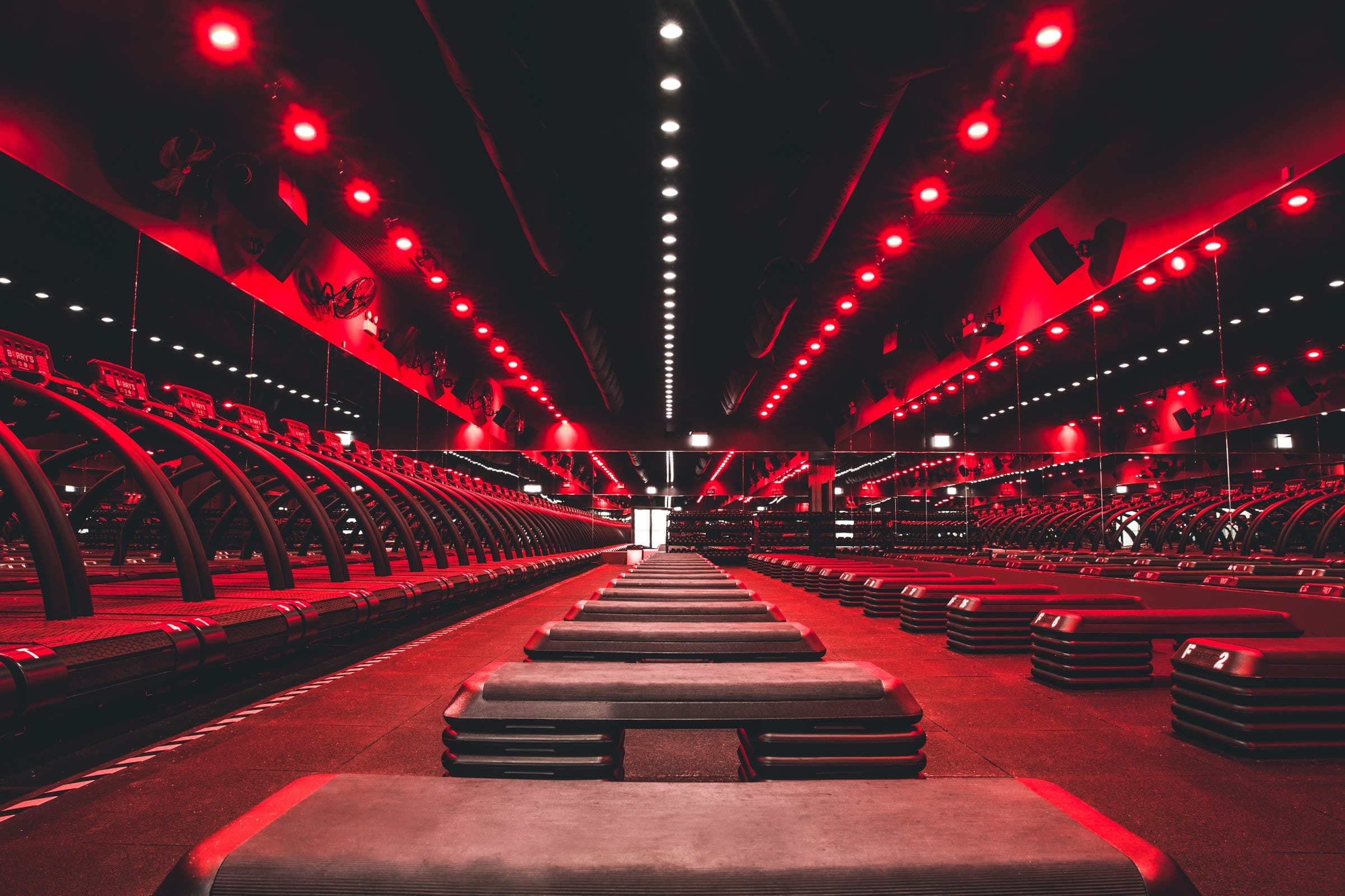
The other major expense is staffing. Barry’s needs at least one instructor per course and a few other support staff to check participants in, make smoothies and clean up between courses. Besides that, equipment needs to be replaced every now and then but unlike big box gyms, Barry’s only has treadmills, dumbbells, step boxes and bands. With the exception of the treadmills, these don’t cost very much and don’t require maintenance until they break, which can be years.
The treadmills they use are Woodway, which are the best. Although they are expensive, they can handle a lot of wear and tear, and have long guarantees. The assumed depreciation is closer to 5-7 years instead of the usual 2-5 for standard treadmills getting such heavy usage in a commercial setting. This difference in useful life doesn’t save money from a capital expenditures standpoint, at best it will be approximately the same. The reason they make this investment, isn’t even to justify a premium price point, it’s because they lose potentially thousands of dollars for every day a treadmill isn’t operational.
A single drop in class typically costs between $30-40 USD (the sports bra is sold separately), monthly memberships can range from $200-500 depending on the location and frequency. There are between 30-50 places in each class and 5-7 classes per day, capping participation at max 2,450 per week. Assuming each class is full and everybody does drop in classes, which is unrealistic, their maximum revenue from classes is ~$100,000 per week. Since half the participants start on the treadmill and the other half on the floor before switching places, if a treadmill is out of order for even one day, that’s 14 lost class positions.
Not only would they miss out on drop ins, but also other spending on smoothies, apparel etc. If members can’t find enough available slots, they downgrade their membership and/or look elsewhere. This is not what the Lord Barry wants. If people are to get fit and find sense of community, it better be at Barry’s or nowhere else!
In all seriousness, it’s important for them maximize capacity because each additional person they can fit in a class flows directly to their contribution margin, getting them closer to profitability. A successful location can generate in the millions of dollars per year, but that’s predicated on them keeping their classes full; this isn’t like Planet Fitness where people keep their membership even if they never go.
Barry’s is now majority private equity owned, so you know they are going to want to maximize profits, even if it means diluting the brand. In the investment’s press release, they announced aggressive expansion plans, confirming these concerns and that Private Equity Ruin’s Great Companies.
It would be a shame, since there are no shortage of boutique fitness studios trying desperately to replicate the devotion and financial success of Barry’s. New fitness concepts pop up all the time, but most come and go faster than a hyped Netflix series. Barry’s has not only helped built the category, but they are still among the leaders nearly 30 years later.
For now at least, the cult lives on and you be certain if you pop into a Barry’s studio anywhere in the world, you can be greeted with flashing lights, loud music, screaming, matching outfits, a good workout and great community.
Thank you for reading. If you liked this article please Subscribe below. I publish articles on a wide range of topics from business, books, current events or anything on my mind.
Such a vastly different model from Anytime Fitness that attracts gym crowd that like working out alone and on their own time!
I thought that yes, the work out is good (because you work out!) but Barry’s hype is definitely defined by their cult side by making you feel seen: they know your name, give you shout outs during the workout, want you to come there to celebrate your birthdays, don’t want you to go anywhere else if you need anything related to fitness (apparel, drinks, snacks, smoothies), have high-end products in the bathrooms - it’s an expensive cult (aren’t they all) that will at least get you abs!