

My wife and I have attended nearly 30 weddings in the past few years.
It’s been consistently four to seven receptions each summer, usually running from May through Labour Day. Anywhere from half to two-thirds are local or within driving distance, with the rest requiring international travel, usually to the other side of the Atlantic.
When the Save the Dates started arriving late last year, not only were we surprised to see our first wedding wasn’t until Labour Day, but that the remaining four were in consecutive weeks through mid-October. When I went to buy wedding cards for all five, the person at the register asked if I was actually about to attend that many weddings or if I was just buying them for other people.
It goes without saying, throwing a wedding is expensive. As covered in The Definitive Etiquette Guide to Bachelor/Bachelorette Parties, the average marital couple will spend ~$35,000 on their wedding. Figures vary, but they’re consistently five figures, at least in the West. Regardless of which numbers you trust, there’s a considerable amount of variance from event to event. Some will blow through that figure on the floral arrangements alone. Others don’t come anywhere close.
Unless you have intimate knowledge of the budget, this isn’t something you’ll know until you arrive. Couples generally don’t take it well when you ask to see itemized receipts of their wedding invoices prior to RSVPing. You have to decide whether you want to attend based on less quantitative measures, such as the depth of your relationship.
Choosing not to attend somebody’s wedding makes a statement. You’re saying you don’t want to commit the time or money necessary to attend.

Everyone understands we live in a world with constraints. By attending somebody’s wedding, you are saying no to other things. It’s one thing if the reception is nearby and you’re only committing to an evening, and something else entirely to fly across an ocean and pay for accommodations for several nights.
This is why the cost to attend a wedding can range anywhere from a few hundred to tens of thousands of dollars. It also depends on what you include in that figure. Is it just transportation, accommodation and the gift? If you start adding in outfits, hair styling, makeup and spray tans, none of which affect me but, from what my wife tells me, do carry costs, things can spiral even further out of hand.
This wedding season, all but one were local which saved us considerably on the transport and accommodation side. Looking back on previous years, no matter how much you try to optimize costs, each destination wedding seems to work out to $1,500-3,000 per person1. If the venues in a big city, sometimes you can stay with a friend or relative, but they have to be okay with you getting back between 1-5AM, which isn’t a given.
Local or destination aside, a big point of debate is gifting. This often brings up strong feelings. Some of it stems from cultural differences, while some comes down to differing views on money.
Fewer people have wedding registries anymore and instead prefer to receive cash as a gift. In Jewish and Italian culture, many have done it this way for generations. Some people believe the gift should at least cover the cost of their plate. Others think it needs to cover their proportional share of the wedding. Some give the same amount regardless of how much they think the event cost. Others show up with two envelopes in their pocket and give the more generous one based on how much they think the couple, or their parents, put into the event.
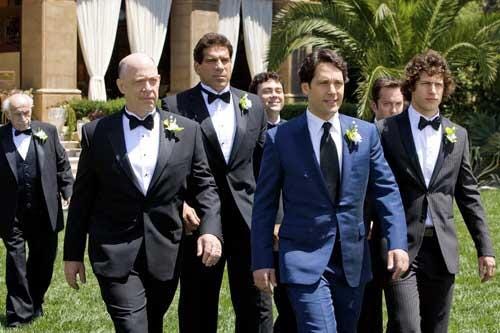
Instead of trying to guess how much it cost per person, I generally give the same amount. The amount should cover a tasting menu and accompanying alcohol pairing, or an expensive bottle of wine at a nice restaurant. If they want to put that toward their honeymoon or buying a house instead, that’s their call.
If it’s a destination wedding, you aren’t obliged to give a gift. If you’re already spending thousands of dollars to show up, the couple should be grateful for that. If, under similar circumstances, they gave you a gift, then it makes sense to reciprocate. If the couple covers part of your travel or accommodations, you should give them something. If you’re a groomsman or bridesmaid, there’s a whole other set of rules that are too long to get into.
In any case, by my estimate, once we factored in gifts, transportation and accommodations, it cost us about $3,000 to attend the five weddings this year, or roughly $1,500 each. If you factor in outfits and other appearance-related matters my wife had to incur, it’s higher, but I prefer to ignore these matters.
Funnily enough, that comes exactly in line with the average cost people incur attending a wedding according to The Knot.
While it’s a lot of money, you have to keep in mind that you are there to witness the most special day in your friend, family member or person-you-feel-too-awkward-to-turn-down’s life. This is not a regular Sunday dinner at the local diner. Understandably, not everyone can or is willing to spend that much to be there.

Everybody has different financial and availability realities. Yet some people will move heaven and earth to attend the wedding of somebody they care about, whereas others won’t come even if the happy couple hires them a chauffeur and massages their neck for the duration of the ceremony.
I have a medium acquaintance who’s single, makes plenty of money and has minimal commitments outside of work. When asked, he’s unapologetic when he tells people that unless the wedding or bachelor party is a short Uber ride from his place, he’s not going. People don’t like it, but at least he’s consistent and lets them know right away instead of waiting until the RSVP deadline. He’s clearly not concerned about alienating people.
On the other hand, I know people earning far less, sometimes with young children, who always seem to show up no matter the commitment required.
Neither approach is wrong. As an adult, it’s up to you to decide how you want to spend your time and money. Depending on how many invites come your way, if you accept them all, you’ll quickly run out of both. Unless you make a complete buffoon of yourself, the couple will always appreciate that you made the effort to be there.
This is why people take wedding attendance so personally. The couple isn’t asking if you want to show up to an evening featuring an open bar, a three-course meal and six hours of dancing. They’re asking whether your relationship is important enough for you to rearrange your life for a day/week.
After thirty weddings, when you run the numbers one could say it’s been fiscally irresponsible to attend all of these weddings. In fact, many people have.
Would I like to have this money back, ideally in the form of $5 bills filling a medium sized swimming pool I could jump into? Sure! But how can you regret spending money to show up for people you care about? If you are spending your time with the right people, it’s the best investment you can make.
It depends how many hotel nights you assign to the wedding itself. If it’s on a Tuesday and you only have direct flights on Friday, do you include the days before the festivities start? If the wedding venue isn’t hosted near an airport and requires an extra travel buffer day, how does that impact the calculation? IFRS and GAAP have yet to define these standards.
Well said